
Objective 13: to provide the pupil with tools for seeking, exploring, and assessing information in the heritage language and to support the pupil in adopting a self-directed approach to studying his or her heritage language.
-
You can switch the keyboard / language of a computer / iPad to the heritage language. You can use a simple website, educational application, suitable for your age.

Example: Student will play a language game provided by the teacher in the heritage language.
-
You can find information from different sources. You know there are different forms of media (television, internet, newspapers, magazines, books).
Example: The student can type a single search term into a search engine by himself. With help they can find more relevant information: http://simonhaughton.typepad.com/main/2014/07/how-to-search-effectively.html
The understand how to search effectively students need to:
- appreciate that different search engines help you locate different types of media - web pages, images and maps being the main three;
- know how to pick key words (not full sentences) spelt correctly about the topic to form the main part of a search algorithm;
- know how to add some basic operators to improve search algorithms, such as putting inverted commas around exact phrases and proper nouns to retrieve word combinations exactly or putting asterisk to indicate unknown words;
- know how search results are ranked or ordered (e.g. by: popularity, language and relevance), with sponsored results appearing near the top.
-
With guidance, you can search, find and understand information and you are able to choose the most suitable source material.
Example: Teach the students how to find reliable sources. Let them search for reliable and non reliable information, and let them show how they know the difference. Search for reliable information
- learn how to look for clues to check whether each search result is worthwhile opening by reading the blurb to check it is suitable and by interpreting its URL to see if its owners appears to be reputable (schools and government organisations are usually reliable sources);
- realise the importance of cross-referencing information found to check it is truthful (especially on multi-authored wikis).
-
You are somewhat familiar with sources of information in your heritage language, and you are able to search for, reflect on, and assess the information. You are able to learn your heritage language in a self-directed manner.
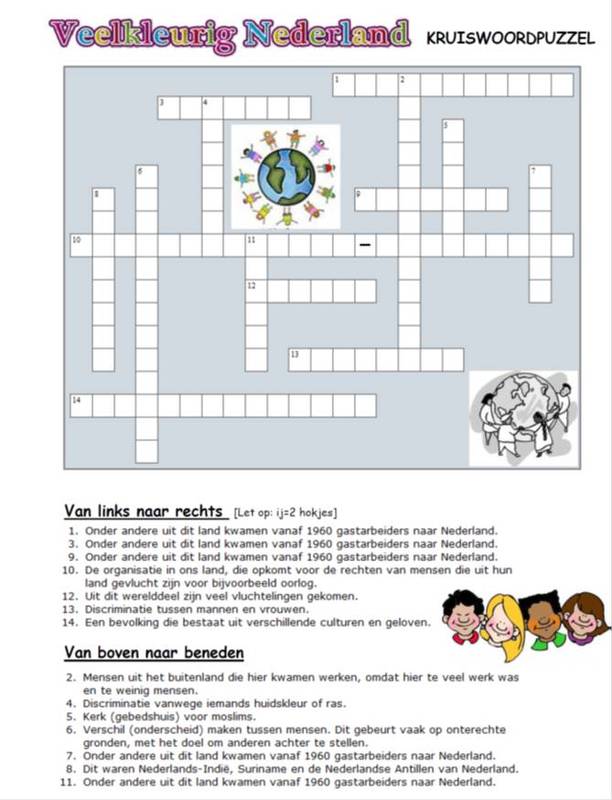 Example: Give the students a task about a new subject and let them find, with some guidance, the answers themselves with help of media
example webpad
-
You can seek information independently from different sources in your heritage language.

Example: You only give the task (without the webpad) the students have to find the sources for the answers themselves. (e.g. task cards).
-
You can independently compile a presentation based on sources.