
Objective 3: to inspire the pupil to develop analytical and critical literacy as well as his or her understanding and interpretation of diverse texts
-
You can read basic texts using a dictionary or other help tools and understand the main content of the text.

Example: The main idea is to find the most important information about the subject of the text. It can be found by putting together the most important information from the introduction and the ending. The student can give the main idea in one sentence.
-
You read basic texts and can tell in your own words the contents of the text.
-
You can make observations based on the facts you read and are able to make some observations about the language and images in the texts.
Example: Let the students make inferences about a text they have read, or pictures they have seen.

-
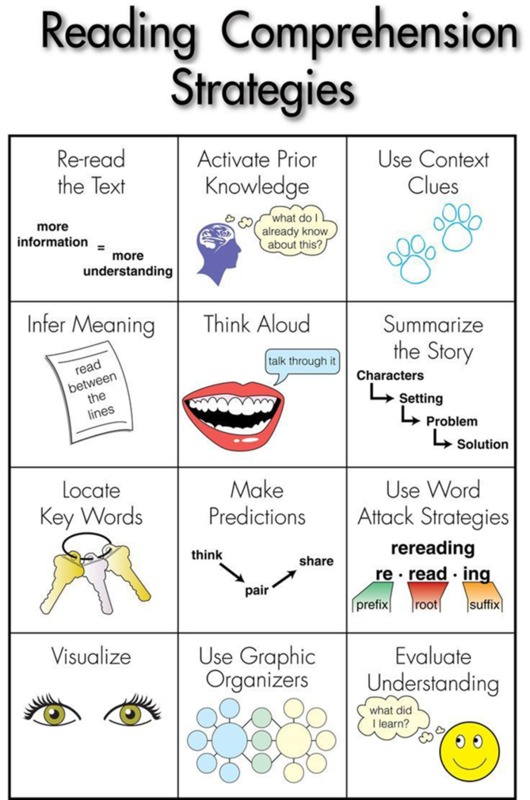
You are able to read texts using some reading techniques and understand the key contents, opinions, and their justifications and you are in some extent able to make observations on linguistic and visual means in the texts.
Example: Practise the different reading strategies

-
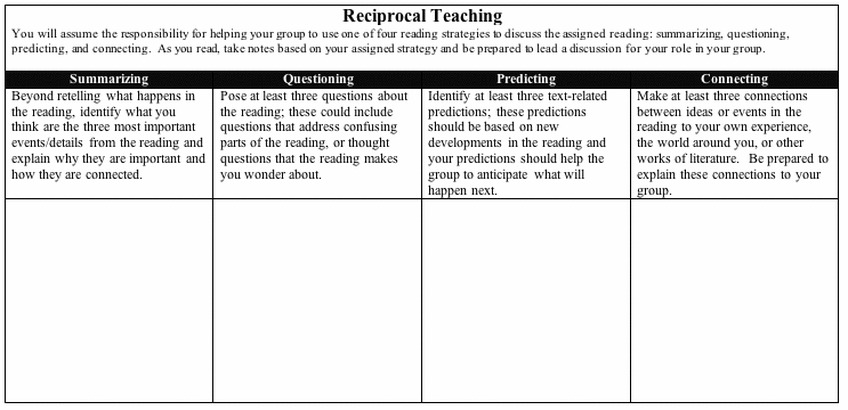
You can read different kind of texts using different kind of reading methods and form your own opinion about it.
Example: Give the students a reading task with the different reading strategies.
-
You will read texts using a variety of ways to read and evaluate texts critically and form a personal opinion of the text which you can justify
Example: write a book report, give a book presentation, write a reply on an argumentative text.
Creative book reports:
- At the end of the book, the main character looks back at the events in his / her diary. Move in the person and write the diary pages.
- Write a letter to the newspaper or magazine of your choice on the subject / content of the story.
- Write a letter to the author of the book, asking him / her to make changes at the next print. Explain what you would like to change and why.
- Find three poems that you think fit the story. Describe exactly why they are so appropriate. Refer to the passages from the story.
- Write a letter to the protagonist of the story, explaining to him / her which decisions you find unwise / incomprehensible and why.
- Write a review (discussion) about the book. Here you also give a short impression of the content. Then you put your opinion into words and explain it.
- Look for at least ten appropriate photos. Make a photo collage and write a report in which you make clear why that collage fits your story.
- Describe in detail the protagonist of your book. What are the good and bad characteristics, what does he / she look like? Then you compare yourself with him / her. In what are you the same and where do you really differ? When would you do the same thing, and what would you do different?
- Imagine that you are a journalist and you interview the protagonist. Think about appropriate questions. You have to derive the answers from the story. Then write the interview.
- For a popular journal, write an article with the title I was a guest at. (Name of main character).
-
Find three artworks (paintings, sculptures, etc.) that fit well with the story. Explain in a report why you chose these works of art.
-
Have a few people from the story correspond with each other. Write at least four letters / emails.
-
Move in one of the persons. Write some fragments from that person's diary, with at least three days between each fragment.
-
Find two lyrics that you think fit well with the story. Please clearly explain your choice. Use examples from the story.
-
Write a letter to your correspondent friend in which you make clear what your opinion about the story is.
-
Write an advertisement text / poster for the story.
-
Find background information about the author's entire work in the library or on the internet. Provide at least three sources. Check whether the book fits with the other work.
-
Write another ending for the story.