
Objective 1: To encourage the pupil to act in different interaction situations
-
You can participate in known routine conversations (interactions), but sometimes reply still in Finnish.
Example: Students can react to simple questions:
- How are you?
- What is your name?
- Please introduce yourself
- Where are you from?
- How old are you?
-
You understand different interaction situations (conversations about different subjects) and you can reply in your heritage language.
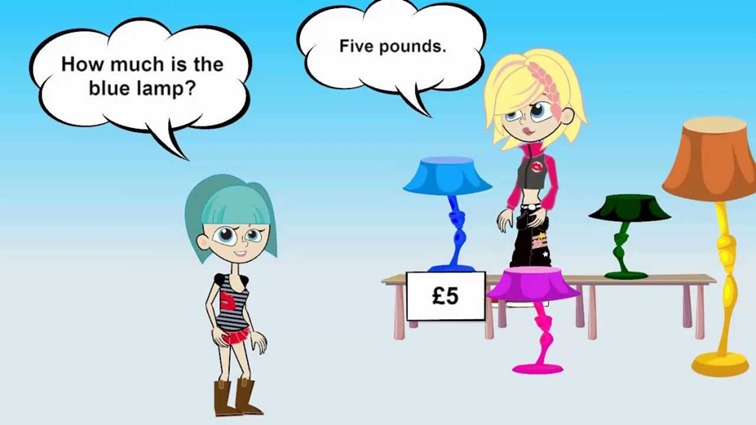
Example: The student knows how to communicate when shopping in own heritage language, how to place an order in a restaurant.
These skills can be practised by role play.
-
You can apply your language skills in your heritage language in interaction situations which are familiar to you.
Example: Students can tell about things in their daily life, the weather etc. 
Studnets can interview each other about what they have done today/in the
weekend /during the holiday and tell in their own words what their classmate
told them.
-
You can participate in diverse interaction situations. You listen to the views of group members, take other into account, and take initiative in interaction situations.
Example: corners:
- In two of the classroom corners there are printouts with opposite statements,
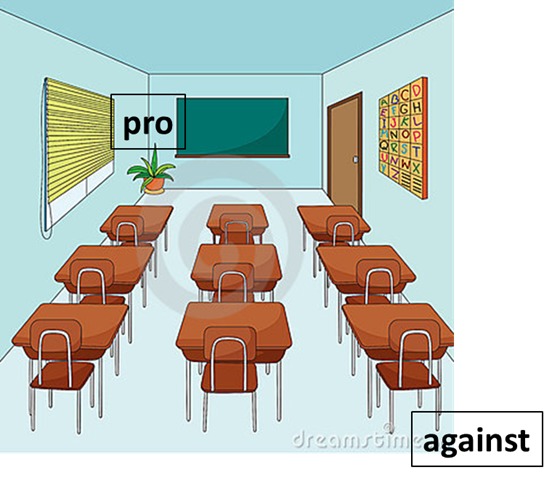 e.g.“Meat consumption is healthy” versus “Meat consumption is unhealthy”.
 - Each pupil goes to the corner of his/her preference and while there, they discuss in pairs the reasons for their choice.

- Afterwards, half of them move on to the opposite corner and form pairs with pupils from that corner. One pupil then agrees with the statement, while the other one is against it. They negotiate, with either pupil defending their choice and remembering the opponent’s arguments.
- Finally, pupils return to their original corners and summarize the arguments quoted by pupils from the opposite corner.
- In the ensuing classroom discussion the teacher asks the pupils why their partners chose the opposite corners.

- The corner selection is a manifestation of independent thinking. The game encourages pupils to express individual opinions, it teaches negotiation techniques and collaboration skills, such as listening and summarizing.
- The game duration is between 10 and 15 minutes (depending on the amount of statements used).
Example statments:
- The illegal download of music and movies needs (not) to be tackled harder.
- Children may (not) have a sign with "forbidden access" on the door of their own room.
- On social media you can/cannot write things about some one else.
- Violent (computer) games should (not) be banned.
- The testing of cosmetic products on animals must be prohibited/permitted.
- Children may (not) occasionally lie to their parents.
-
You take actively part in various interaction situations and help others to communicate.

Example: In group work the student can take the role of organiser or mediator
- ensure that the group stays at work.
- ensure that everyone participates and gets the chance to say something.
- If something is discussed, give turns to talk.
- ask every person in the group if he understands what needs to be done.
- If this is not the case, ask the group to stop for a while and explain.
- If nobody in the group knows the answer, ask the teacher.
Mediator
- encourage the people in the group to participate and cooperate with each other.
- Asks the peers what is their opinion about the subject
- encourage the people in the group to help each other.
- give the people in the group a compliment if they do something right.
- Make sure that nobody is left out
-
You can summarize the interaction situations in your heritage language.
- write the answer of the group.
- discuss with the group what will be reported .
- briefly summarize the assignment to present the report for the class.
- during debriefing tell what has been done and how it has been done on behalf of the group and how the group have cooperated.
- organize the presentation and ensure that everyone has a task in this.