
Objective 1: To guide the pupil to develop his or her ability to act in different interaction situations and to assess his or her actions in them
-
You are aware there are rules in different communication situations, but you do not always apply them correct.
Example: you do role plays in different communication situations:
- Phone call with your friend vs phone call with your teacher
- Meeting a distant family member for the first time, meeting an exchange student
- Congratulating your friend on his birthday, congratulation your grand mother on her 80th birthday
-
You can handle familiar communication situations and understand there are differences in Finnish an heritage language communication.
Examples: Have little roll plays, in which a Finn is visiting your home country, or somebody from your home country is visiting Finland
- Waiting at a bus stop

- Going for coffee at a friends place
- Student is calling home to ask permission to play with his/her friend in heritage language, and is discussion the outcome at the same time with his/her friend in Finnish
- Student is with his parents/relatives at a restaurant and meets a school friend there
-
You can act in different interaction situations, according to the rules of the situations.
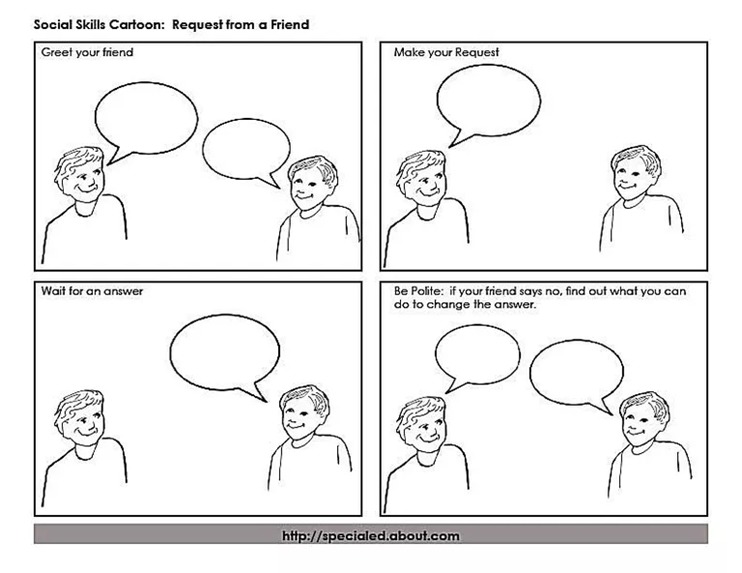 Example: You can write the correct dialogues by different interaction situations. Introduce the concepts: What is a request, or an initiation?
- A request: "Could you help me find the library?"
- A greeting: "Hi, I'm Amanda." Or, "Hello, Dr. Williams. It's nice to see you."
- An interaction initiation: "Hi, I'm Jerry. I don't think we've met before. What's your name?
- A negotiation: "Can I have a turn? How about after five minutes? Can I set the alarm on my watch?
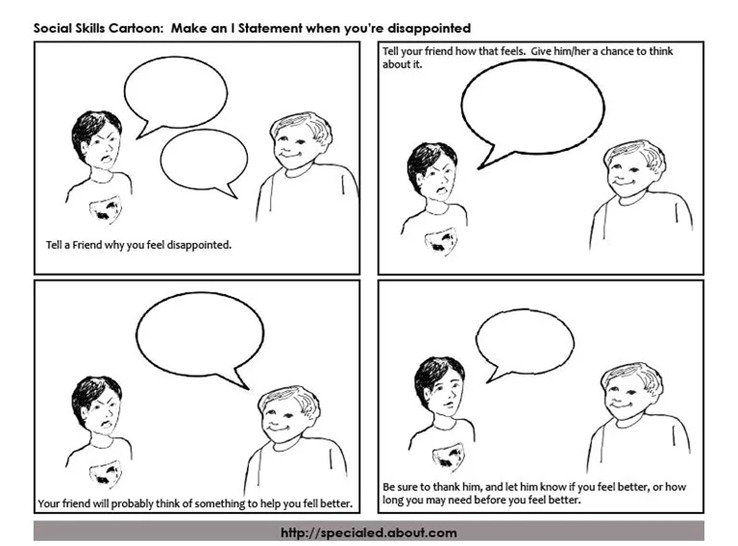
Compare interactions:''
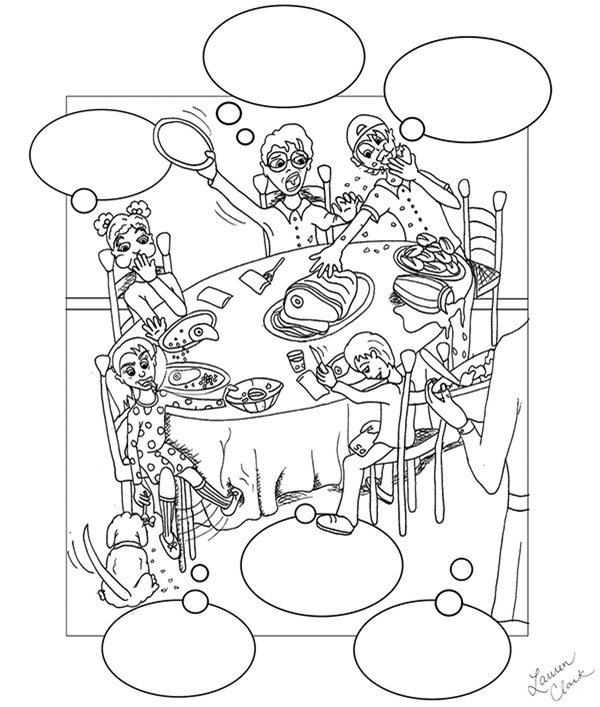
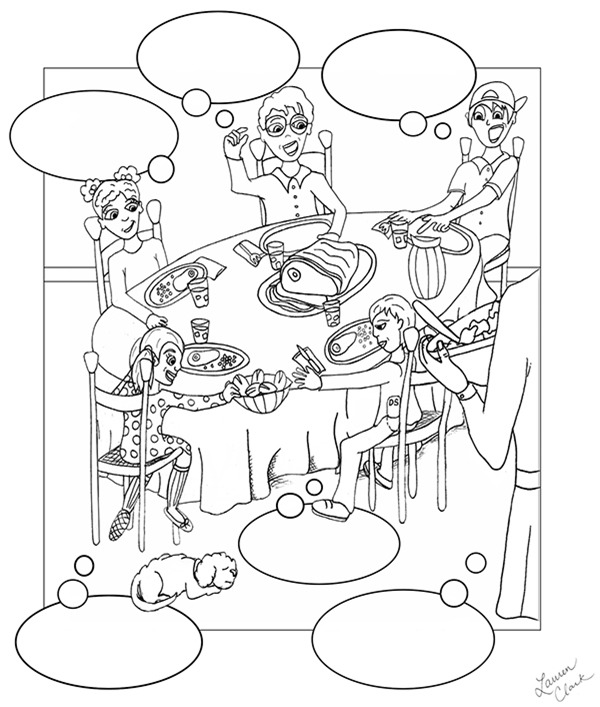
High/low context: who's which?
To give an idea of where different cultures fall on the context scale, they are often organised in a loose linear format:

Look up your country on: context scale
Write a role play/interview questions/phone call scenario for an interaction situation in your country.
High Context
- Communication tends to be indirect, harmoniously structured and understated.
- In conversation, people are expected to speak one after another in an orderly, linear fashion.
- Disagreements are personally threatening. It is important to solve conflict immediately or avoid it completely in order for work to continue.
- Physical space is considered more communal. Standing very close to others is a common practice.
- Verbal messages are indirect. Speakers often talk around a point (instead of directly to it) and use embellishments to convey meaning.
- Accuracy is valued. How well something is learned is important.
- Some countries considered “high context” include Japan, Greece and various Arab nations.
Low Context
- Communication tends to be linear, dramatic, precise and open.
- Because words are so highly valued, they are used almost constantly.
- Disagreements are depersonalized. Conflicts do not have to be resolved immediately for work to continue. When solutions are found, they tend to be rationally based.
- Privacy and personal space are highly valued. Physical space is considered privately owned.
- Verbal messages are explicit and direct. Words are valued above their context.
- Speed is valued. How efficiently something is done is important.
- Some countries considered “low context” include the United States, Germany and various Scandinavian countries.
- While “high” and “low” context are examples of opposing cultures, it is also true that many cultures fall in between these two extremes. Called “multi-active,” these cultures might include those of Spain, Italy or Latin America.
-
You are able to act in different interaction situations and are able to assess your own actions in them.
Example: Walk and exchange
The teacher outlines a real situation and asks the students to think about how they would respond to such a situation.
- What would you do?
- Why?
- What is the consequences of your action?
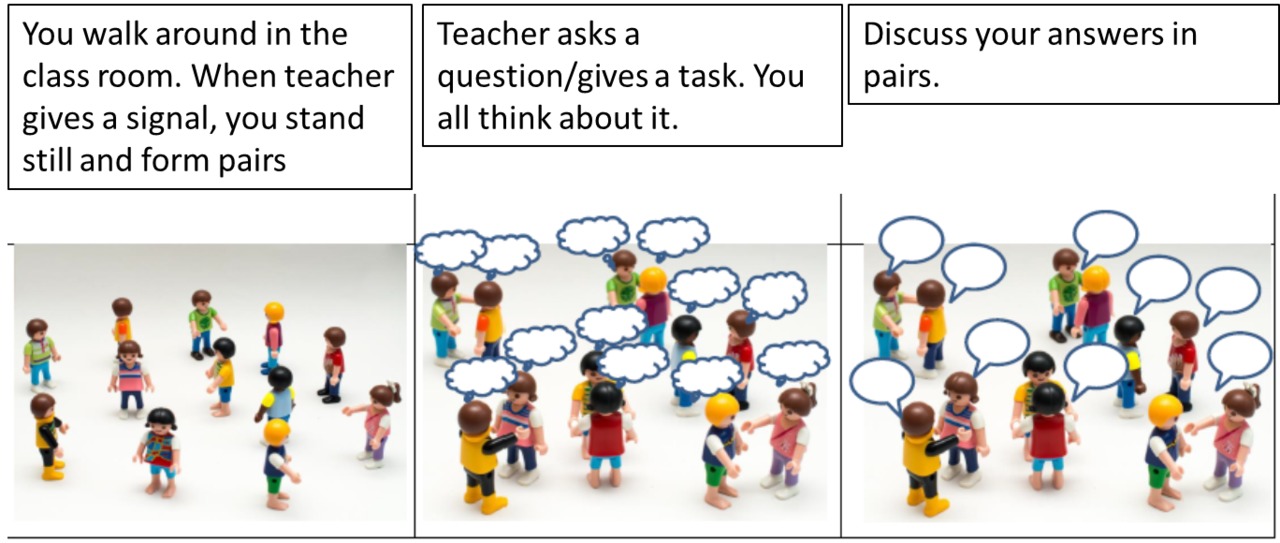
Examples situations:
- You are in the train, bur realize you didn’t buy at ticket. The conductor comes.
- You play a sports match, but the referee is partial.
- You want to go to a party, your parents say ‘no’. You did go any way.
-
You can act in a new communication situation with the facts you have.
Example: Consensus method
The students are divided into groups and receive the assignment for one problem to find the best solution; a solution agreed by every group member. The rule in this process is essential: 'We have only made a decision if we all agree. If anyone doesn’t feel right about our decision, then there is no decision. ' Maybe no one will get his or her favorite result, but all team members will have input.
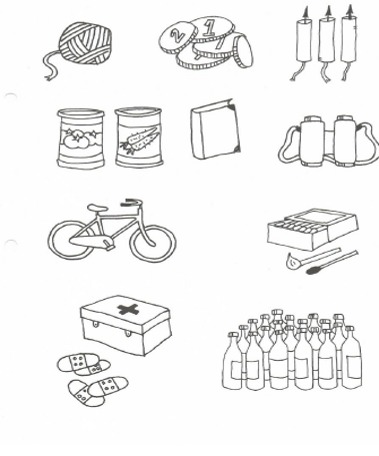
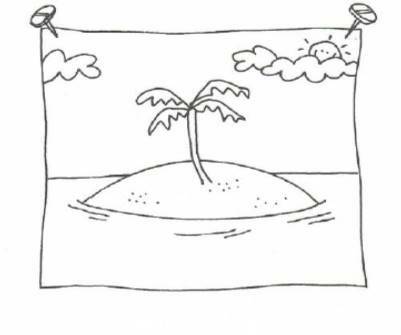
'We take this': Explain to the groups that they are at sea with a boat and that storm breaks out. Their boat collides with the rocks of an uninhabited Island. They must now choose which material from the list they take with them to survive. In groups they each receive a list of 10 materials. The materials must be given a number, with 1 being the main object and 10 the least important.
-
You can create new communication situations and assess your own actions. You are able to improvise.
Example: facilitator/ leader of discussion/debate