6. Forest plants
Contents

6.1 Mosses and lichens
Mosses
Mosses are primitive plants that do not have roots. They were the first land plants to develop on our planet.
Mosses are small, evergreen plants, which means that they do not drop their leaves during the winter. Mosses have leaves and stems, but instead of roots they use small rhizoids to attach themselves to their growing surface. Plants use their leaves to gather moisture and nutrients. Mosses have no vascular tissue.
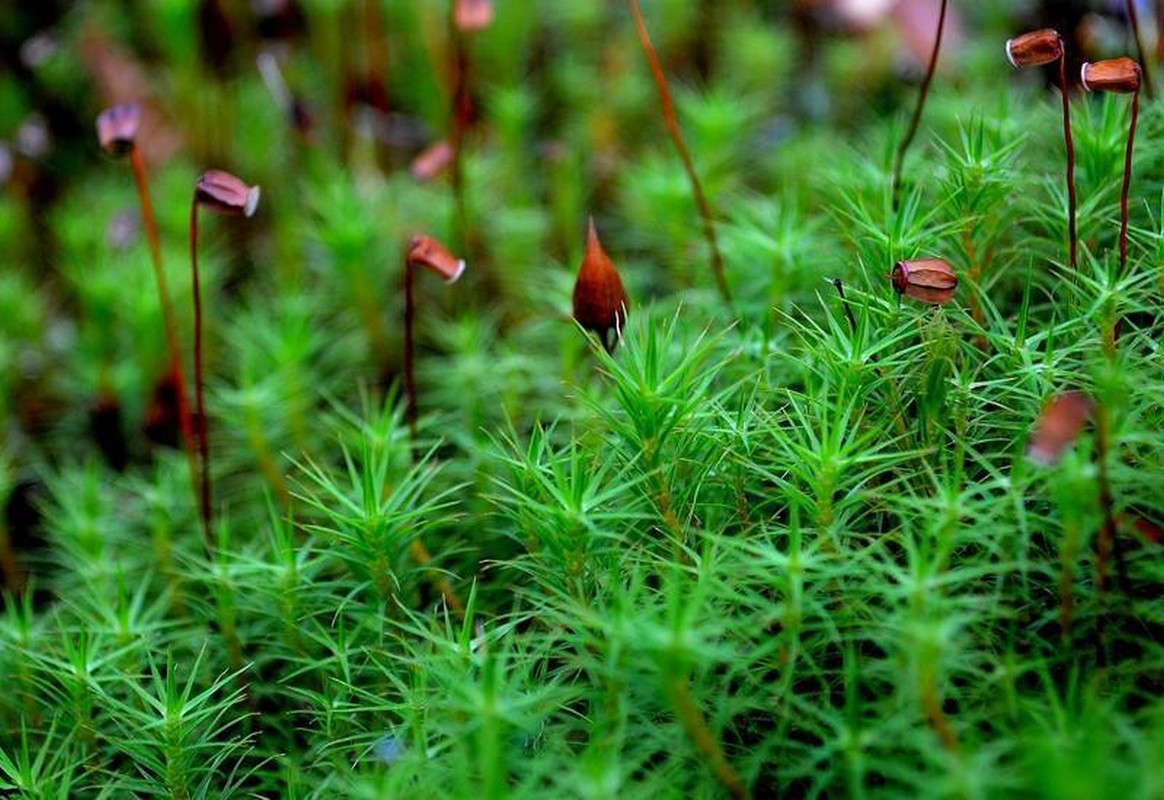
Haircap moss with sporangia.
Lichens
Lichens have no distinct leaves, stems, or roots. Lichens consist of fungal mycelia and photosynthetic algae that live in close symbiosis with one another. The mycelium takes care of gathering water and nutrients, whereas the algal part of the lichen produces sugars in photosynthesis and gives some of them to the mycelium. Lichens reproduce via spores and detached lichen crumbs.

Reindeer lichen. The thallus or body of a lichen contains no distinguishable leaves, stem, flowers, or roots.
6.2 Gallery: Mosses and lichens


6.3 Ferns and horsetails
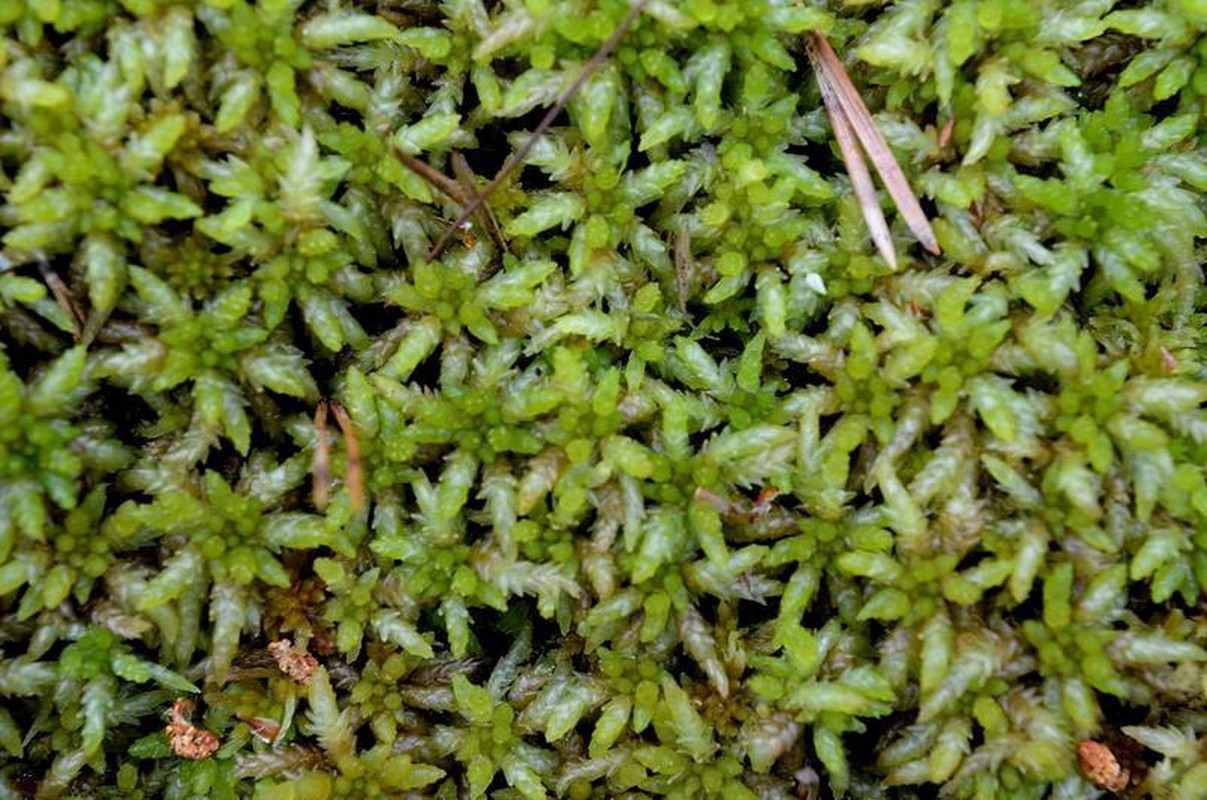
Pteridophytes are a group of ancient land plants that consist of ferns, horsetails, and liverworts. Unlike mosses, from which they have developed, they have roots and vascular tissue. Like mosses, they thrive in wer and shady conditions. The most well-known ferns are the ostrich fern and the wall fern.

The wall fern is a pteridophyte: it reproduces via spores and its stem contains vascular tissue.
Like mosses, pteridophytes reproduce via spores. Their sporangia are located on the undersides of their leaves. They can reproduce either asexually or with sex cells.
6.4 Herbaceous plants
Seed plants have roots, stems, flowers, and leaves. Many seed plants have herbaceous stems, whereas other have wooden stems.
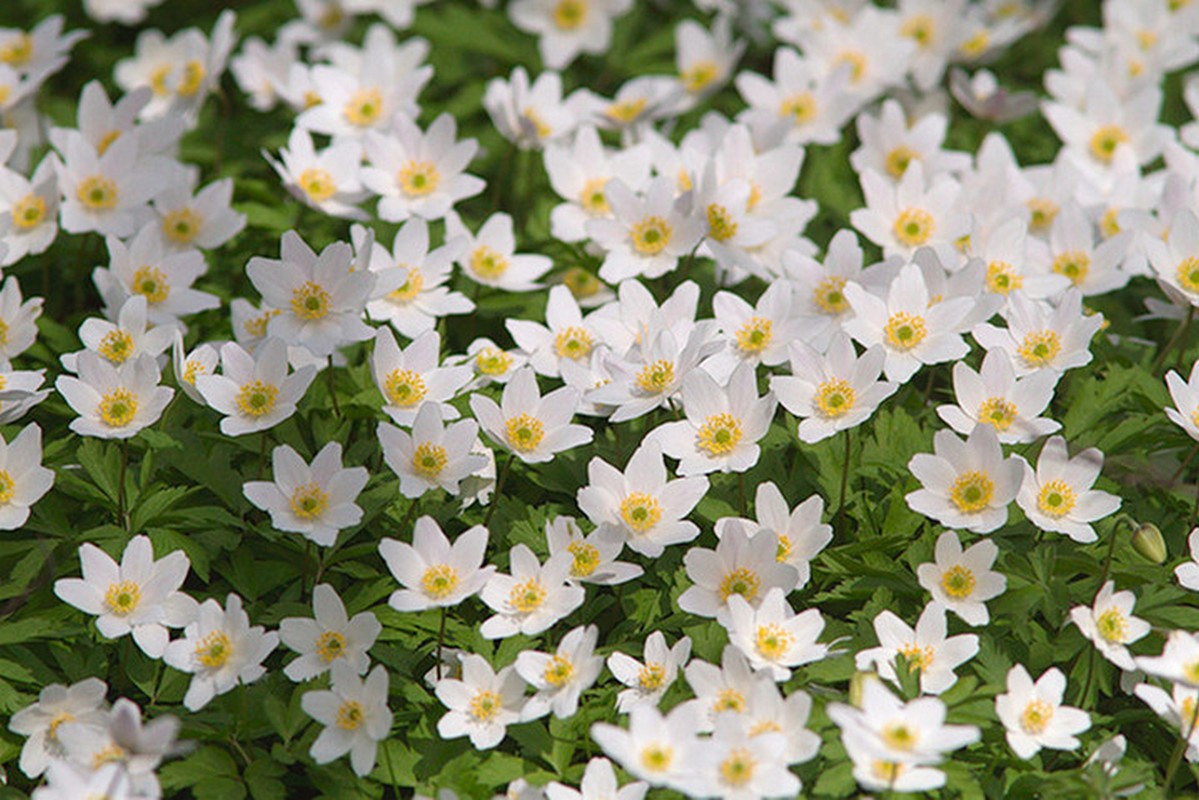
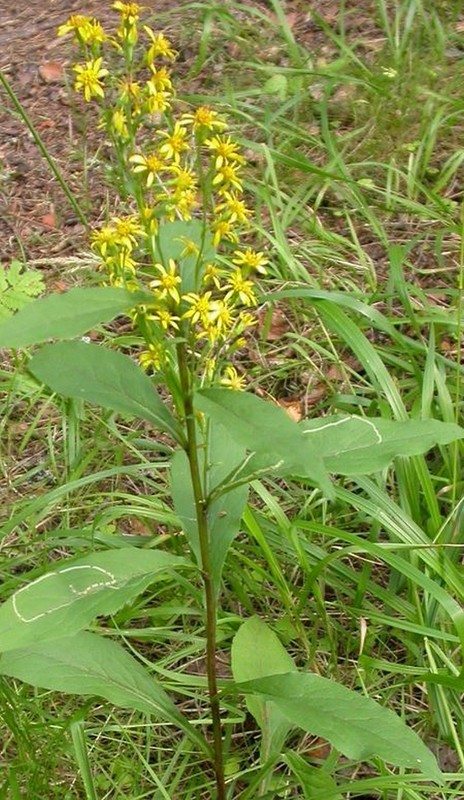
The most common herbaceous plants of the forest include the liverleaf, the wood anemone, the wood sorrel, the goldenrod, the May lily, and the rosebay willowherb.
6.5 Gallery: Herbaceous forest plants



6.6 Sprigs
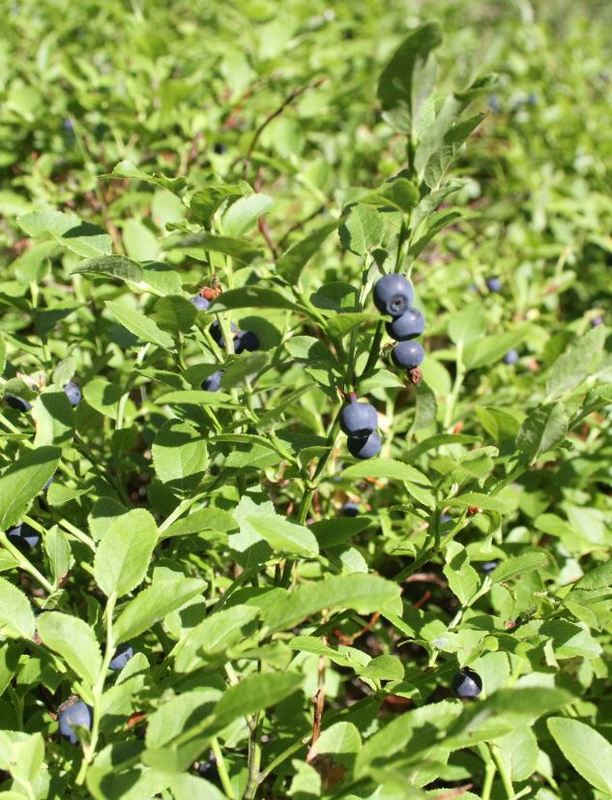
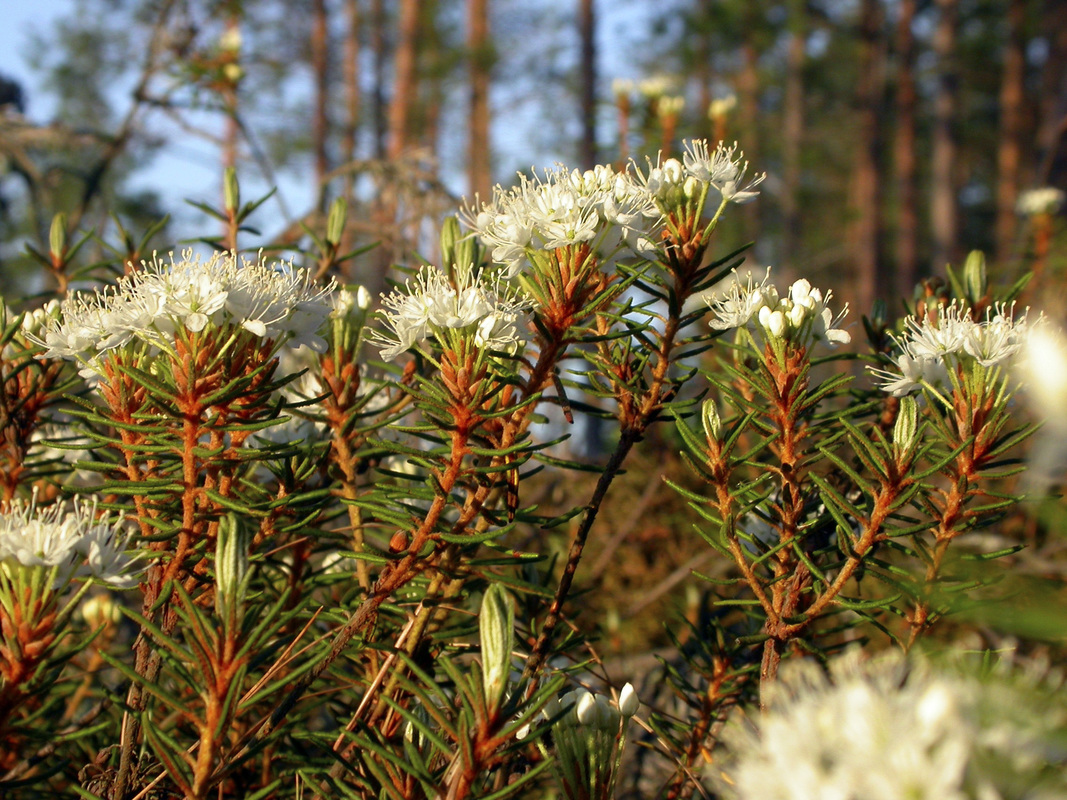 Sprigs or dwarf shrubs are short plants with woody stems. Plants that are over half a meter tall are considered shrubs.
The most well-known forest sprigs include the berry-bearing blueberry and lingonberry.
Heather is an important sprig for bees. Their flowers contain a lot of nectar, which bees use to make honey.
Other forest sprigs include the twinflower, which can often be seen creeping over mosses on the forest floor, and the crowberry, which can be identified by its needle-like leaves.
The picture on the right displays the wild rosemary, which is a sprig species that thrives in wet forests and bogs.