
3. Forest types and tree species
Contents
3.1 Forest ecosystems
Various factors influence what kind of a forest will grow in a certain area. The structure of the soil, the availability of nutrients, the amount of sunlight, the variation in temperature, and the amount of rainfall all have an effect in determining what kinds of plants will thrive in a specific place. Because different plants compete for these site factors, a forest contains only the species that have best adapted to its conditions.
The individuals of a certain species living in a specific area form a population. For example, a stoat population of a certain region consists of all the stoats that live in that region. An organism community of a forest consists of all the different populations of organisms that live in the same forest. A forest ecosystem is the result of the interaction between its organism community and its non-living environment.
Characteristics of forest ecosystems.
3.2 Do you remember the terminology?
- Biosphere – the part of planet Earth that accomodates living organisms.
- Ecosystem – an interactive whole consisting of living organisms (plants, animals, etc) and their non-living environment (water, rocks, etc).
- Organism community – all the populations of living organisms inhabiting a specific area.
- Population – all the individuals of the same species living in a specific area.
- Species – the basic unit of the classification of living organisms; e.g. spruce, bear.
- Organism – a living being; bacteria, protist, plant, fungus, or animal.
Name the terms
3.3 Forest types
Forests can be classified in different ways.
The easiest way is to classify forests into types according to the trees that grow in them. By following this method of classification, we arrive at three distinct types of forests:- Broadleaf forests, where the most common trees are broadleaf trees.
- Pine forests, where the most common tree species is pine.
- Spruce forets, where the most common tree species is spruce.
- In dry taiga forests, you can find lichens, with pine as the most prominent tree speceis.
- In wet taiga forests, you can find mosses, with spruce as the most prominent tree species.
- In broadleaf forests, the undergrowth is rich, and the most prominent trees are broadleaf trees.
For many people living in cities, parks are the most well known forest-like environment. Parks are different from natural forests in many different ways, most notably in terms of their species, as well as because their plants are often watered and taken care of by humans.

Broadleaf forest can be seen in the foreground of the photograph. The lake shores in the background are dominated by taiga forest.
3.4 Broadleaf forests
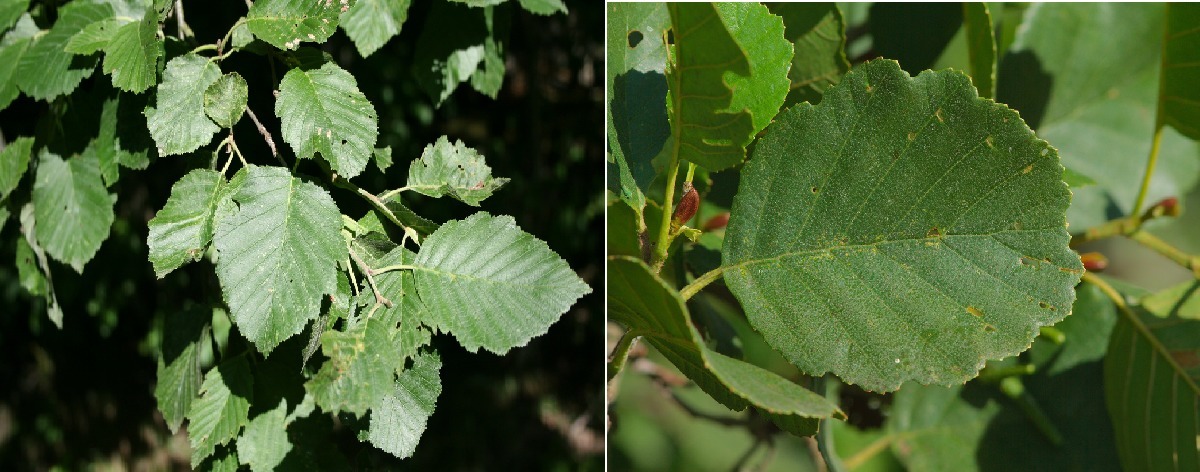
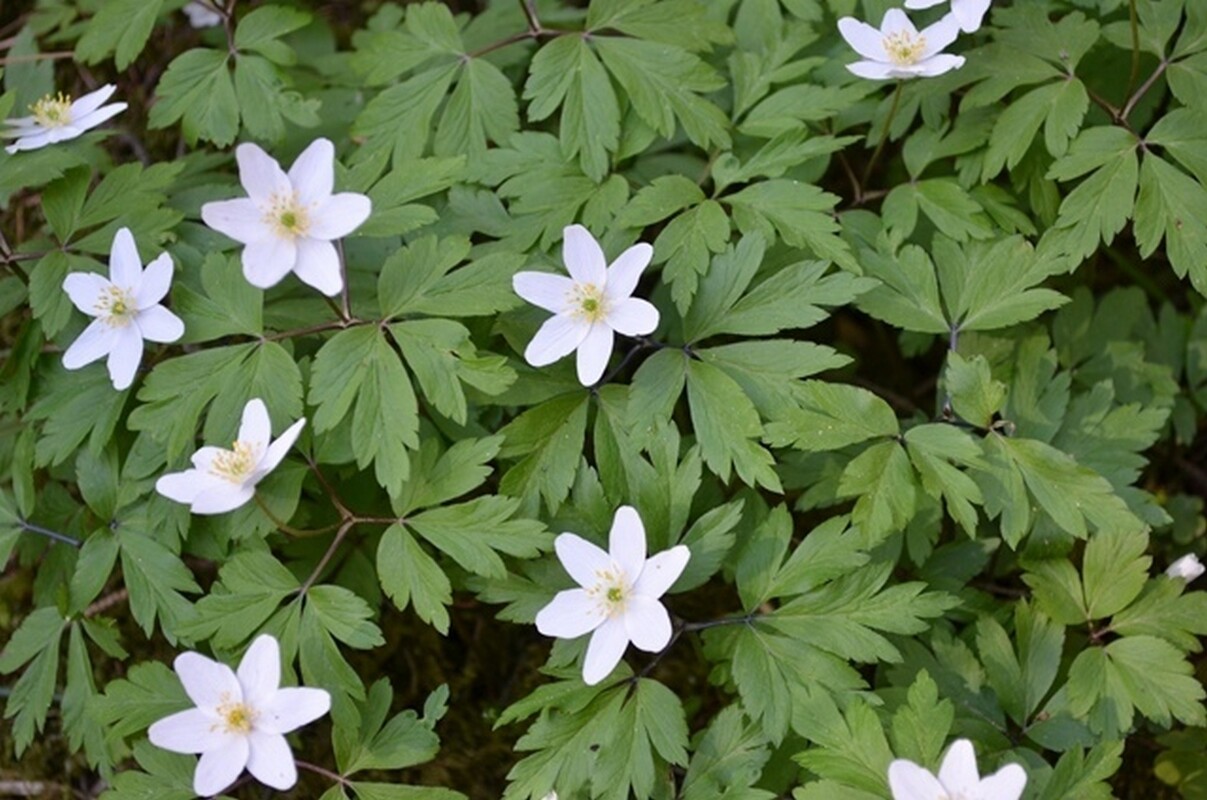
Broadleaf forests are dominated by broadleaf trees. Young broadleaf forests mostly consist of rapidly spreading and growing tree species, such as birch, willow, and aspen. In broadleaf forests, the amount of sunlight that reaches the ground level is high in spring when the trees have not yet grown their leaves, but low during the summer. Because of this, the undergrowth consists mainly of flowers, grasses and shrubs that flower during the spring and otherwise thrive in shady conditions.
Broadleaf forests are important habitats for many bird and mammal species. For example, aspens are important trees for a number of different animals. Their bark and branches are the food of hares and moose during the winter. Their leaves are eaten by various insects, which themselves are the food of many different birds. Woodpeckers also carve their nests in the the soft trunks of aspens. After woodpeckers have nested in the aspens, the nest holes can be used by other birds, such as great tits.
Broadleaf forests grow in regions where the soil is water-absorbent and rich in nutrients, and where the yearly temperature is warm. Groves are a type of broadleaf forest where so-called "noble" broadleaf trees, such as oaks, maples, and elms, can be found.
Broadleaf forest.
Groves are a type of broadleaf forest.
3.5 Broadleaf trees




3.6 Other species from broadleaf forests




3.7 Pine forests
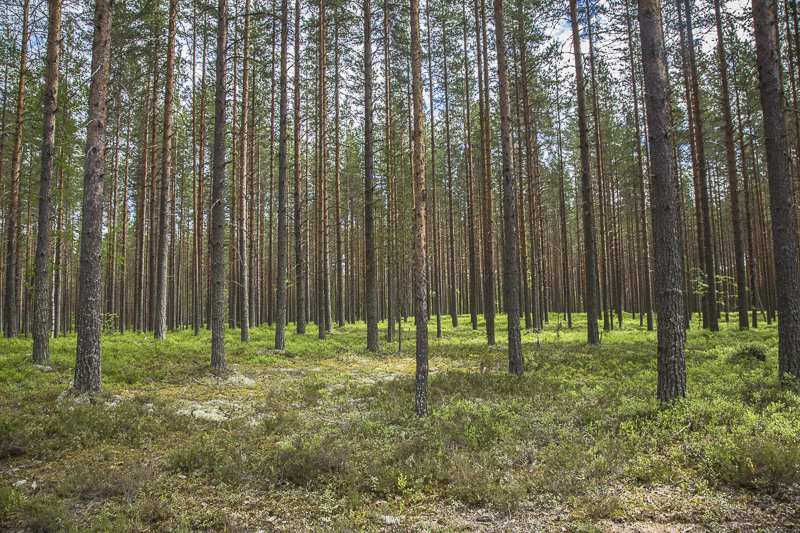
Dry pine forests are a common forest type in Northern Europe. Pine trees are coniferous, which means that they reproduce by producing sead-bearing cones. Pines require a lot of sunlight, and they thrive in dry environments.
Sand and gravel are well-draining soil types common to pine forests, which is why they are sometimes called dry taiga forests. As water passes through this type of soil quickly, the soil cannot absorb large amounts of nutrients for plants to use. The ground of a pine forest is usually covered with plants that are adapted to such barren conditions, including lichens, lingonberries and heathers.
Animals found in pine forests include voles, mice, squirrels, foxes and reindeers. Birds that can be encountered in dry taiga forests include the chaffinch, the willow warbler, and various tit species.
A dry taiga forest dominated by pine trees.
3.8 Species from pine forests

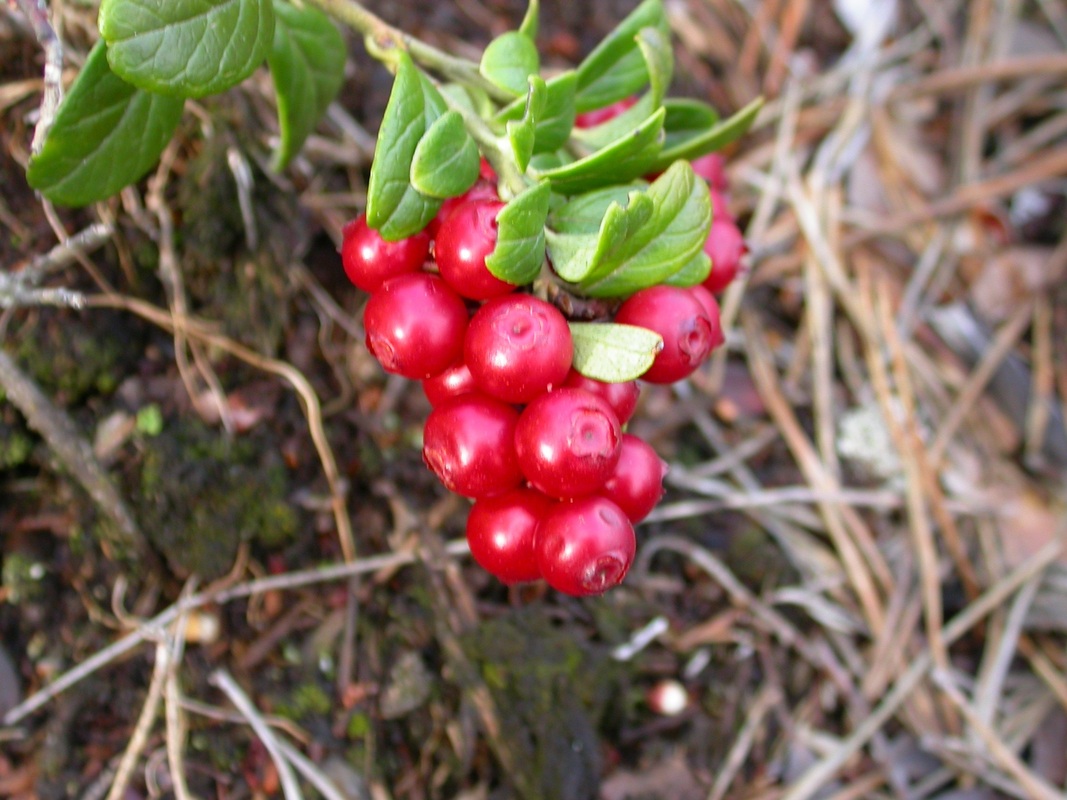

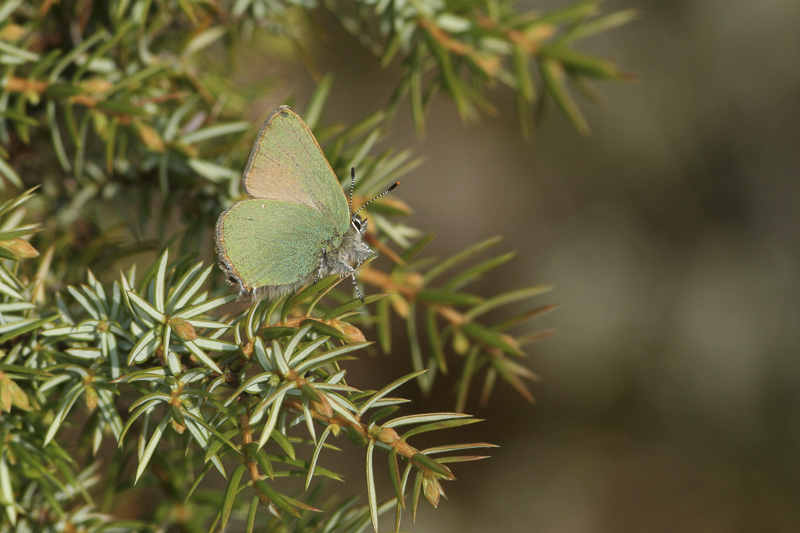

3.9 Spruce forests
If the soil of a forest consists of more water-absorbent till, it will also store up more nutrients for plants. This type of soil often accomodates wet taiga forests with spruce as the most dominant tree species.
Spruce, like pine, is a coniferous tree species common to the forests of Northern Europe. Many broadleaf and pine forests are transformed into spruce forests over time. This is due to the fact that spruce trees are better adapted to the temperate and humid climatic conditions of Northern Europe than most other species of tree.
Spruce thrive in shady environments. Because their branches are thick, they prevent sunlight from reaching the ground level of the forest. As a result, wet taiga forests mostly accommodate plants that are well-adapted to dark and shady conditions. The undergrowth of a young spruce forest is often rich, containing blueberries, grasses, and arctic starflowers. The oldest forests of this type are shadier, and their undergrowth consists mostly of mosses.
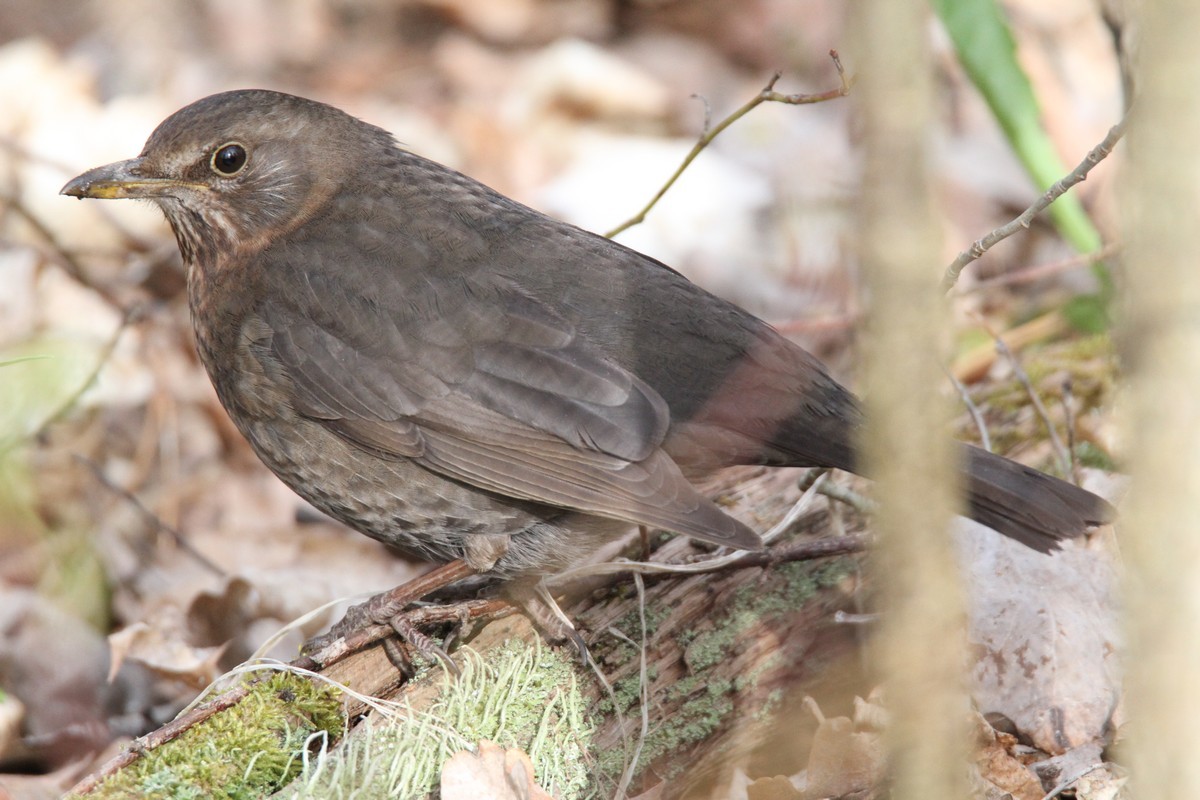
The most common animals of spruce forests include squirrels, coal tits, willow tits, and goldcrests. Animals such as bears, voles and thrushes like to eat blueberries growing in the forests.
A wet taiga forest dominated by spruce trees.
3.10 Species from spruce forests


3.11 Parks and urban forests
Plants and animals of the park. Viinikka Park in Tampere. © Juha Salminen.
Various green spaces give color to urban areas. Green spaces often contain plant species that thrive in the polluted air of city environments. These plants are often brought to green spaces from elsewhere, and they are watered and taken care of regularly by humans. Because of this, urban green spaces are often very different from natural ecosystems.
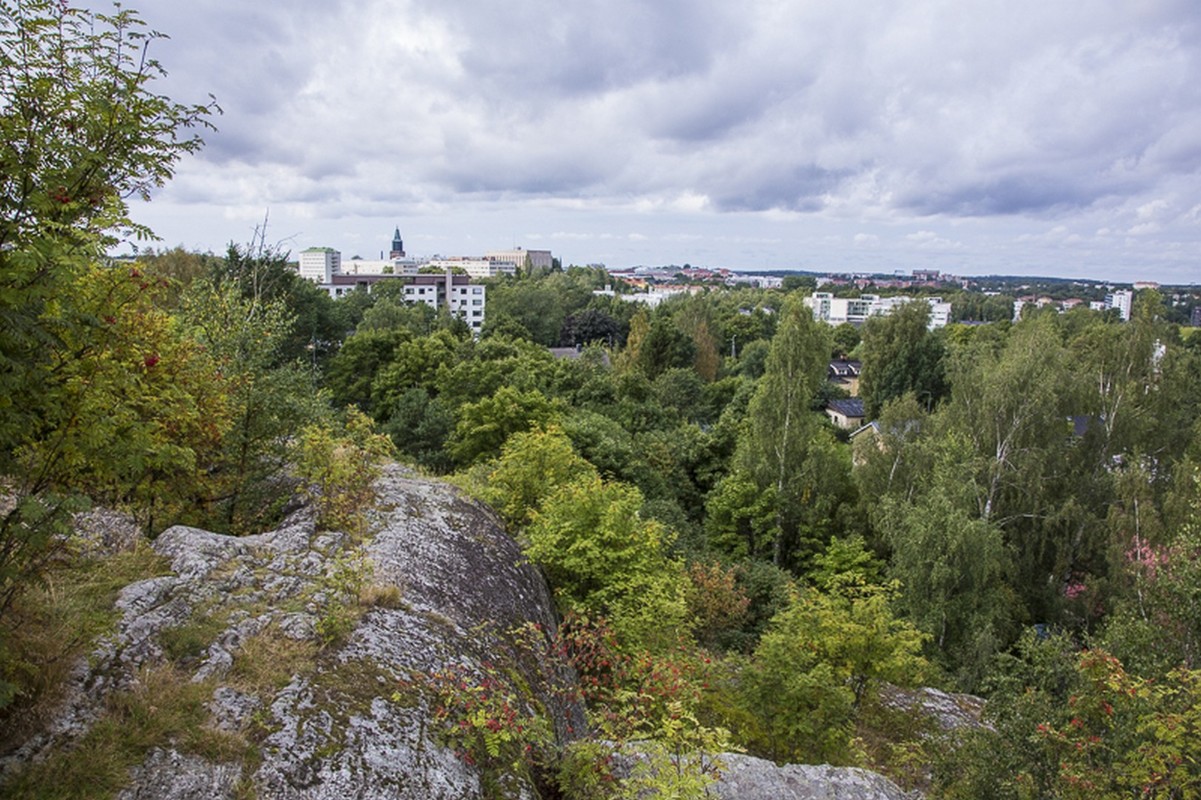
Green areas give color to urban environments. Turku, Finland.
Parks are the most common type of urban green spaces. They are often covered by grass and contain various broadleaf tree species. They provide both humans and animals with a place to relax during warm summer days. During the autumn, the falling leaves of broadleaf trees give the city a spark of color.
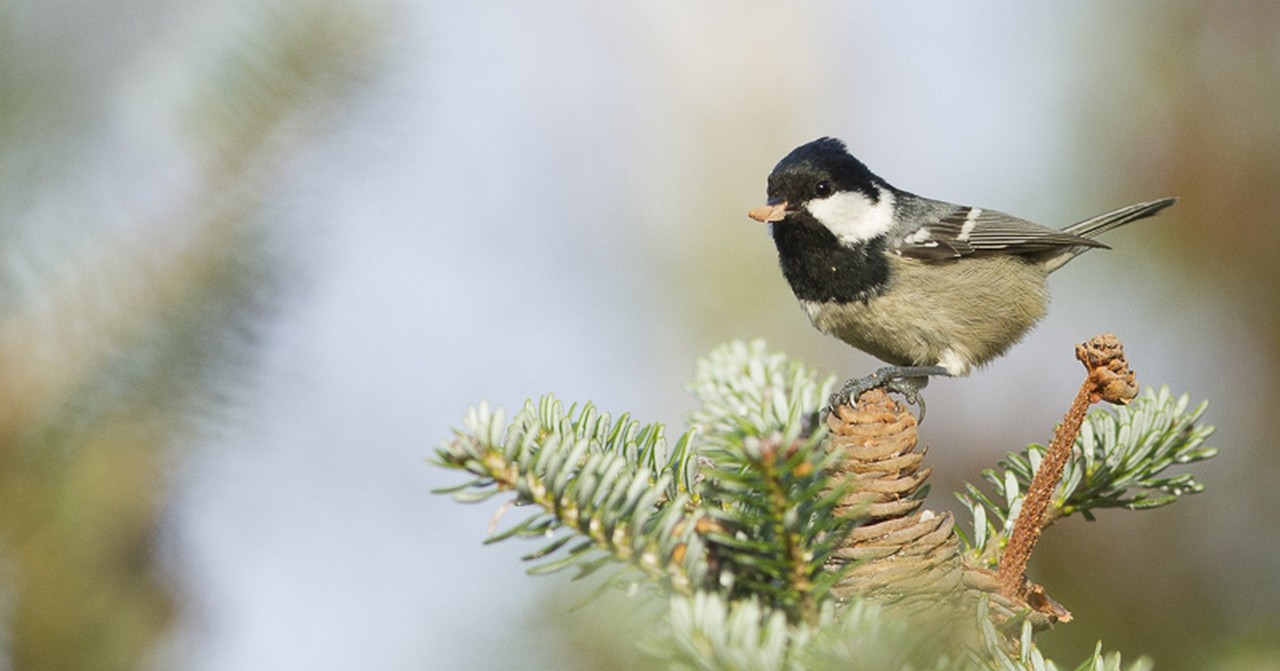 The fir trees planted in urban parks provide a good living habitat for many birds, such as the coal tit (pictured).
Urban forests are forests that grow either inside or next to urban areas. The plants of urban forest are not taken care of by humans, which makes them different from parks and other similar green spaces. Some urban forests are protected in order to conserve the area's biodiversity, whereas some exist to provide citizens with recreational walking, jogging or biking routes.
The animals found in parks and urban forests have grown used to humans. There are few predators and plenty of food for animals such as squirrels, hedgehogs, and even foxes. The bird species that can be spotted in urban areas are largely the same that can be found in natural forests, mostly consisting of various tit and thrush species.
 Hares are common inhabitants of urban forests and parks.