
10. Endangered forest species
Contents

10.1 Endangered species
Endangered species are living organisms that are threatened by extinction or disappearance from a certain region. Human activity has resulted in many species becoming endangered and extinct throughout history.
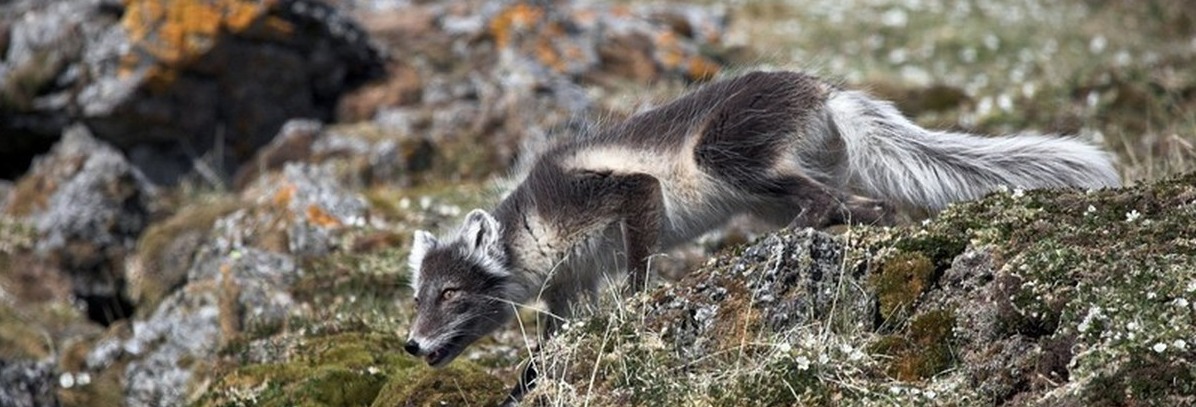
 The Arctic fox is an extremely endangered species.
Human activity threatens the continued survival of many species both directly and indirectly. For example, the Arctic fox has become endangered because of humans hunting it for its beautiful white fur. Human activity has also indirectly influenced the endangerment of the Arctic fox, as global warming has caused the species' habitats to grow smaller.
The most endangered species of our forests include the animals, plants and fungi that live in old, natural forests. Approximately 36 % of all the endangered species in Finland live in forests, of which over 80 % specifically live in old forests. The majority of these endangered species are either invertebrates or fungi.
10.2 Levels of endangerment
How to know whether a species is endangered or not? In order to answer this question, the International Union for the Conservation of Nature (IUCN) has classified species of living organisms in terms of their risk of extinction. This "Red List" is an useful tool in determining which species are threatened the most by human activity and what kinds of conservation efforts are required to keep the planet's species alive.
| Class | Explanation | Example species |
|---|---|---|
| Extinct (EX) | The species is extinct: no living individuals exist. | e.g. European mink in Finland |
| Critically endangered (CR) | The species is in an extremely critical state and will become extinct without succesfull conservation efforts. | greater spotted eagle, wolverine, Arctic fox |
| Endangered (EN) | The species has a very high risk of becoming extinct in the wild. | wolf, gyrfalcon |
| Vulnerable (VU) | The species is at risk of becoming extinct because of human activity. | bear, beaver, lynx, flying squirrel, peregrine falcon |
| Near threatened (NT) | The species' populations are not endangered, but it is close to being at high risk of extinction some time in the future. | mountain hare, roe deer, great horned owl |
| Least concern (LC) | The species' populations are stable and abundant. | e.g. most rodents |
Each category contains species at a specific level of becoming extinct or disappearing from a certain area. The conservation status of a species is calculated by monitoring changes in the species' population size and distribution. Conservation statuses are often estimated within different areas, such as in different nations. This is why one species can be extinct in Finland but still found living in the wild in Sweden.
The IUCN Red List should not be interpreted in a way that suggests that only the species that belong to the most critical categories need to be conserved and protected. In truth, nature conservation should be undertaken in a way that safeguards the survival of all the species of an ecosystem.
10.3 Gallery: Endangered forest species


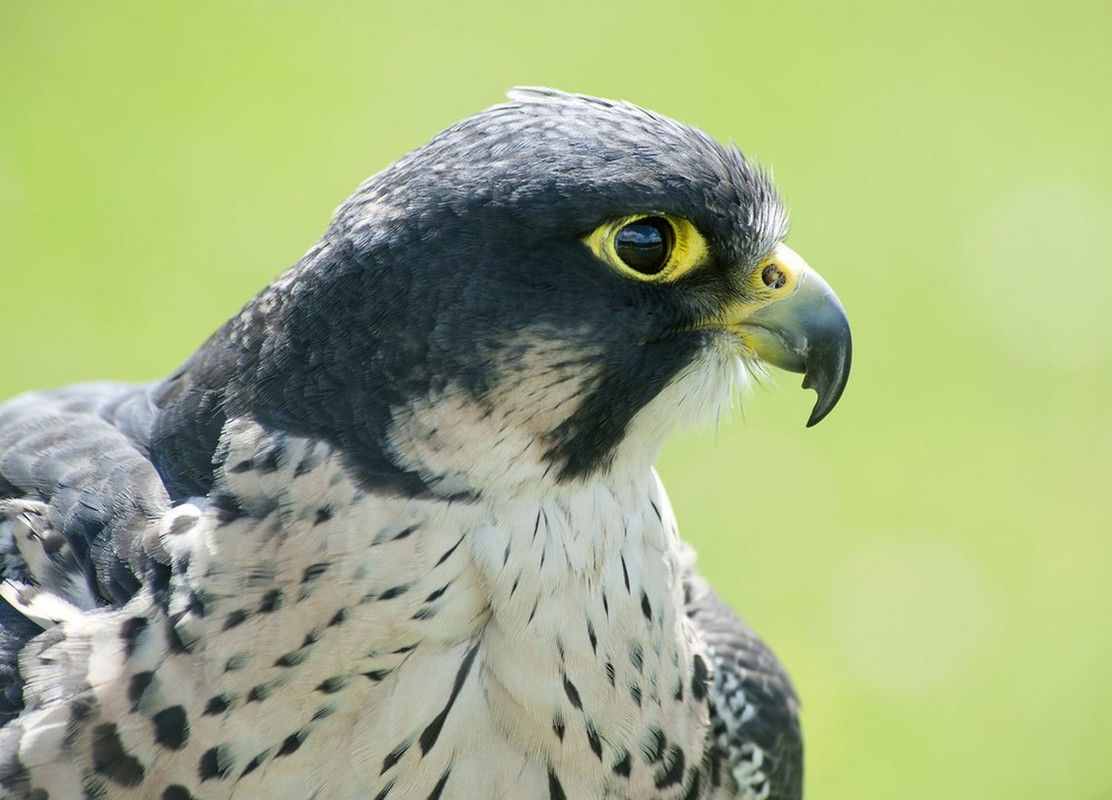


10.4 Gallery: Endangered predators


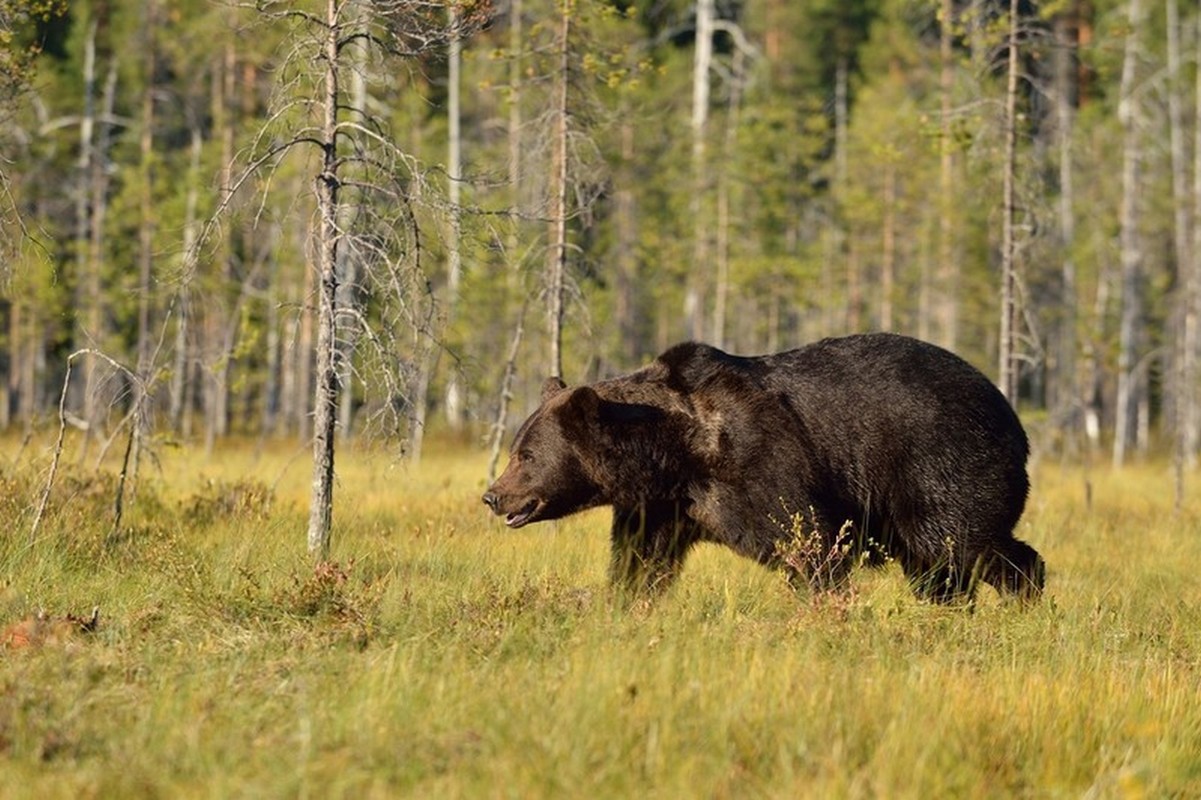

10.5 The case of Finnish forest reindeer
Finnish forest reindeer is no more considered an endangered species in Finland. However, this was not always the case.
Before the 19th century, the Finnish forest reindeer was common to Finnish forests. It was an important game animal that gradually became more widely hunted during the course of the 19th century. Excessive hunting caused the Finnish forest reindeer population to dwindle. Finally, it became a legally protected species in the year 1913. By this point, however, the Finnish roe deer population had already disappeared completely.
Despite being extinct in the nation for decades, the Finnish forest reindeer ultimately returned to Finland during the 20th century. During the 1940s and the 1950s, Finnish forest reindeer populations began to move from Karelia to Finland. Some individuals were moved by humans into the Suomenselkä region, where the Finnish forest reindeer has subsequently developed a healthy, abundant population. Finnish forest reindeer can nowadays be found specifically in the Kainuu region.
The tale of Finnish forest reindeer's disappearance and return is an example of how a species' conservation status can change over time. It also shows how human activity affects the wild species around us. Nowadays, Finland has an important role in the conservation of Finnish forest reindeer, because the animal is only found in Finland and in Northwest Russia. At the moment, the Finnish forest reindeer is considered a near threatened species, although globally speaking the species is distributed in a very small area and its population sizes are very small.
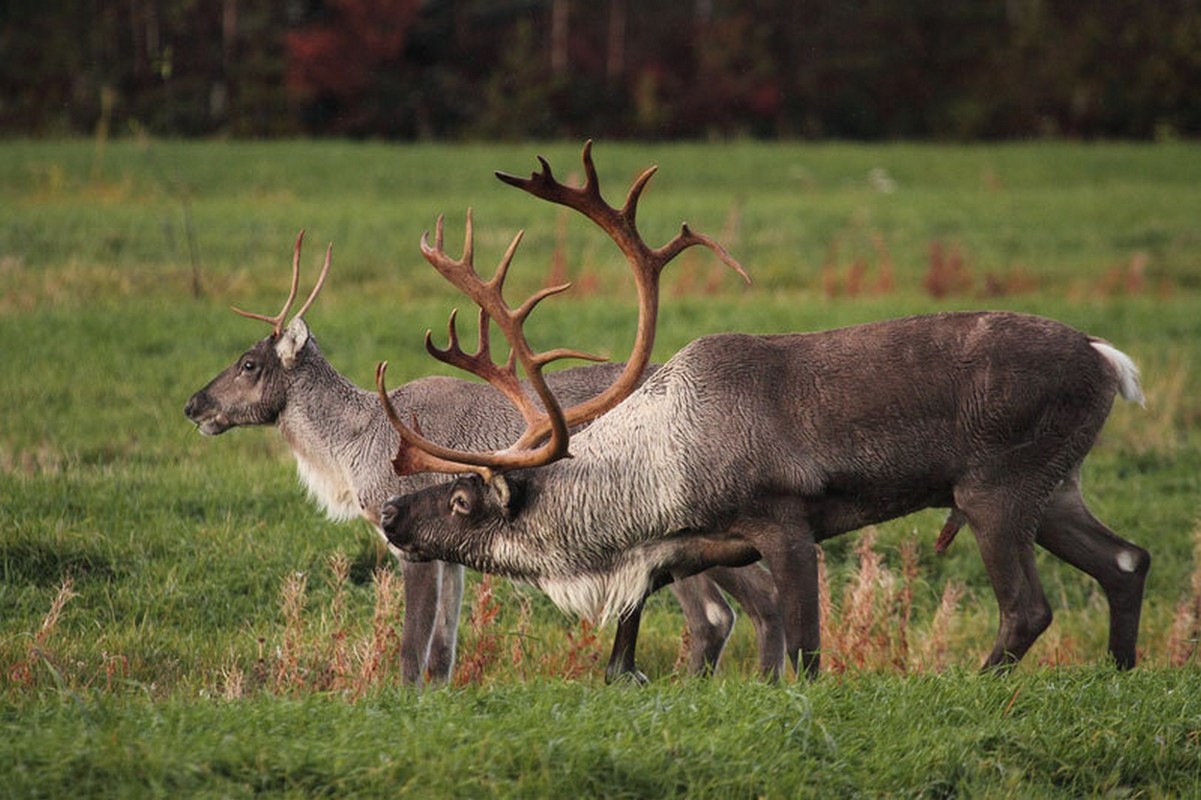
The Finnish forest reindeer both disappeared and returned to Finland during the 20th century.
10.6 Will the Arctic fox return?
A hundred years ago, the Arctic fox was a common species in Lapland. However, the species was hunted so effectively during the early 20th century that its populations decreased rapidly. The Arctic fox was determined a legally protected species in the year 1940. However, this has not been enough to revive the Arctic fox population in Lapland. It is still considered a critically endangered species, and it is the most endangered mammal species in Finland.
The reasons for the unsuccesfull recovery of the Arctic fox have puzzled scientists and conservationists alike. Although the habitats of the Arctic fox have grown smaller because of global warming, this is not enough to explain why the species continues to remain endangered. Other explaining factors include the worsening food situation in the tundra and the distribution of the red fox into Lapland.
There are approximately 200 Arctic foxes living in Lapland today, most of which live in Sweden. Without creative and succesfull conservation efforts, it may well be possible that the Arctic fox is doomed to become extinct in the wild.
10.7 Nature conservation
Nature conservation seeks to protect the environment and the biodiversity around us. This can be done by legislative means. In Finland, there are a number of legally protected forest areas. Most of them are located in Northern Finland, where the majority of state-owned wilderness areas and national parks can be found.
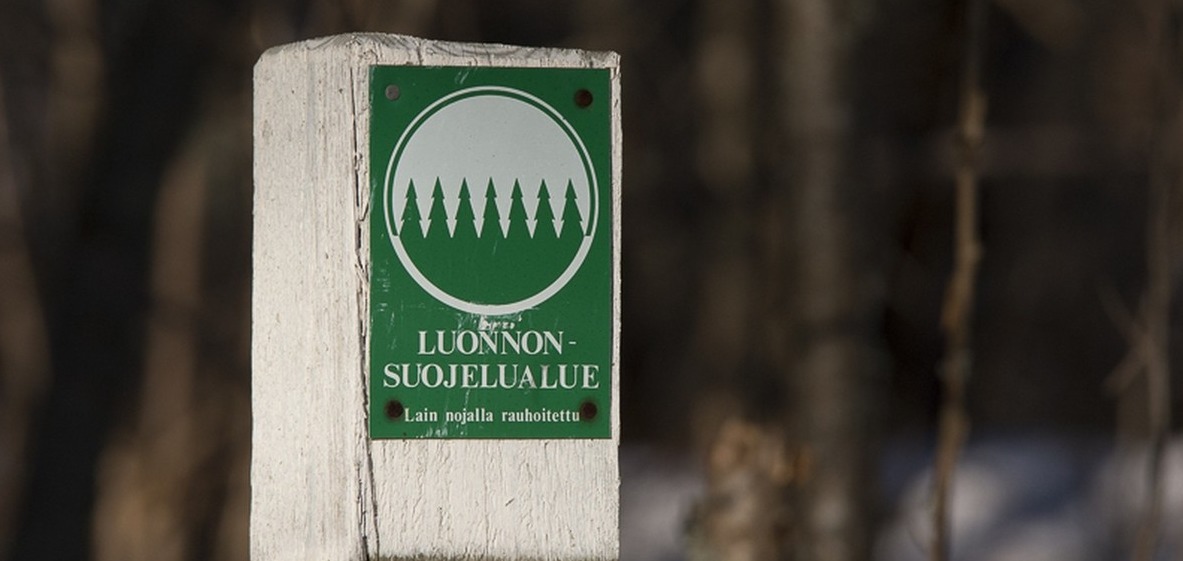
A pole marking a legally protected nature conservation area.
In contrast, most of the forests in Southern Finland are privately owned and used as fuel for the paper and wood industries. Increased industry and other human activities have severely decreased the amount of natural forests in Southern Finland. Protected forests comprise only two percent of the surface area of Southern Finland. The lack of natural forests has a drastic effect on the survival of many species of animals, birds, plants, and fungi, some of which thrive only in areas where there is no human influence.
In Finland, nature conservation is done through the Nature Conservation Act and the EU's Habitats Directive. Through these channels, it is possible to protect wilderness areas and their inhabitants with legislative means. Nature conservation efforts and awareness are also influenced by various non-governmental organizations, such as WWF and Greenpeace.