
13.2 Fells and their living conditions
Fell vegetation grows smaller and more scarce when moving from the bottom of the fell towards its bare summit. The difference in air temperature in different parts of a fell's slope can be up to a few degrees Celsius,
Fells are windy ecosystems. The wind-beaten slopes can lack loose soil almost completely, whereas sheltered areas can receive several meters worth of snow.

The stony slopes of fells are difficult habitats for plants.
Fells experience a relatively short summer. The last snows of the winter melt during June, whereas the autumn arrives in the beginning of August. This means that the growing season of plants in fell ecosystems is very short. The short summer leaves approximately two months for fell plants to grow, reproduce, and disperse their seeds. This is almost half the length of the growing season in Southern Finland.
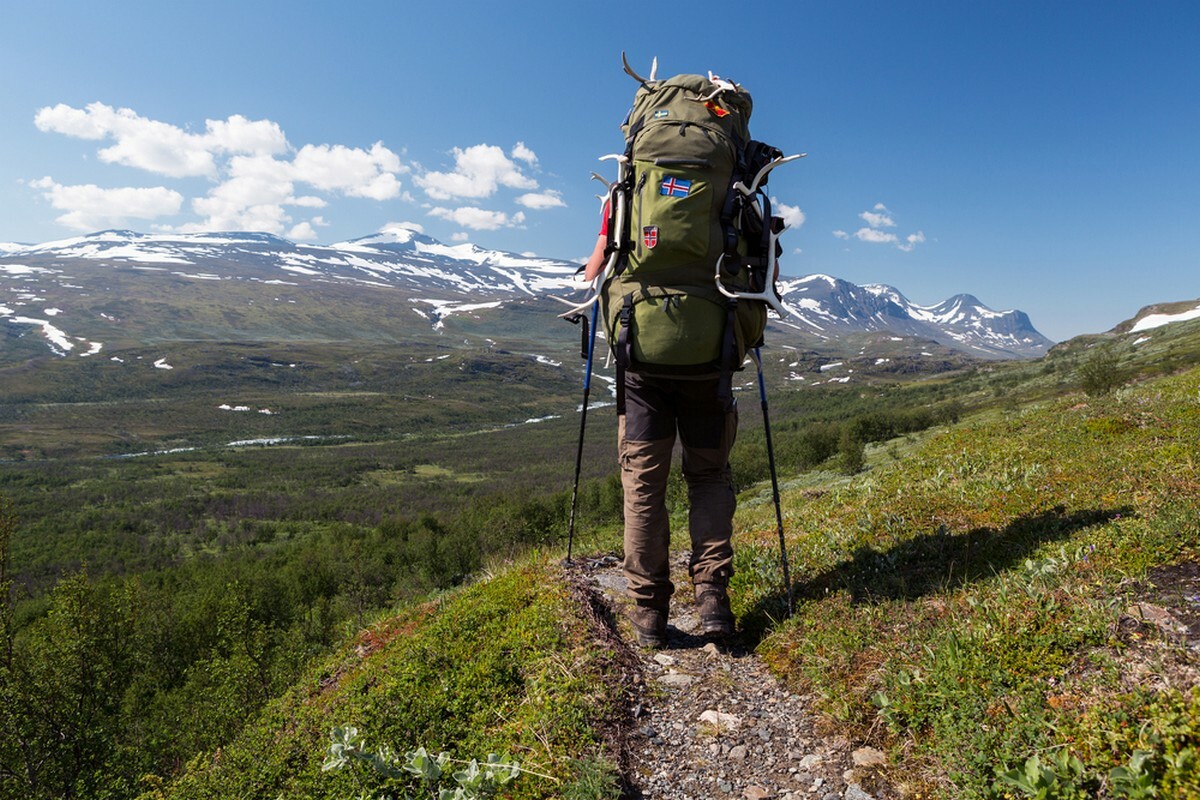
Plants and hikers alike benefit from the long summer days in the polar regions of the planet.