
12.1 Bogs and plants
How to know whether or not you are standing in a bog? The answer can be determined with the help of a long stick. If the stick can be stuck down in the soil for at least 20 centimeters, you are standing in a bog. The soil consists of soft peat.
Bogs are wet, peat-producing ecosystems. Peat is formed when dead plant parts decompose slowly in wet, cold and low-oxygen soil. Over time, the plant matter is concentrated into peat. This is how the bog's vegetation creates its own soil.
Bogs accomodate relatively few plants. Because peat is an acidic and wet soil type that is low in both oxygen and important nutrients such as nitrogen, only certain plant species such as peat moss and sprigs thrive in it. Bogs can be divided into open bogs, spruce bogs and pine swamps depending on the tree species most prominent in them. Open bogs are completely free of trees.
Finland is a relatively flat country with a wet and cold climate. The amount of rainfall exceeds the amount of water that is evaporated back into the atmosphere. This water can accumulate in pools and depressions that were created during the last ice age. This is why bogs are so common in Finland. They comprise almost one third of the nation's land surface area. This makes Finland the most boggy nation on the planet.
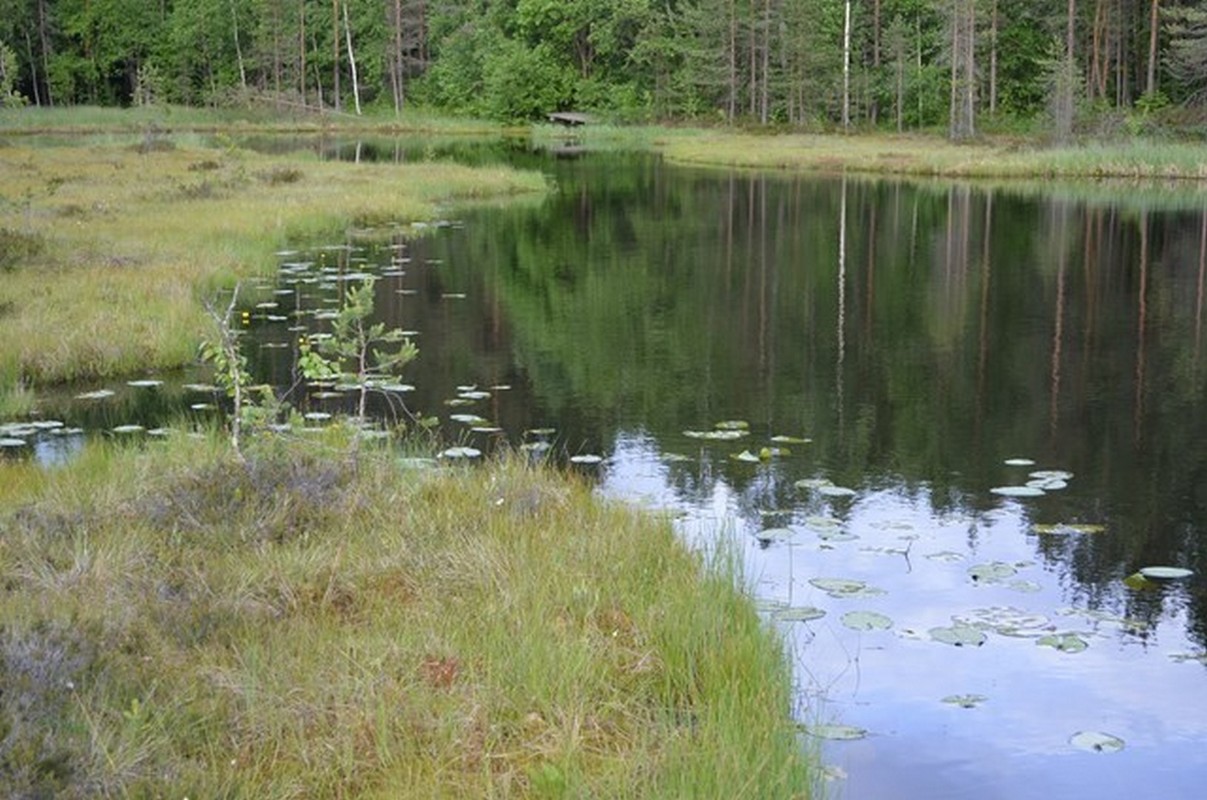
When a lake overgrows, bog vegetation spreads from the edges of the lake towards the center.