
9.7 Overwintering stratedies
The animals of the forest begin to prepare for the winter as soon as autumn begins. Many forest-dwelling animals have to eat more food in the autumn than they normally do in order to build up their fat layer. Fat layers help to keep animals warm during the cold winter months by acting as insulation.
Some animals, such as squirrels, gather food supplies for the winter. Some animals even change their diet completely during the winter. An example of such a change is found in the wood grouse, which eats berries during the autumn but survives mostly on pine needles during the winter.
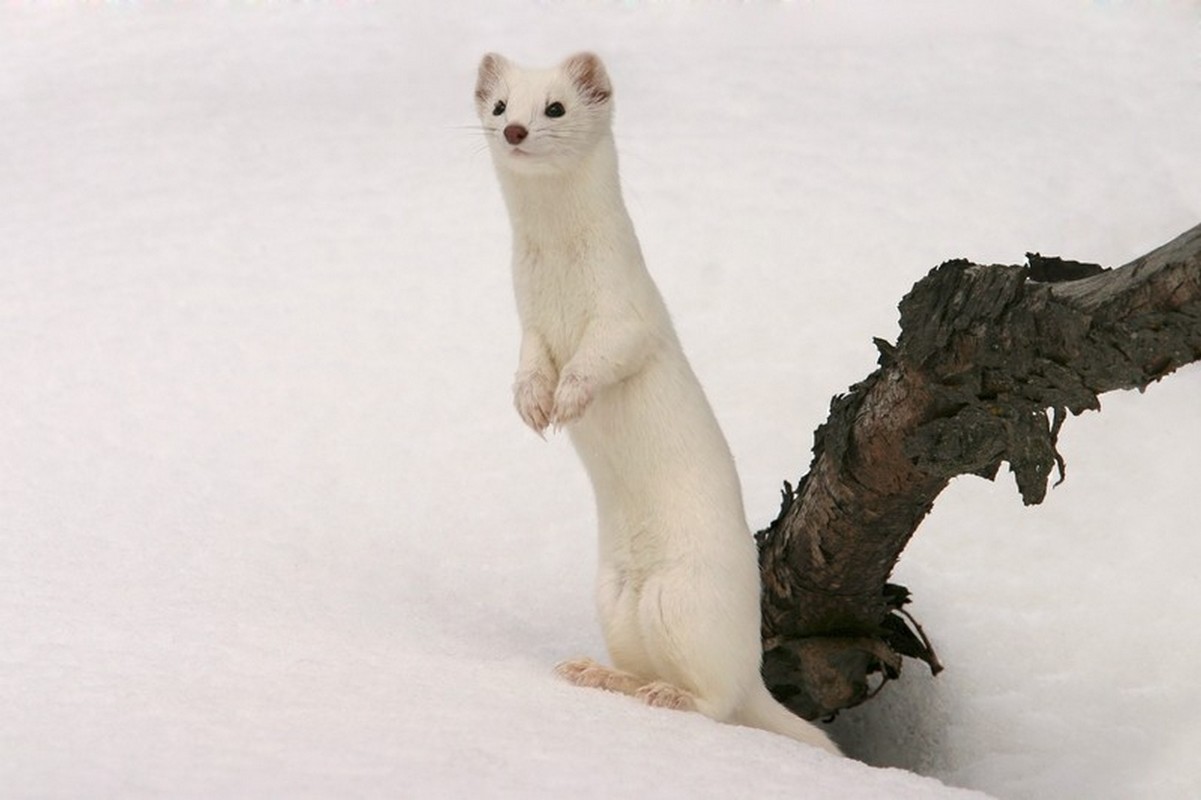
The stoat grows a white coat during the winter.
Many forest-dwelling animals change their fur coat or feathers during the winter. In most mammals and birds, the winter coat or plumage is significantly thicker and warmer than it is in the summer. In some species, such as the stoat and the mountain hare, the color of the winter coat is white, in order to act as camouflage when the animal roams the snowy forest.
Snow also offers animals protection from the cold air. Small mammals, such as voles, mice and shrew, spend the winter mostly in small tunnels they dig under the snow. These small animals have fast metabolisms, which means that they need a lot of food during the winter in order to stay warm.

The wood mouse spends most of its winter under the snow.