
8.4 Small mammals

Rodents are common forest inhabitants. They are mammals, and include species such as voles, mice, and squirrels. They are herbivores, and their front teeth have developed in a way that makes it easy for them to chew plants.
Hares are closely related to rodents. Like rodents, they have chisel-like teeth that are well suited to eating plant parts. Forests are mostly inhabited by mountain hares, whereas parks and fields are inhabited by brown hares. Rodents and hares are popular food among forest predators.
Various small insectivorous mammals can also be found in the forest. They are small mammals that eat insects and other invertebrates. They include species such as shrews and moles.
Moles live underground, where they dig tunnels and hunt for earthworms. They are mostly found in groves, where the soil type accommodates a lot of earthworms and is suitable for digging tunnels.
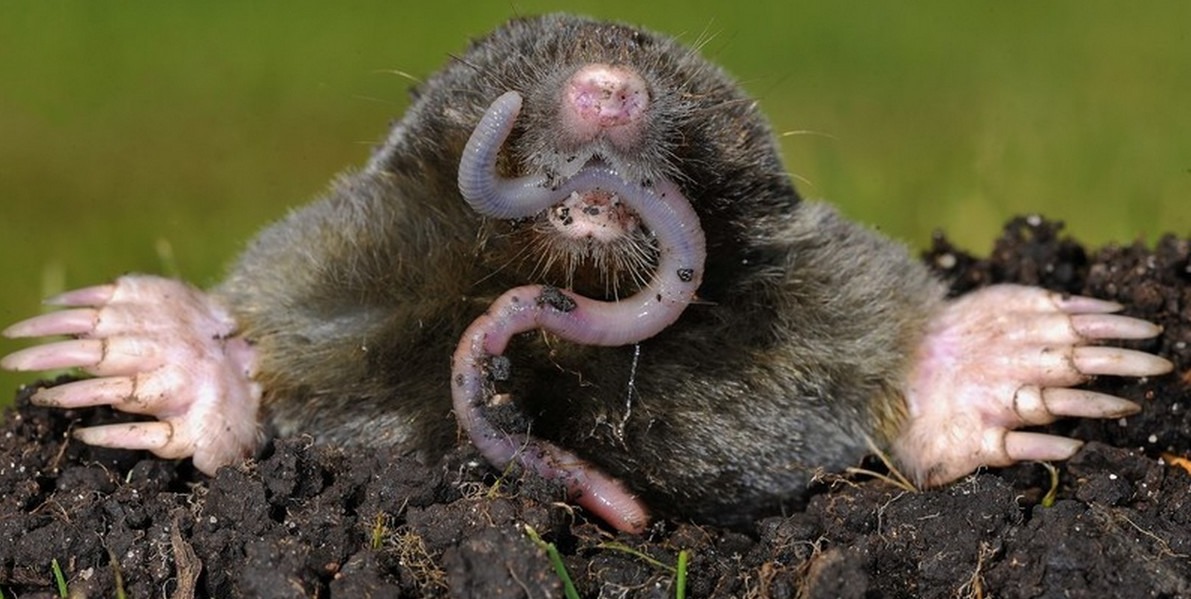 Moles dig underground tunnels.
All forest predators are not large. Some small mustelids can be found in the forest. These mammals, for example the weasel and the stoat, hunt mostly small vertebrates such as moles.