
8.1 Large species, few individuals
In the previous chapter, we examined the small but numerous species of forest invertebrates. In terms of forest vertebrates, the situation is the opposite: the species are large, but they are not as numerous as invertebrates.
Vertebratic animals have an internal supporting structure called a skeleton. They can be divided into homeothermic and poikilothermic animals depending on how they regulate their body temperature. Homeothermic or warm-blooded animals, such as birds and mammals, retain a stable body temperature. In contrast, the body temperature of poikilothermic or cold-blooded animals, such as reptiles and amphibians, changes depending to the temperature of their surroudning environment.
Many mammals and birds have their own territories. A territory is an area that is inhabited and defended by an individual or a group of organisms. Mammals and birds use their territories to search for food and to reproduce. Other individuals or herds of the same species are kept away from the territory. Because of these territories, only a limited amount of individuals can live in one forest. This is why forest vertebrates are less numerous than forest invertebrates.
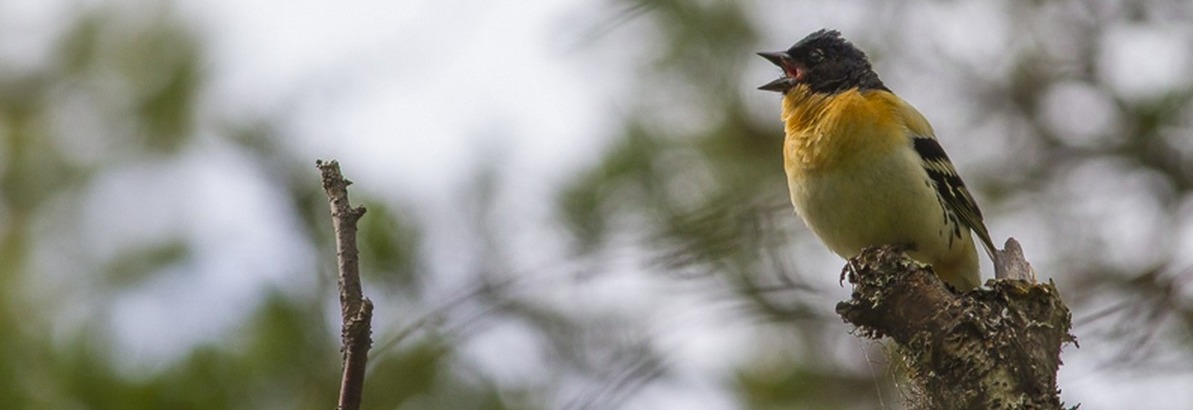
The brambling announces its territory by singing.
Large species need territories, because they make sure that the individuals receive enough food to sustain themselves. Because of their large size, large invertebrates require a lot of food to maintain their body temperature, to grow, and to reproduce.

| Group | Structure | Diet | Species | Other |
|---|---|---|---|---|
| Passerines: insectivores | thin beaks | insects | willow warbler, pied flycatcher | migrating birds |
| Passerines: seed-eaters | sturdy beaks | insects during the summer, otherwise seeds | chaffinch, crossbill | some species overwinter |
| Tits | thin beaks | insects and seeds | great tit | visit the bird feeder during the winter |
| Owls | thick plumage, tearing beaks | small rodents and birds | boreal owl, northern eagle owl | migrate when necessary |
| Hawks | tearing beaks | mammals and birds | sparrowhawk | fast predators |
| Woodpeckers | stiff tails, strong beaks | insects and seeds | great spotted woodpecker, black woodpecker | some species can visit the bird feeder |
| Group | Structure | Diet | Species | Other |
|---|---|---|---|---|
| Insectivores | small teeth | insects and worms | shrew, mole | spend the winter under snow |
| Deer | hooves | plant parts | moose, white-tailed deer, reindeer | many species are hunted |
| Rodents | small size, chisel-like teeth | plant parts | bank vole, wood mouse, squirrel | large changes in population sizes |
| Predators | suited for preying and hunting | other animals | pine marten, wolf, bear, lynx | some are omnivores |