
22. The digestive system
What is food?
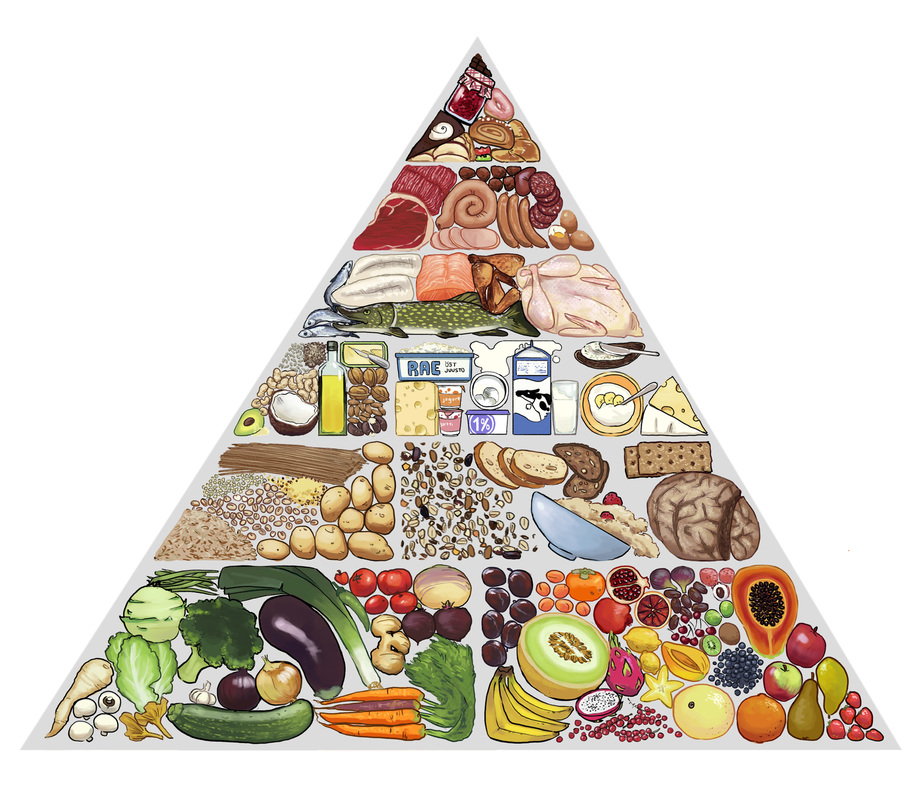 The human body needs food and water in order to function correctly. We eat food to gain energy.
 Carbohydrates (such as starch and sugar), proteins and fats contain energy. A wide-ranging diet also gives us many important vitamins and other substances.
Proteins consist of amino acids. The human body needs approximately 20 different amino acids in order to build new cells. This is why a wide-ranging diet is essential for a healthy lifestyle. Proteins and amino acids are found in foods like fish, meat, milk, beans and eggs.
Fats contain a lot of energy. This is why people who are trying to lose weight often try to stay away from fatty foods. Despite this, fats are important substances for our cells.
Our cells also need water in order to function properly. This is why our brain tells us when we are thirsty.
The digestive system
Teeth
 The first place we process food is the mouth. There, we use our teeth to cut up food into swallowable pieces.
 The milk teeth or baby teeth are the first teeth that a human develops. There are usually 20 of these teeth.
The baby teeth are replaced by a set of permanent teeth between the ages of 6 and 13.
The front teeth cut up the food we eat into manageable pieces. The teeth in the back of the mouth chew and process food into even smaller pieces.
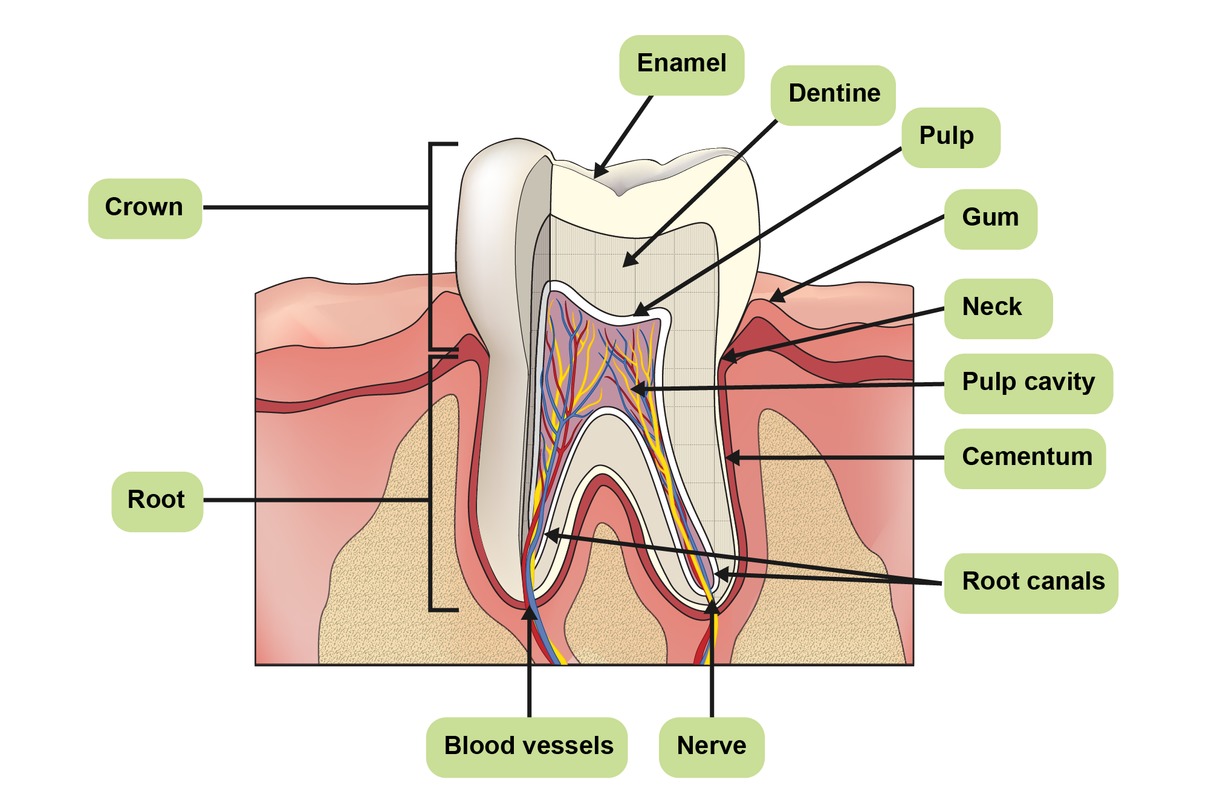
The teeth are connected to the jaw with their long roots. The surface of the teeth is protected by a layer of durable enamel. It protects the dentines, which are the actual bony parts of teeth.
Eating too much sugar is bad for your teeth. It feeds the bacteria that live in your mouth and wear down your teeth.
Brushing your teeth regularly is a good way to take care of your teeth. Eating a xylitol-rich chewing gum also helps.
What happens to food in our bodies?
 The gastrointenstinal tract begins at the mouth and ends at the rectum. It is where the digestion of food takes place. During digestion, the body breaks down the food we eat and processes all of its important energy and substances. These substances are then transmitted into other parts of the body via the circulatory system.
The digestion of food begins at the mouth. There, the teeth cut up the food into manageable, swallowable pieces. At the same time, the mouth secretes spit, which helps to break down the food. After being swallowed, the food then travels into the stomach through the esophagus. In the stomach, the food is broken down into liquid.
From the stomach, the processed food continues its journey into the small intestine. There, the food is processed with the help of substances secreted by the liver and the pancreas. In the small intestine, the food is broken down into even smaller particles. The substances and energy contained it are absorbed by the blood vessels of the small intestine.
After travelling through the small intestine, the food reaches the large intestine. There, the water from food is absorbed into the bloodstream. After this, all the material that has not yet been processed is removed from the digestive system through the rectum and the anus.
Terminology
| Term | Explanation |
|---|---|
| carbohydrate | An energy-containing substance. E.g. sugar, starch and cellulose. |
| protein | An energy-rich substance that consists of amino acids. |
| fat | An energy-rich substance. |