
13. Fells
Contents
13.1 Fells are treeless ecosystems
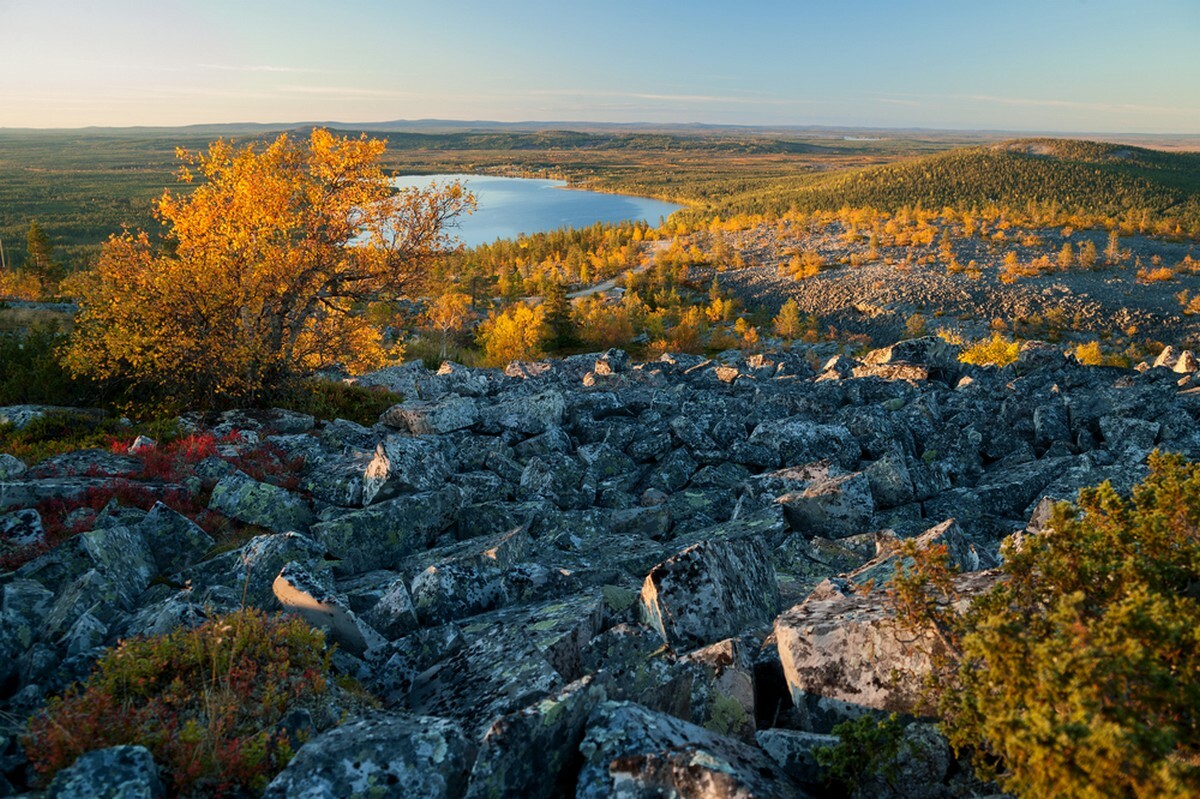
 Fells are mountaineous ecosystems. They can be defined as old, flattened orogenic mountains the peaks of which reach elevations where tree growth is not possible.
In Finland, there are no snow-capped mountain ranges like the Central European Alps, but there are a lot of fells. They can be found specifically in Northern Lapland.
The harsh conditions of these fells make them unique ecosystems. Although the number of plant and animal species is lower in fells than in forests and other more temperate ecosystems, many species can only be encountered in fell regions.
Most of the surface area of Finnish Lapland consists of coniferous forest, but in higher elevations some species common to the tundra can be found.
13.2 Fells and their living conditions
Fell vegetation grows smaller and more scarce when moving from the bottom of the fell towards its bare summit. The difference in air temperature in different parts of a fell's slope can be up to a few degrees Celsius,
Fells are windy ecosystems. The wind-beaten slopes can lack loose soil almost completely, whereas sheltered areas can receive several meters worth of snow.

The stony slopes of fells are difficult habitats for plants.
Fells experience a relatively short summer. The last snows of the winter melt during June, whereas the autumn arrives in the beginning of August. This means that the growing season of plants in fell ecosystems is very short. The short summer leaves approximately two months for fell plants to grow, reproduce, and disperse their seeds. This is almost half the length of the growing season in Southern Finland.

Plants and hikers alike benefit from the long summer days in the polar regions of the planet.
13.3 Vegetation and elevation
The lower parts of fells often consist of northern coniferous forest. Spruce can be found growing in wet regions, whereas pines dominate dryer areas. In the northernmost parts of Lapland, the lower parts of fells are dominated by mountain birch. The mountain birch is a variation of the white birch that grows low and curved trunks. It has adapted to the harsh conditions of the northern fells.
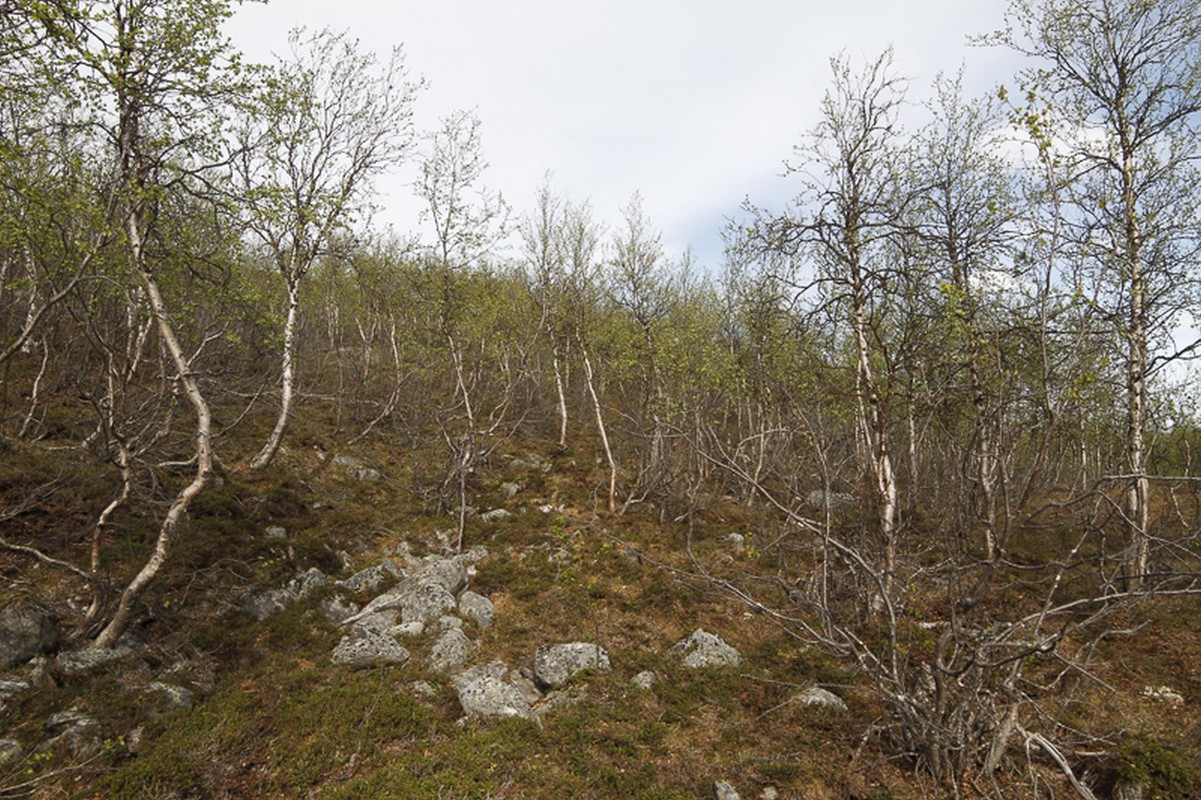
A forest of mountain birch.
A number of sprigs, such as crowberries and dwarf birch, as well as lichens, grow near the ground level of northern mountain birch forests. Above the mountain birch forests, only individual trees and small sprigs can be found. No trees grow on the high and flat fell summits.

Fell vegetation changes according to elevation. Joatka, Norway.
13.4 Fell animals
Most of the vertebrate species found in fell ecosystems are the same as the ones encountered in coniferous forests. As the elevation of the fell increases, coniferous forests give way to mountain birch forests and finally to bare fell summits. These environments accommodate their own species.
The low vegetation found on fell summits is beneficial for rodents, such as voles. The rodent species best adapted to the harsh conditions of the fells is the Norway lemming.
 Norway lemmings can be found on fell slopes.
The Arctic fox is a predator that is specialized in hunting fell-dwelling rodents. However, the population of Arctic foxes has decreased rapidly during the course of the last few centuries, and the species is now considered critically endangered. Aside from reindeer, other large mammal species are hard to find in fell ecosystems.
The most common bird species of fell ecosystems include the willow grouse and the rock ptarmigan. Rock ptarmigans inhabit areas well over the tree line, whereas willow grouse thrive in lower elevations. Many bird species common to tundra regions also like to use fell summits as their nesting areas. The snow bunting, the Eurasian dotterel and the long-tailed skua are examples of such species.

Like its name suggests, the rock ptarmigan blends in well on rocky fell slopes.