
8. Forest vertebrates
Contents
8.1 Large species, few individuals
In the previous chapter, we examined the small but numerous species of forest invertebrates. In terms of forest vertebrates, the situation is the opposite: the species are large, but they are not as numerous as invertebrates.
Vertebratic animals have an internal supporting structure called a skeleton. They can be divided into homeothermic and poikilothermic animals depending on how they regulate their body temperature. Homeothermic or warm-blooded animals, such as birds and mammals, retain a stable body temperature. In contrast, the body temperature of poikilothermic or cold-blooded animals, such as reptiles and amphibians, changes depending to the temperature of their surroudning environment.
Many mammals and birds have their own territories. A territory is an area that is inhabited and defended by an individual or a group of organisms. Mammals and birds use their territories to search for food and to reproduce. Other individuals or herds of the same species are kept away from the territory. Because of these territories, only a limited amount of individuals can live in one forest. This is why forest vertebrates are less numerous than forest invertebrates.

The brambling announces its territory by singing.
Large species need territories, because they make sure that the individuals receive enough food to sustain themselves. Because of their large size, large invertebrates require a lot of food to maintain their body temperature, to grow, and to reproduce.

| Group | Structure | Diet | Species | Other |
|---|---|---|---|---|
| Passerines: insectivores | thin beaks | insects | willow warbler, pied flycatcher | migrating birds |
| Passerines: seed-eaters | sturdy beaks | insects during the summer, otherwise seeds | chaffinch, crossbill | some species overwinter |
| Tits | thin beaks | insects and seeds | great tit | visit the bird feeder during the winter |
| Owls | thick plumage, tearing beaks | small rodents and birds | boreal owl, northern eagle owl | migrate when necessary |
| Hawks | tearing beaks | mammals and birds | sparrowhawk | fast predators |
| Woodpeckers | stiff tails, strong beaks | insects and seeds | great spotted woodpecker, black woodpecker | some species can visit the bird feeder |
| Group | Structure | Diet | Species | Other |
|---|---|---|---|---|
| Insectivores | small teeth | insects and worms | shrew, mole | spend the winter under snow |
| Deer | hooves | plant parts | moose, white-tailed deer, reindeer | many species are hunted |
| Rodents | small size, chisel-like teeth | plant parts | bank vole, wood mouse, squirrel | large changes in population sizes |
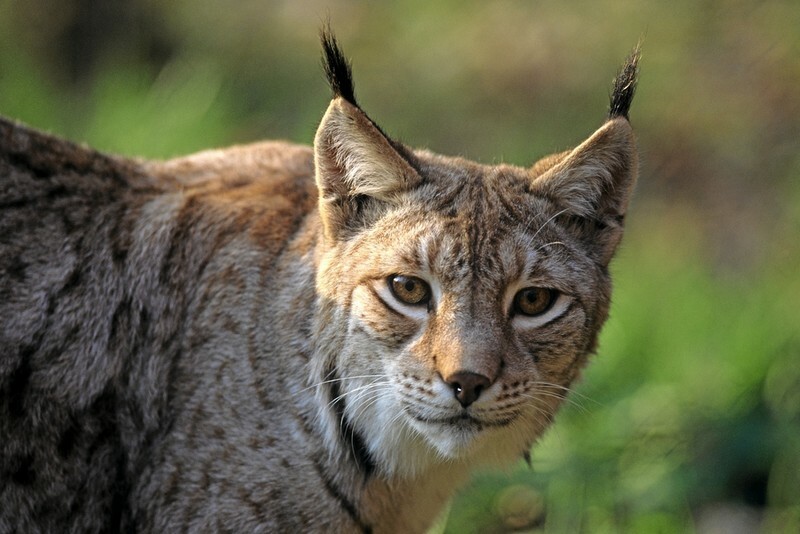
| Predators | suited for preying and hunting | other animals | pine marten, wolf, bear, lynx | some are omnivores |
8.2 Deer and moose
The forest of Northern Europe are home to only a few large herbivorous animals when compared to some other biomes of the planet, such as the African savannas.
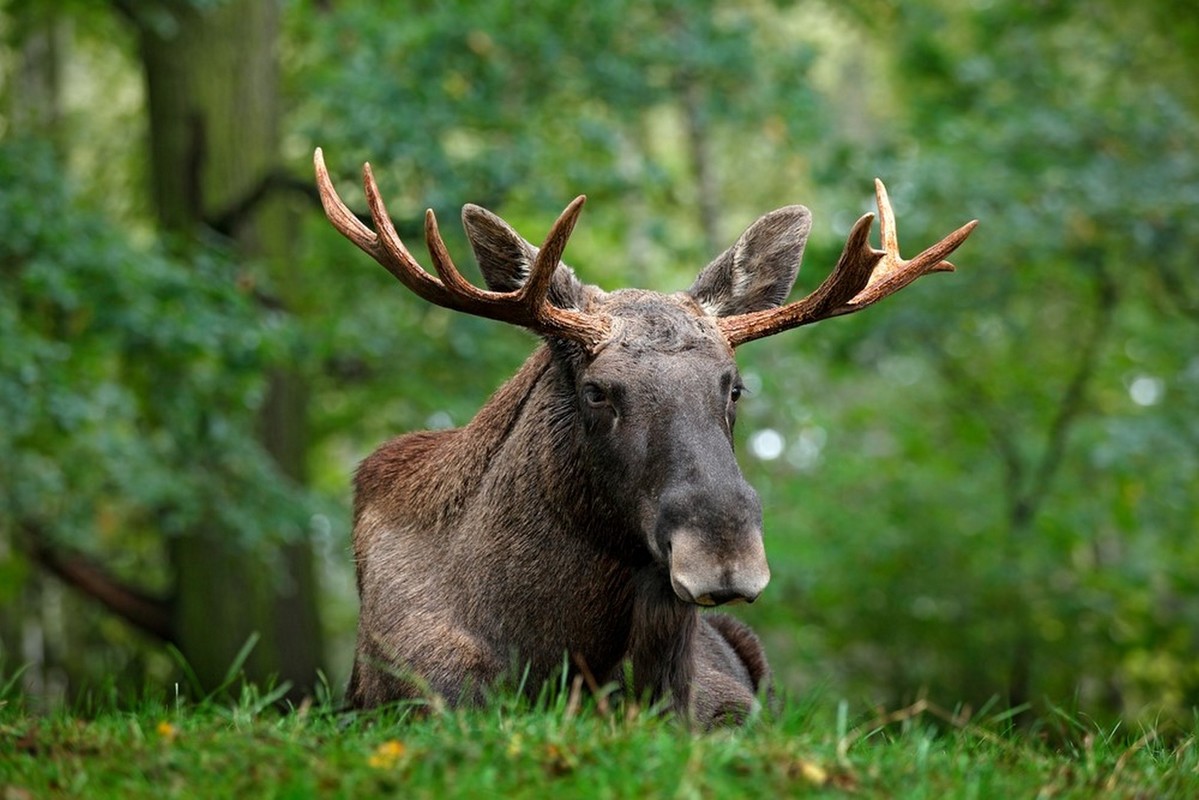
The best-known and largest forest-dwelling herbivore is the moose. Moose live in small herds during the winter and roam the forests either alone or in small groups during the summer. Although the sizes of moose populations are relatively small, they have large effects on forestry, in particular. Moose eat a lot of plants, especially enjoying the branches and saplings of trees such as pine. As a result, forest vegetation is often severely damaged by large moose populations.
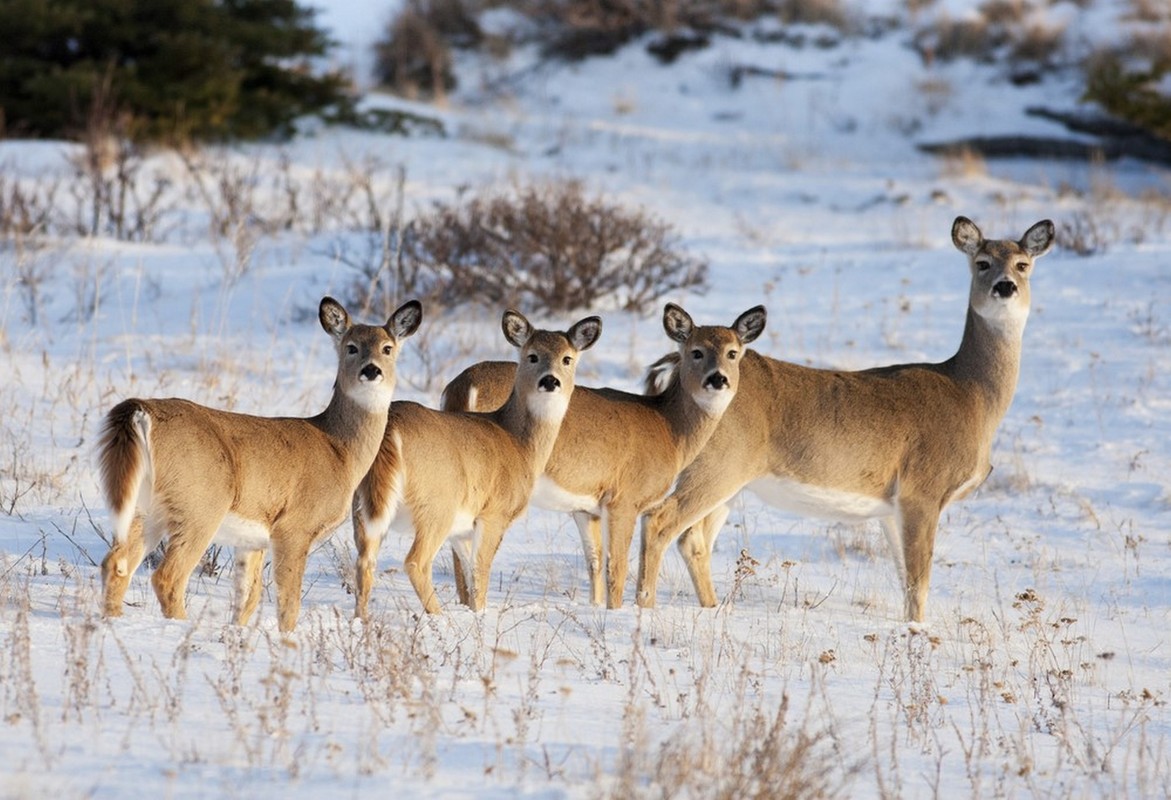
Other forest-dwelling deer include species such as roe deer, forest reindeer and white-tailed deer. Large populations of reindeer are found in Lapland, but they are mostly not wild animals but ratherlivestock taken care of by humans.

The moose is the largest forest-dwelling herbivore of Northern Europe.
8.3 Predators
Predators are animals that use other animals as their food source. They are second degree consumers.
A bear and wolves devouring a carcass of a dead animal.
The best-known forest-dwelling predators are mammals, such as the wolf, the wolverine, the bear, and the fox. Wolves and wolverines are carnivores, whose diet consists completely of other vertebratic animals. In contrast, bears and foxes are omnivores that also eat plant parts such as berries and seeds.
Forests are also home to various predator birds, such as hawks, eagles, and owls. They can be carnivores whose their diet consists of small mammals or other birds. There are also some omnivorous bird species. For example, the hooded crow can eat other birds, but will also eat berries and seeds.

The fox is an omnivorous predator: it can eat other animals as well as plant parts, such as berries.
8.4 Small mammals

Rodents are common forest inhabitants. They are mammals, and include species such as voles, mice, and squirrels. They are herbivores, and their front teeth have developed in a way that makes it easy for them to chew plants.
Hares are closely related to rodents. Like rodents, they have chisel-like teeth that are well suited to eating plant parts. Forests are mostly inhabited by mountain hares, whereas parks and fields are inhabited by brown hares. Rodents and hares are popular food among forest predators.
Various small insectivorous mammals can also be found in the forest. They are small mammals that eat insects and other invertebrates. They include species such as shrews and moles.
Moles live underground, where they dig tunnels and hunt for earthworms. They are mostly found in groves, where the soil type accommodates a lot of earthworms and is suitable for digging tunnels.
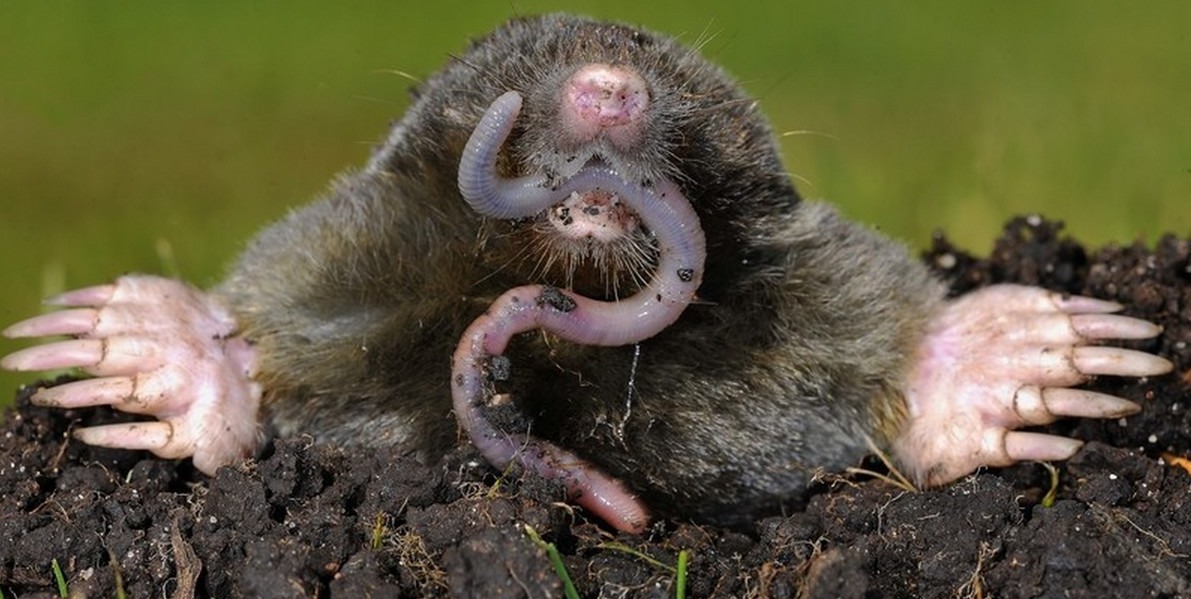 Moles dig underground tunnels.
All forest predators are not large. Some small mustelids can be found in the forest. These mammals, for example the weasel and the stoat, hunt mostly small vertebrates such as moles.
8.5 Gallery: Forest mammals

www.shutterstock.com

www.shutterstock.com

www.shutterstock.com

© Oskari Härmä ja e-Oppi Oy

Shutterstock.com

© Simo Veistola & e-Oppi Oy. Kuva otettu Forssan luonnonhistoriallisessa museossa.
Shutterstock.com

www.shutterstock.com
www.shutterstock.com

© Oskari Härmä & e-Oppi Oy

Shutterstock.com

www.shutterstock.com

Shutterstock.com
8.6 Forest birds
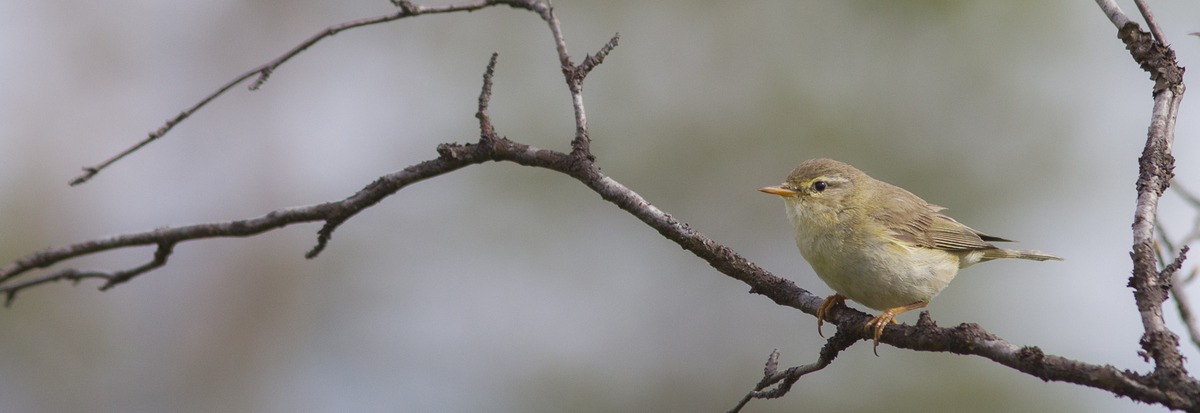 The song of the willow warbler can be heard in the forests of Northern Europe.
The forest's soundscape is dominated by birds. During spring and summer, birdsong can be heard everywhere in nature. Why do birds sing?
Birds sing mostly during their reproductive season, which takes place during the spring and summer months. Their songs have two functions. The male birds attract females with their song in order to reproduce and nest. However, male birds also sing for other males. By doing so, they announce their territory, protecting it from other males.
The best-known songbirds include the chaffinch and various thrushes, such as the blackbird and the redwing. The willow warbler and the tree pipit are some of the most numerous forest-dwelling birds, but their songs are less often identified.
The majority of forest-dwelling songbirds are migrating birds. They migrate to the south for the cold winter months and return back north during the spring.