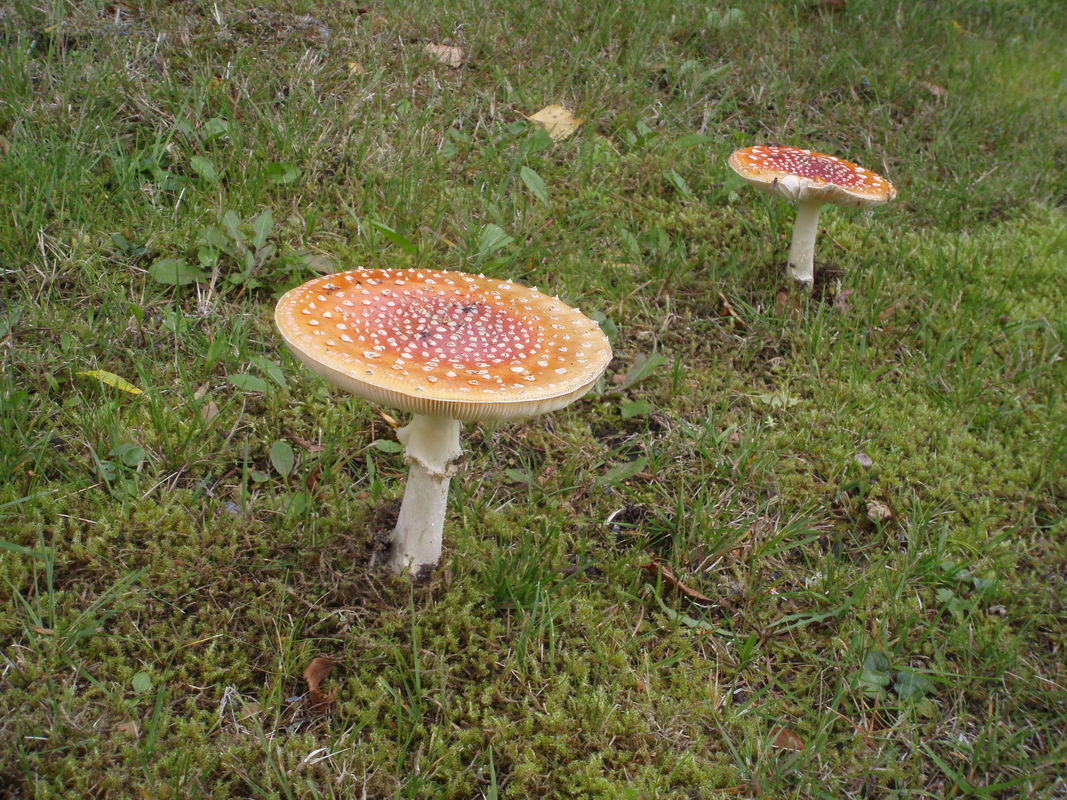
4. Fungi of the forest
Contents

4.1 Experiences
 Discuss your previous experiences of fungi.
- Have you ever been mushroom picking? If you have, what kinds of mushrooms have you picked?
- Do you like mushrooms in food? What kinds of mushrooms? If you do not like mushrooms in food, explain why that is.
- Have you ever tasted food spoilt with mold? Why does food grow moldy?
- Have you seen trees or other plants damaged by a fungal disease?
4.2 Fungi of the forest
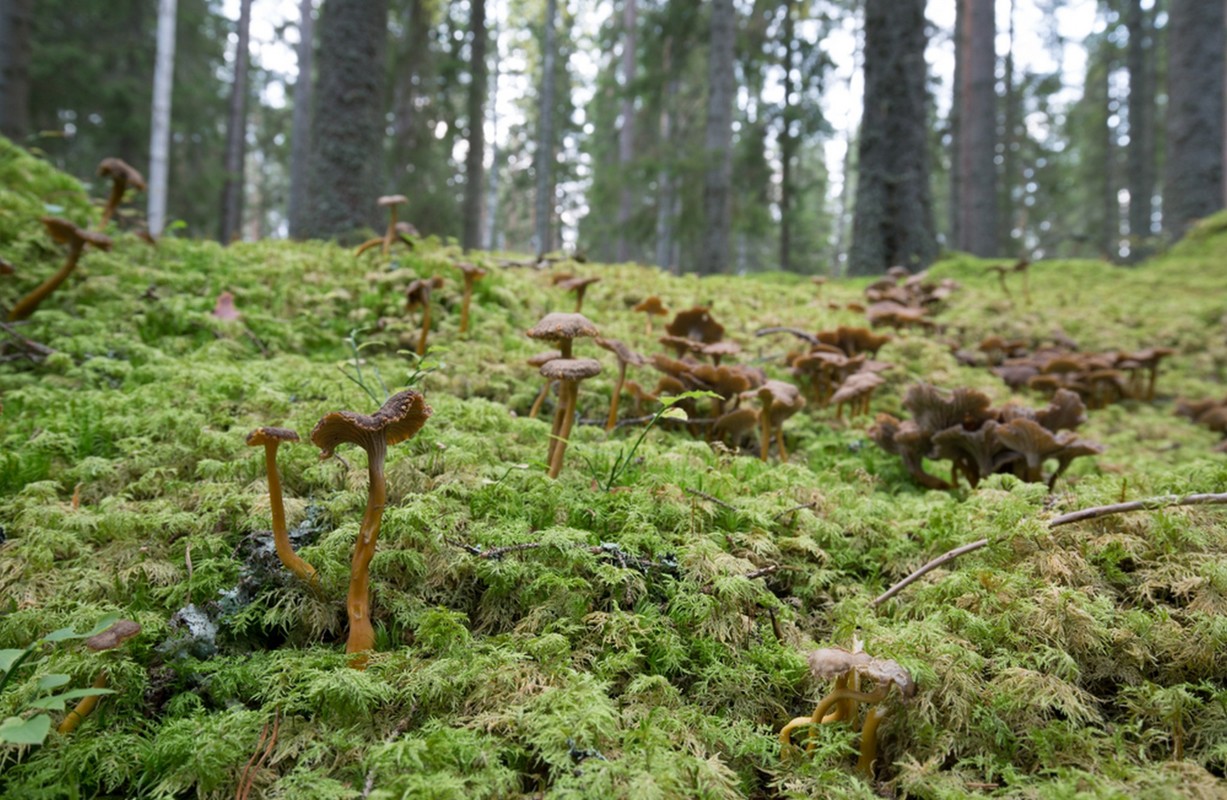 Fungi are everywhere in the forest. They can be found growing on the branches, trunks and roots of trees, as well as on fallen trees and on tree stumps.
There are numerous fungi in the ground beneath our feet. If the forest floor is studied with a microscope, small fungi can be seen growing among the ground level vegetation.
The ecosystem of the forest would not function without fungi. Other organisms rely on fungi either directly or indirectly. For example, the forest trees discussed in the previous chapter could not grow without the help of fungi that live in connection with their root systems.
4.3 Neither plants or animals
Fungi share a number of characteristics with plants. Both types of organisms seem to grow upwards from the ground and to stay in one place. Despite these similarities, fungi are not plants.
Unlike autotrophic plants, fungi are not capable of photosynthesis. This means that unlike plants, fungi cannot produce their own energy. Instead, fungi are heterotrophic organisms that gain their energy by feeding on the compounds created by other organisms. In this sense, fungi are similar to animals.
However, many features of fungal cells, tissues, reproduction, and genome make them different from both the animal and plant kingdoms. Therefore, fungi are unique organisms that comprise their own fungi kingdom.

The traditional kingdom classification of living organisms. Like plants, animals, and protists, fungi are eukaryotic, meaning that their cells have nuclei and specialized organelles.
The fungi kingdom is a diverse group of organisms. There are over 100 000 known species of fungi, but the actual number of different fungi species in the world may well be in the millions.
Most fungi are microscopically small, even unicellular. They exist everywhere around us: in the soil, in plants, in animals, and even in other fungi. We notice these microfungi for example when the bread in our pantry grows moldy.
The larger, more visible types of fungi are called macrofungi. They can grow fruit bodies, which we usually call mushrooms. Macrofungi are also prevalent in the environment around us.
4.4 Fungal cells and mycelia
The structure of a fungal cell is similar to that of a plant cell. However, fungal cells do not have photosynthetic chloroplasts.
Like all other living organisms, fungi consist of cells. Fungal cells are similar to plant cells, but they lack the plant cells' chloroplasts. Because of this, fungi are not capable of photosynthesis.
Fungi cells are joined together into branching mycelia. These mycelia grow in large quantities in the forest soil and in rotting wood. Most of the fungal mass of any forest consists of these mycelia, with actual visible mushrooms only constituting a small fragment of the total fungal mass.
 A microscopic image of the mycelium of a certain polypore fungus.
4.5 Mushroom structure
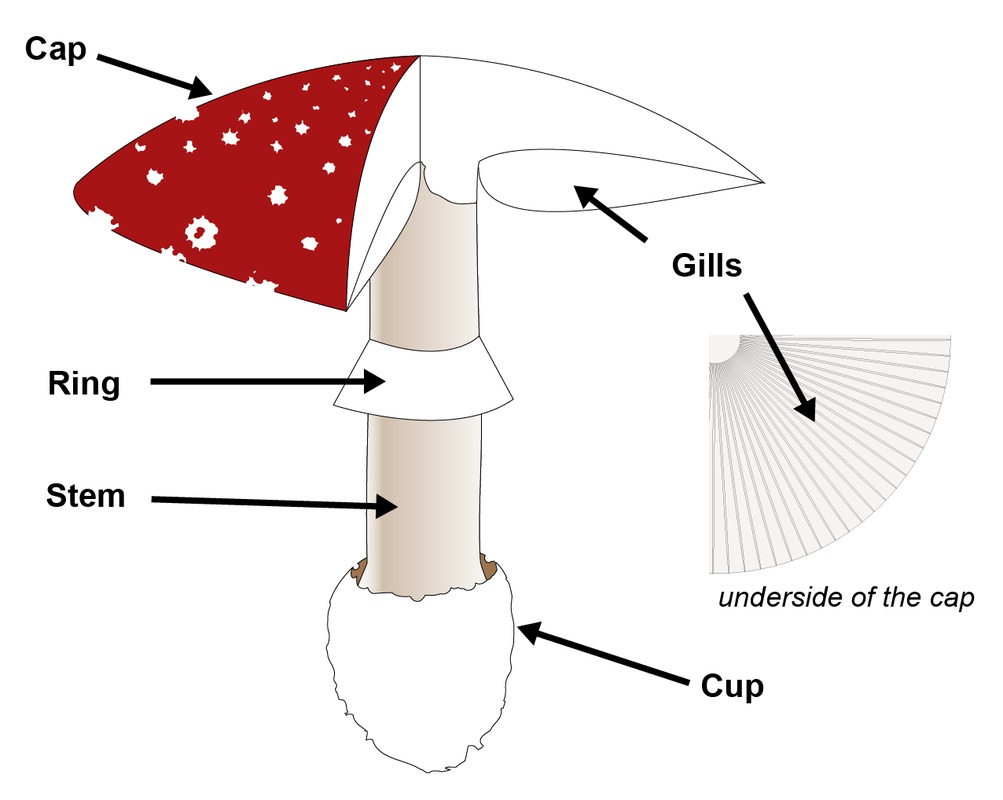
Fungi reproduce via spores. To produce them, fungi must produce specialized fruit bodies. To us, they are the most visible parts of fungi, and the fruit bodies of many fungi are used as food. Most of the fungi you encounter in the forest will have a similar fruit body structure.
The top part of the fruit body consists of a cuticled cap. The underside of the cap can contain either gills, tubes or spikes, depending on the species. The cap is connected to the stem of the fruit body.
In some species, such as the poisonous fly amanita, the top part of the stem can contain a ring. Fly amanita mushrooms also contain a cup, which is located at the bottom of the stem.
4.6 Symbiosis
As fungi are heterotrophic organisms, they have developed different ways to gain energy produced by other organisms. Many fungi of the forest, such as boletes, milk caps, and chanterelles, gain energy by living in symbiosis with trees and other plants. Symbiosis is a kind of a mutually beneficial relationship between two organisms. Together, the mycelium of the fungus and the roots of the tree form a structure called a mycorrhiza.
Through the mycorrhiza, the fungus recieves sugars produced by the tree during photosynthesis. In return, the tree receives water and nutrients gathered by the fungus. Therefore, both the fungus and the tree benefit from their symbiotic relationship.

The mycorrhiza transports photosynthesis products, nutrients and water between a fungus and the roots of a plant.
Many forest plants need their fungal partners to thrive and grow. For example, the roots of the pine tree are incapable of gathering enough water and nutrients without the help of a symbiotic fungi. Similarly, fungi are also reliant on their plant partners.

The pine bolete lives in symbiosis with a pine tree.
Lichens are also part of the fungi kingdom. They consist of two symbiotic parts: a fungus and an alga. Most of a lichen's body consists of fungal cells, but photosynthetic algal cells can be found on its surface.
The algal part of the lichen produces sugars during photosynthesis, which are used by the fungal part as a source of energy. In return, the fungal part provides the algal part with a surface to grow on, as well as giving it access to more water and nutrients.

Reindeer lichen.
4.7 Decomposers

Large amounts of dead matter are produced in nature constantly. This dead matter needs to be decomposed and the nutrients contained within it brought back to the use of the forest's producers in order for the ecosystem to function.
In nature, this decomposition is done by many invertebrates, bacteria, and fungi. The importance of fungi decomposers can be seen when studying the leaf and needle litter found on the forest floor. Numerous fungal mycelia run through this litter, gaining energy by breaking down the chemicals contained within it.
Many polypores found in the forest are examples of such decomposer fungi. The picture on the right shows a decaying birch trunk being broken down by a polypore fungus.
4.8 Parasites
 In addition to living in symbiosis with plants and decomposing dead organisms, mushrooms can also gain energy by acting as parasites.
Parasites are organisms that gain their energy by feeding on other living organisms. Many fungi live as parasites on tree trunks or in other plants. For example, many polypore fungi cause significant damage to pine and spruce trees.
Most plant diseases are caused by fungi. Many fungi that cause plant diseases are microscopically small.
4.9 Uses of fungi
We are all familiar with fungi as food ingredients. The fruit bodies of different fungi can be added to salads, soups, sauces, or pizza. Fungi are relatively healthy and nutritious food. However, fungi can be used in other ways, as well.
Some fungi can be used as the source of dyes for clothes and fabrics. For example, the inedible blood red webcap, sopimattomat veriseitikki, surprise webcap and poison pax are excellent dye mushrooms.

The blood red webcap can be used to dye clothes and fabrics.
Yeasts are unicellular muschrooms. Humans have used yeast fungi to bake bread, brew beer and produce wine for thousands of years.
Many medicinal substances also come from fungi. The most famous fungus-based medicinal substance is probably penicillin, which has been historically important in fighting bacterial infections.
Fungi help our lives in ways that we rarely think about. For example, you may own jeans that have been bleached with fungal enzymes. These enzymes are also used to produce glucose syrup found in many sodas. Fungi also contain aromatic substances that can be separated for use in food production.