
7. Forest invertebrates
Contents
7.1 Many kinds of animals live in the forest
In the previous chapters, we have examined the plants and fungi of the forest. However, for many of us, the forest is best known for its diverse animal life.
The majority of the animal species of Northern Europe live in forests. Forests are among the most important living habitats for animals in the whole world. It can therefore be said that forests are the home of animals.
 Many insect species can fly. The image shows bees on their courtship flights. Can you find the queen?
7.2 Forest invertebrates
 The best known animal species of the forest are probably large mammals, such as the bear and the moose. However, some of the most prominent forest animals are actually invertebrates, such as the mosquito.
Mosquitoes are insects. Insects are invertebratic animals, which means that they do not have internal supporting structures or vertebrae like most other animals, such as we humans, do. The most well-known groups of invertebrates include insects, spiders, and earthworms.
Despite not having internal skeletons, many invertebrates have exoskeletons. Exoskeletons are external supporting structures. Many insects, like for example beetles, are protected by such a supporting structure.
Almost 97 percent of the planet's species are invertebrates.
Picture on the right: Top row: bee, fly and beetle. Middle row: fly, ladybug and ground beetle. Bottom row: wasp, bee and spider.

Ants are the rulers of many forest ecosystems. They are insects. Worker ants do not develop wings.
7.3 Insects are herbivores, predators and decomposers
As discussed in the previous chapters, plants are the producers of forest ecosystems. All animals belong either to the consumers or the decomposers of the forest. They need make use of the chemical energy produced by green plants in order to grow and develop. To do this, they must consume other organisms.
Consumers can be divided into herbivores and predators. The larvae of many insect species are herbivores. Butterfly larvae, for example, can sometimes devour all the leaves of a broadleaf tree. These larvae are examples of first degree consumers. As they eat and gain energy, the insect larvae gradually grow bigger and pupate. Finally, an adult butterfly emerges from the pupa.
Many insect species are predators. They gain their energy by preying on other insects. They are second degree consumers. The ladybug is an example of a predator insect species.
Some invertebrates act as decomposers. They use parts of dead organisms, such as plant leaves and insects, as their source of energy. Some species of beetle are examples of decomposer insects.

Insect larvae are first degree consumers.
7.4 Day butterflies
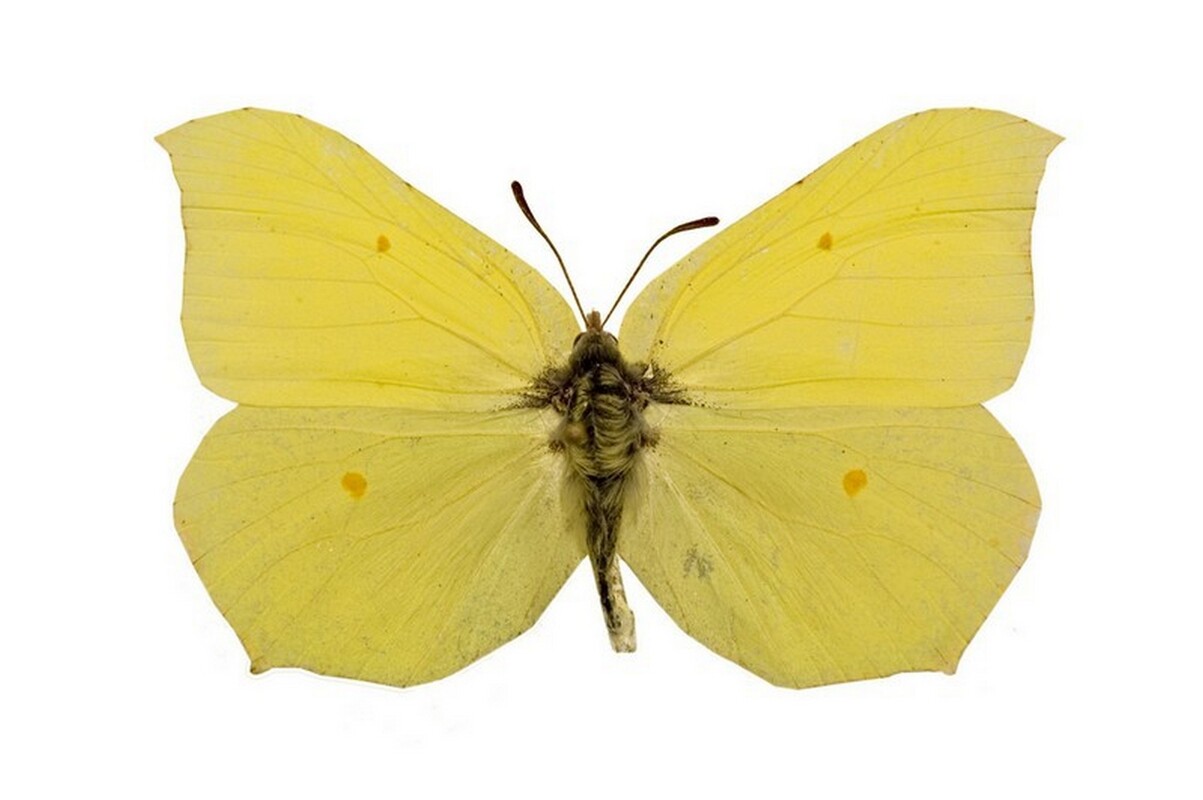
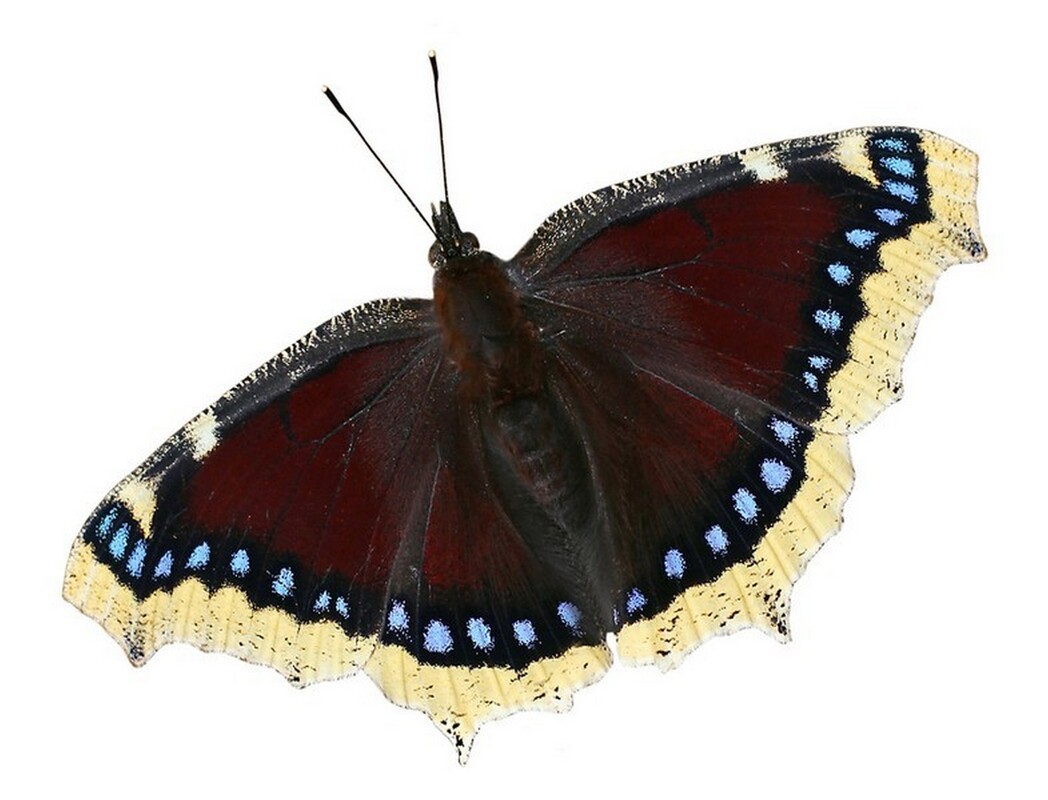
 Large day butterflies, such as the common brimstone and the mourning cloak, are some of the most impressive-looking insects of the forest. They fly around during daytime searching for flowers in order to drink their sweet nectar. When travelling between different flowers they also act as pollinators.
Butterflies lay their eggs on the leaves of specific plants. For example, the small tortoiseshell butterfly always lays its eggs on the leaves of a nettle. By doing so, they make sure that their larvae have access to food straight away after hatching.
Butterflies overwinter either as eggs, larvae, pupas or adults. This is why different butterfly species can be found flying during different times of year.
Species that spend the winter as adult butterflies, such asthe mourning cloak, are the first butterflies that can be seen flying during the spring. Other species, such as the common brimstone, hatch during the summer and can be found flying late into the autumn months. Butterflies disappear from nature when winter begins to arrive. Most butterflies overwinter in a state of hibernation.

Map butterfly larvae, pupa and adults.
7.5 Butterfly species




7.6 Ants
When thinking about the animals that rule the forest, we often think about large mammals such as the bear and the moose. In truth, however, forest ecosystems are ruled by smaller animals.
Ants are the most important group of insects in terms of forest ecosystems. Their success is based on their mass power, or their ability to form and maintain large communities. In addition, ants have strong jaws and quick feet, which make them very well adapted to life in the forest.
The anthills found in the forest are not built by individual wood ants. Instead, they are the result of the concentrated efforts of thousands of ants living in the same ant colony.

Anthills are colonies.
Ant colonies have strict hierarchies. They depend on and are ruled by a female queen. In many cases, one nest can contain multiple queens, and one colony can contain multiple nests.
The majority of the ants in a colony are workers. They are female ants. Usually, all the workers of an ant colony are the offspring of one or two queens. They do not reproduce themselves at all.
The genes of the worker ants are transmitted to the next generation via the queen, as the workers feed and take care of the queen and the offspring it produces. Male ants spend most of their time inside the nest, waiting for their courtship flight. An anthill contains a large amount of eggs and larvae, which are fed by the workers.
Ants are predators. They prey on other insects, spiders, and even animals much larger than them.
However, ants do not prey on all insects. Interestingly, they have developed a mutualistic relationship with greenflies. Greenflies emit a sweet, sugary substance called honeydew, which ants use as their food source, "milking" and herding the greenflies. In return, the ants protect the greenflies from predators such as ladybugs. Therefore, both the greenflies and the ants benefit from this relationship.

Ants taking care of their larvae and eggs.
7.7 Gallery: Forest insects


7.8 Spiders
During the summer, you may find spiders living on the leaves and the floor of the forest. Unlike insects, spiders have eight legs. Spiders are predators that eat insects. Many spider species prey on flying insects by weaving webs.

Many spider species weave webs.
 Like spriders, mites belong to the group of eight-legged arachnids. They are small organisms, some of which are invisible to the human eye.
The tick is a well-known blood-sucking mite. It feeds on warm-blooded mammals, such as humans.
The tick attaches itself into the skin of its prey by using its strong jaws, and begins sucking the prey's blood. The tick uses the blood as their food. When a tick has sucked itself full of blood, its belly takes on a ball-like shape.
A tickbite should be avoided, because some ticks spread diseases, such as borreliosis. This is why you should always check your skin and clothes for fleas after coming home from a hike in the forest.
7.9 Differences between insects and spiders
| INSECTS | SPIDERS | |
|---|---|---|
| Legs | 6 | 8 |
| Flight ability | Yes. Most insects have four wings. | No. |
| Metamorphosis | Egg - larva - (pupa) - adult | A small spider hatches from the egg. |
| Diet | Some eat plants, others eat other insects. | Eat insects. |
7.10 Decomposers
 When looking at the forest floor, you will find a lot of dead plant matter, such as decomposing leaves, needles, and spruce cones. This matter does not stay on the forest floor for long, because it is broken down by decomposers.
When you pick up a handful of forest soil, you are picking up thousands of small animals. Some of them are invisible to the naked eye.
Larger animals that dwell on the forest floor include earthworms and insect larvae. They are decomposers that gain their energy by breaking down dead plant matter. Many bacteria of the forest floor also act as decomposers.
Earthworms are worms that dwell in the ground. The most prevalent earthworm species in the world is the common earthworm, which has a reddish body and can grow up to 30 cm in length.
Earthworms like to live under the ground, but they can be seen living on the forest floor as well, especially after a rainy day. They are one of the key species of the forest. This means that their existence helps other species to thrive in a variety of ways. For example, by breaking down nutrients and mixing up the soil, earthworms help forest plants to grow.