
10.5 The case of Finnish forest reindeer
Finnish forest reindeer is no more considered an endangered species in Finland. However, this was not always the case.
Before the 19th century, the Finnish forest reindeer was common to Finnish forests. It was an important game animal that gradually became more widely hunted during the course of the 19th century. Excessive hunting caused the Finnish forest reindeer population to dwindle. Finally, it became a legally protected species in the year 1913. By this point, however, the Finnish roe deer population had already disappeared completely.
Despite being extinct in the nation for decades, the Finnish forest reindeer ultimately returned to Finland during the 20th century. During the 1940s and the 1950s, Finnish forest reindeer populations began to move from Karelia to Finland. Some individuals were moved by humans into the Suomenselkä region, where the Finnish forest reindeer has subsequently developed a healthy, abundant population. Finnish forest reindeer can nowadays be found specifically in the Kainuu region.
The tale of Finnish forest reindeer's disappearance and return is an example of how a species' conservation status can change over time. It also shows how human activity affects the wild species around us. Nowadays, Finland has an important role in the conservation of Finnish forest reindeer, because the animal is only found in Finland and in Northwest Russia. At the moment, the Finnish forest reindeer is considered a near threatened species, although globally speaking the species is distributed in a very small area and its population sizes are very small.
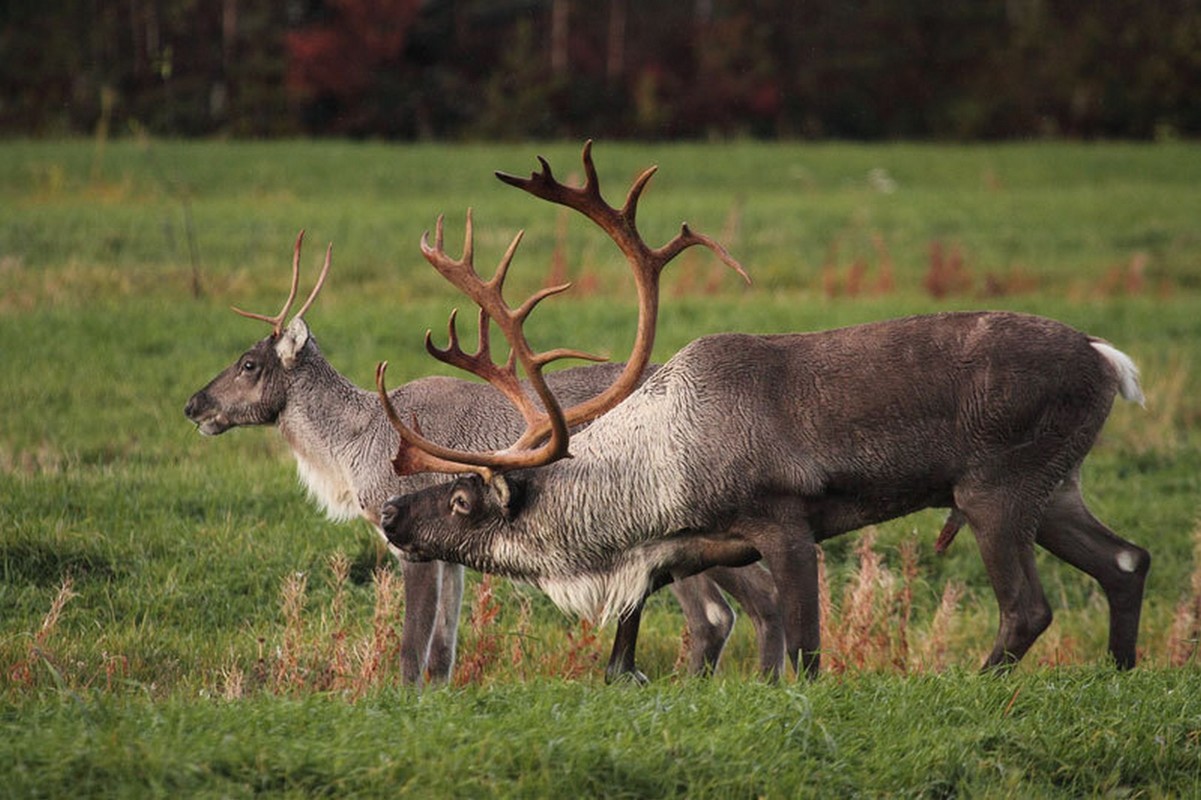
The Finnish forest reindeer both disappeared and returned to Finland during the 20th century.