
9.5 Autumn
After a lively summer, the following autumn consists mostly of plants and animals preparing for the cold winter. As winter becomes closer, the conditions of the environment change significantly. Days become shorter and colder.
The movement and vital functions of invertebrates slow down. Homeothermic animals, such as mammals, have to use more energy in order maintain their body temperature.

During the autumn, broadleaf trees drop their leaves and store all the excess nutrients and sugars into their trunks. This results in the colorful autumn foliage. Before winter arrives, some trees grow new buds in order to be ready for the arrival of spring. Coniferous trees, such as pine and spruce, retain their needle-like leaves even during the winter months.
As the autumn progresses, igrating birds begin to leave for their southern winter habitats. Some vertebrates begin to hibernate or brumate. Slowly, the forest becomes more quiet. Many annual plants wither away, and the forest loses its green summer color.
However, the life of the forest does not slow down completely. Fungi begin to reproduce during the autumn, as the amount of rainfall increases. This is why mushrooms can be picked from the forest during the autumn months!
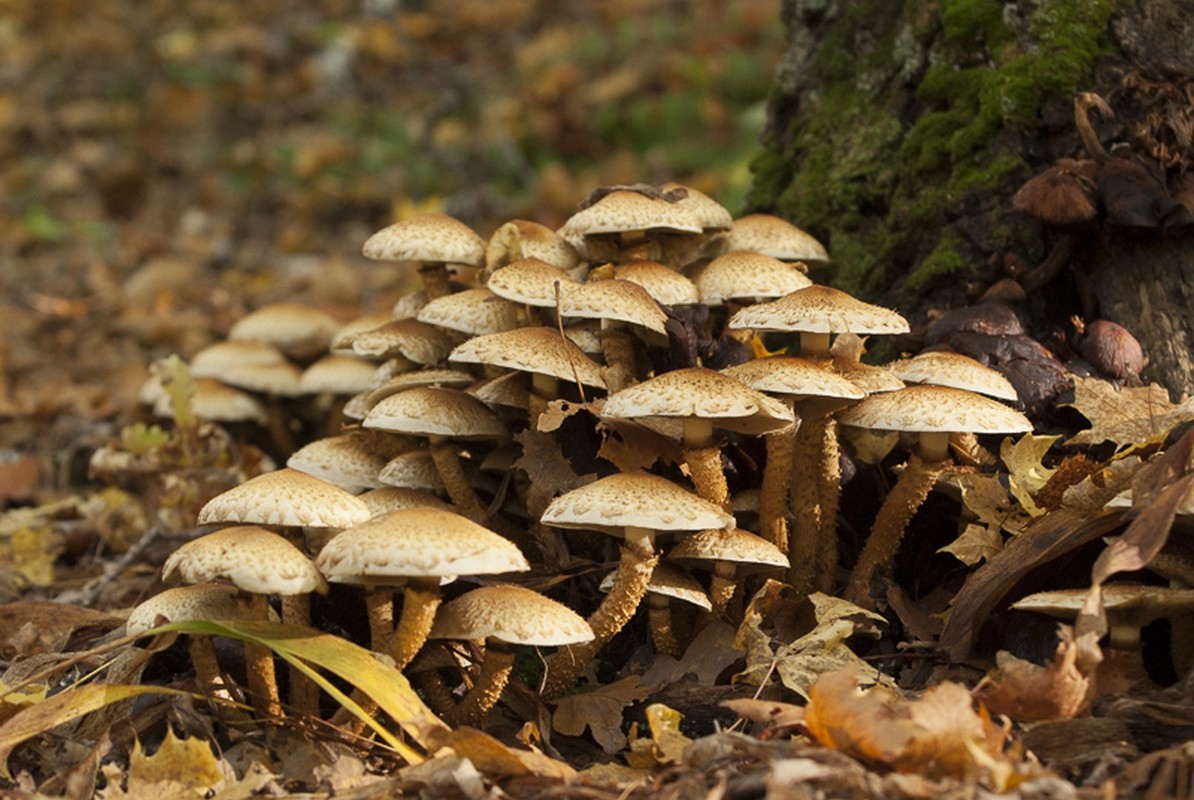 Many fungi grow their reproductive fruit bodies during the autumn.