
9.2 Birds and the seasons
During the winter, the snowy forests provide less food for animals such as birds. The birds of Northern Europe react to the changing seasons in two different ways: they are either sedentary or migrating birds.
Sedentary birds live in the same region throughout the year. The crested tit (pictured below) is an example of such a sedentary bird. They spend the winter either in or near their home forest.
During the winter, it is more difficult for sedentary birds to find enough food. They need a large intake of food to maintain their body temperature during the cold winter.

The crested tit.
When spring arrives, sedentary birds such as the crested tit are often quick to reproduce. As a result, the crested tit can sometimes have fully-grown offspring when migrating birds such as the pied flycatcher are only returning to their home regions.
During the autumn, sedentary birds like the crested tit do not have to store up energy and fat for a long migration journey. Some sedentary birds spend the winter near birdfeeders that are set up by humans.
Migrating birds complete two long journeys each year. These journeys are connected to the changing seasons. During the spring, migrating birds fly to the north, which is where they nest. They spend the summer in the north, and when autumn arrives, they start migrating back south. For example, the pied flyecatcher can spend its winters in Africa and its summers in Finland.
The reason why migrating birds complete their long journeys is the changing food situation in the northen regions. During the summer, there is plenty of food, such as insects, for migrating birds to enjoy. They nest and raise their young during the summer up north. When autumn arrives and the amount of food decreases, migrating birds begin to prepare for their long journey south. There, they find plenty of food even during the winter.
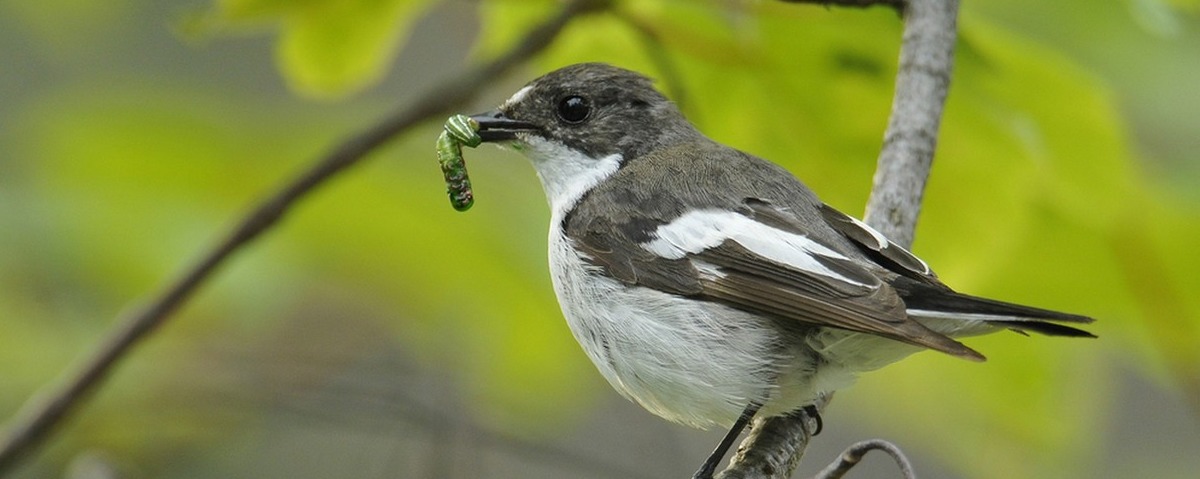
The pied flyecatcher.
In addition to sedentary and migrating birds, there are also irruptive birds. They do not migrate along the same routes every year, but rather move from place to place depending on the amount of food they can find. Crosbills and nutcrackers are examples of such irruptive bird species.
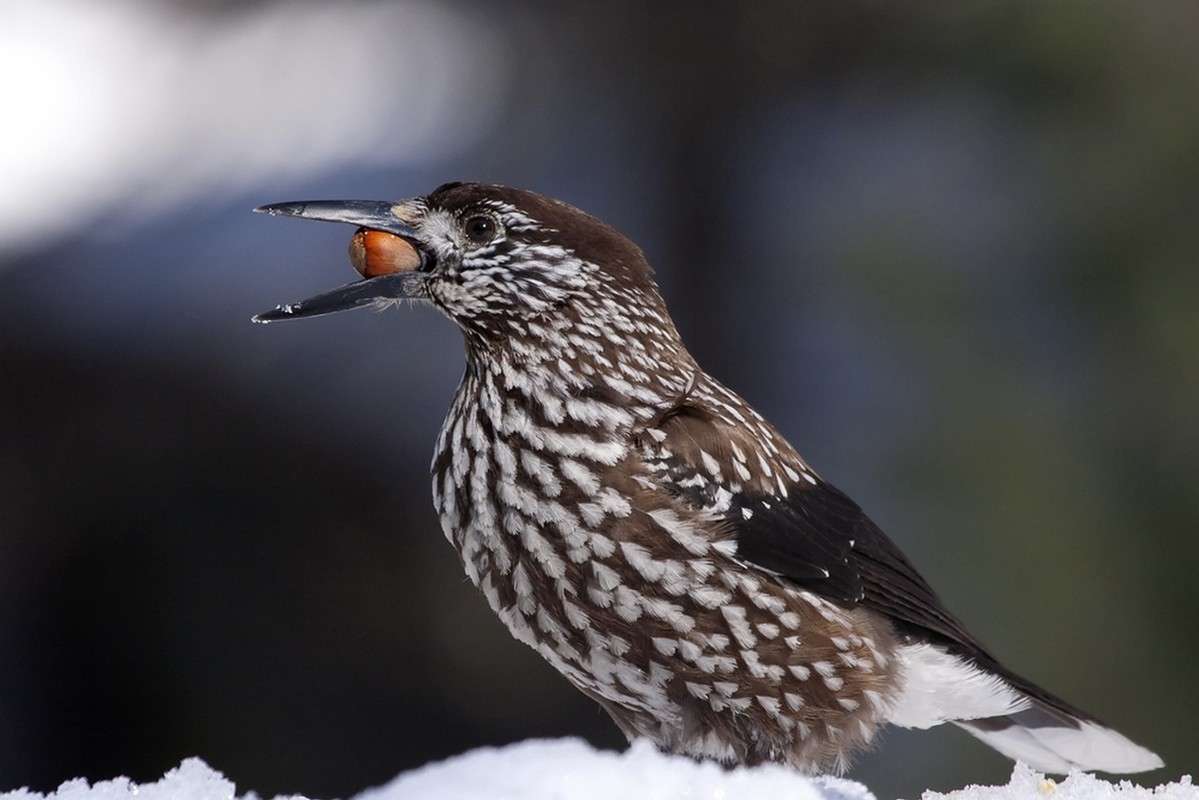
The nutcracker.