- Knowing why the liver is called the central laboratory of the body.
- Knowing how urine is produced and how the kidneys remove it from our bodies.
- Knowing what can cause damage to your liver and kidneys.
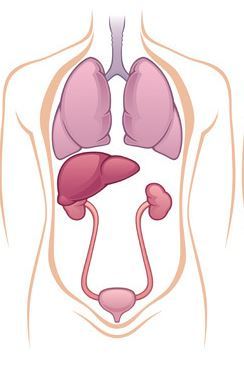
- The liver is our largest internal organ and serves as a place for the production, storage and break down of many substances.
- The fetal liver produces blood cells. In adults, the liver acts as a blood recycler.
- The bile produced by the liver helps digestive enzymes break down fats.
- The liver stores glucose and releases it into the bloodstream when needed.
- The liver breaks down toxins and converts unnecessary proteins into urea. Urea is a waste product that is excreted by the kidneys when you urinate.
- The kidneys maintain the body's water and salt balance and remove the urea produced by the liver from the bloodstream.
- Urea is a waste product, which is filtered in addition to water and salts in nephrons. Urea is the major organic component of human urine.
- Urine samples may provide information on both liver and kidney dysfunction.
- Keywords: liver, kidney, nephron, urea, bile, urine