
Second class levers
 In second class levers, the hand movement is increased, but the amount of energy required is decreased. The force and the load move in the same direction.
Like first class levers, second class levers are also more functional when the fulcrum and the load are located close together and when the lever itself is longer.
Bottle openers are usually levers. They can be used like first class levers, but also as second class levers. When using a bottle opener as a second class lever, the hand and the bottle cap move in the same direction.
The egg cutter is also an example of a second class lever. The fulcrum is located at the end of the lever, and the load is provided by the egg. The hand and the cutter move in the same direction.
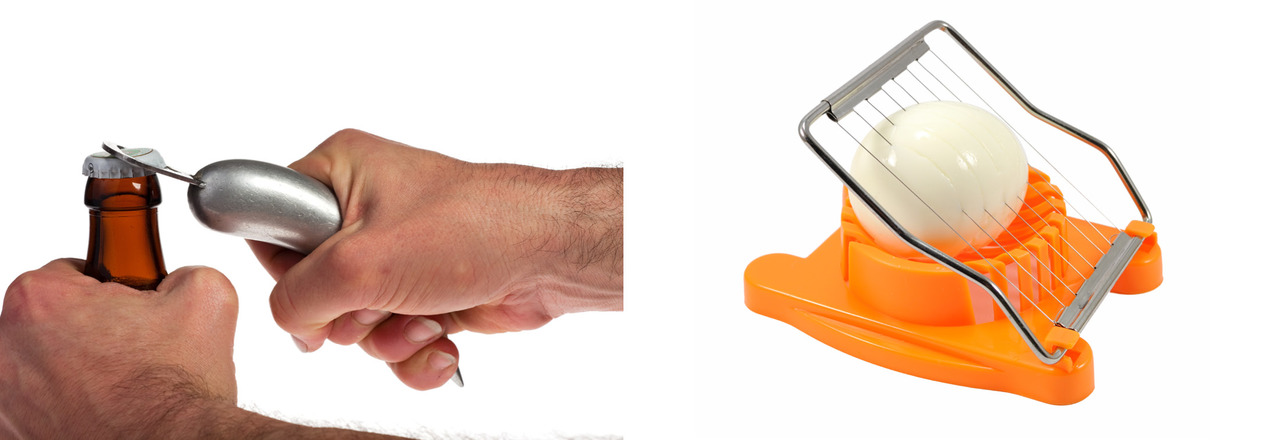
Bottle openers and egg cutters are examples of second class levers.
The hand brake of a bicycle is also a lever. The load is provided by the brake cable. Because the load is located between the hand and the fulcrum, the hand brake is an example of a second class lever.
A hole punch is also a second class lever. Its fulcrum is located at the end of the lever. The hand pressing the lever moves in the same direction with the sharp edges that press holes in the paper.
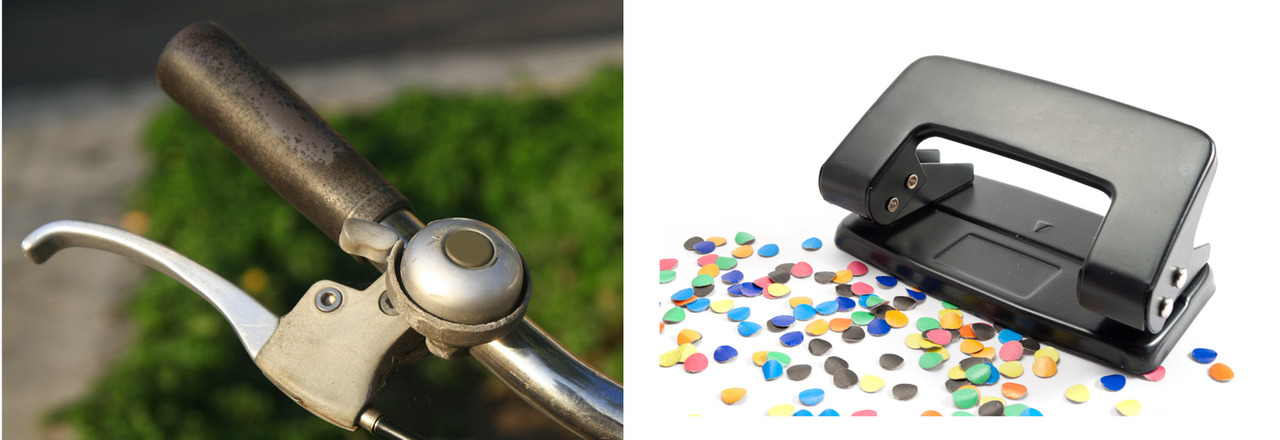
Hand brakes and hole punches are also second class levers.
The trigger of a fire extinguisher is also a second class lever. The fulcrum is located at the end of the lever, whereas the load is provided by a peg that opens the extinguisher's valve.
The railing of a loom is also an example of a seond class lever. It is used to compress threads when weaving a textile.

The trigger of a fire extinguisher and the railing of a loom are also examples of the second class lever.