
Sound waves
Study notes

There is no sound without a source and a medium. As a consequence, you cannot hear anything explode in space, even though the original Star Wars films beg to differ. Space is devoid of sound.
In order to speak, you need to produce sound waves and, in turn, mold them into phonems with your tongue and your mouth. These sound waves stem from your throat, from the same cavity you cough from and inhale into. Place your hand on your throat while speaking to feel your vocal cords in action. This video showcases what they look like in song.

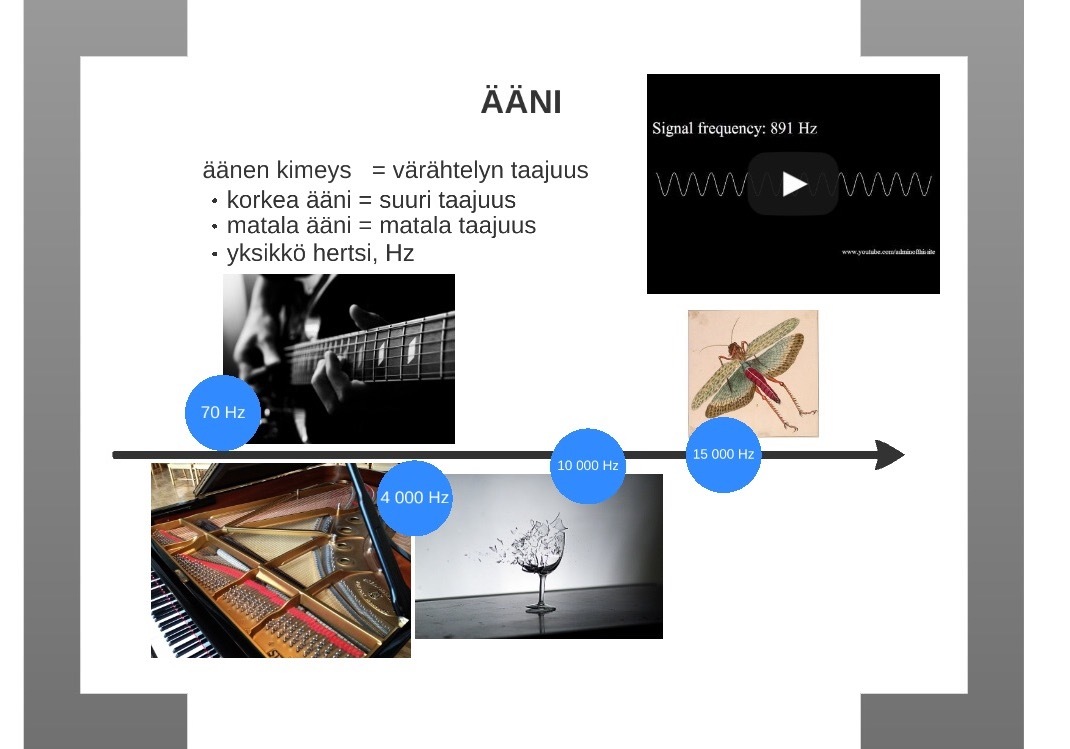
The pitch of a sound is measured in hertz (abbrev. Hz). An average human has the auditory spectrum of 20 Hz to 20 000 Hz, ranging from drum-like sounds to high-pitched squeaking. Test your hearing abilities with this video.
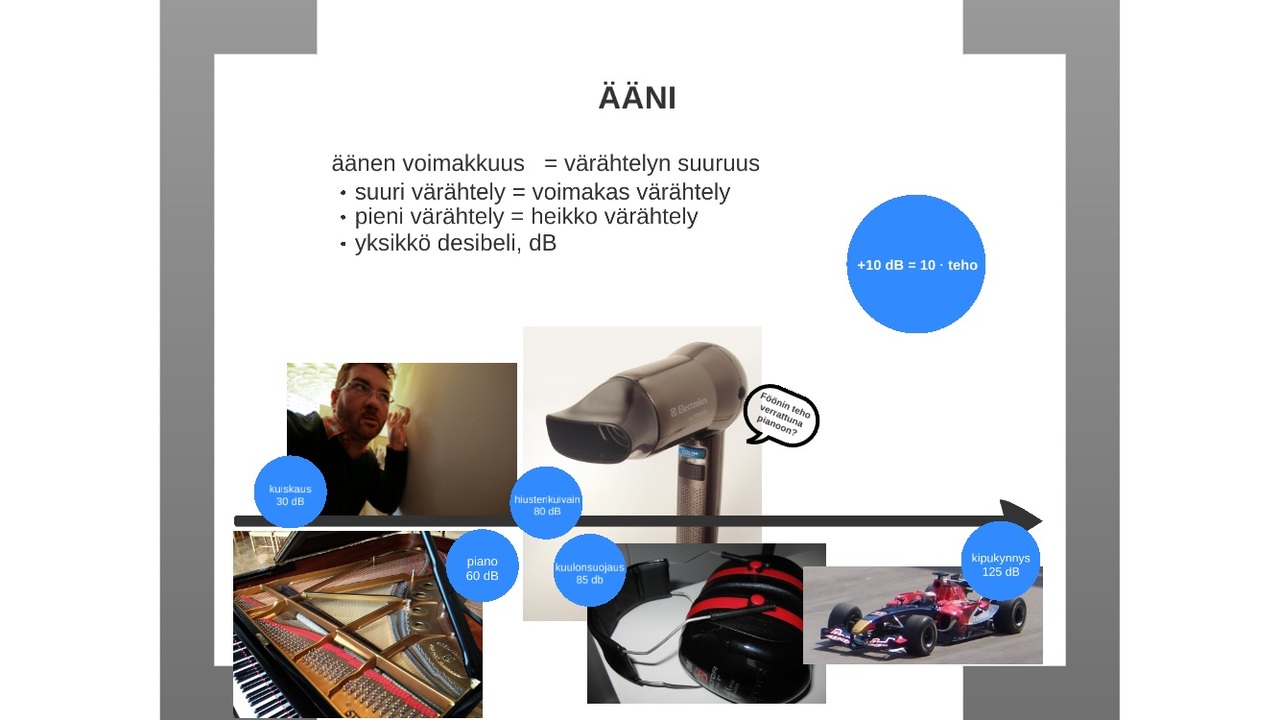
The volume of a sound is measured in decibels (abbrev. dB). These units follow a strange rule of thumb: if one speaker produces 50 dB, then...
- 10 speakers produce 60 dB, or 10 dB more
- 100 speakers produce 70 dB, or 20 dB more
- 1 000 speakers produce 80 dB, or 30 dB more

The main auditory organ for humans and animals alike is the ear. This video tells you more about its delicate, vulnerable structures.
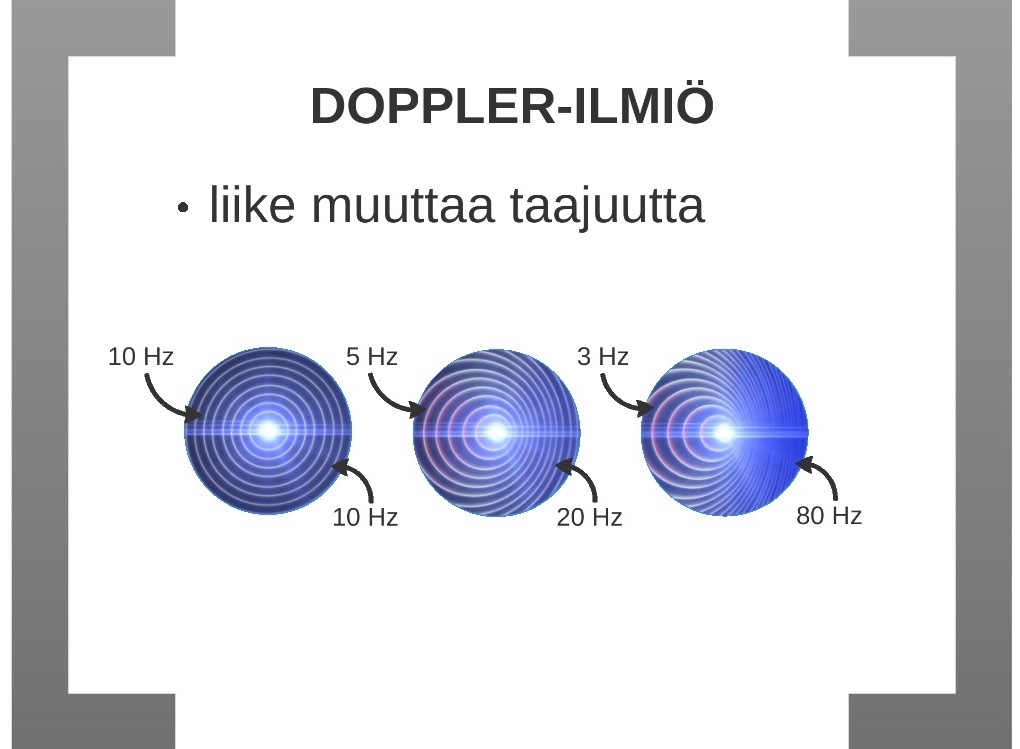
The Doppler effect explains the change in the pitch of an ambulance passing by. It also provides an explanation as to why Hornets give out loud booms while flying.
In the image above, the bright source of sound waves is moving to the right. This means that the waves accumulate to the right and sparsen to the left. Humans perceive this difference as different pitches: the sound becomes higher and higher before the ambulance passes by, and lower and lower afterwards.