
21. Kenya
Mount Kilimanjaro is in Africa

Mount Kilimanjaro is a dormant volcano located on the border between Tanzania and Kenya. It has not erupted for a long time.
Look at the photograph on the right. Notice the shrubby vegetation of the African savanna, the acacia tree, and the warm, sunny climate. Why is the top of Mount Kilimanjaro covered in snow?
The elephant is a large, herbivorous mammal of the African savanna.
Kenya
Kenya is located in East Africa, near the equator. It is bordered in the east by the Indian Ocean. Its neighboring nations include Tanzania, Uganda and Ethiopia. The eastern parts of Kenya consists of lowland areas, whereas the rest of the county comprises of highland regions.
The capital city of Kenya is Nairobi. It is a large city inhabited by over two million people. It is located in the Kenyan highlands, at an elevation of over two kilometers. This is why the climate in Nairobi is not as hot as elsewhere in the tropical zone. The city of Mombasa is located on the shore of the Indian Ocean.
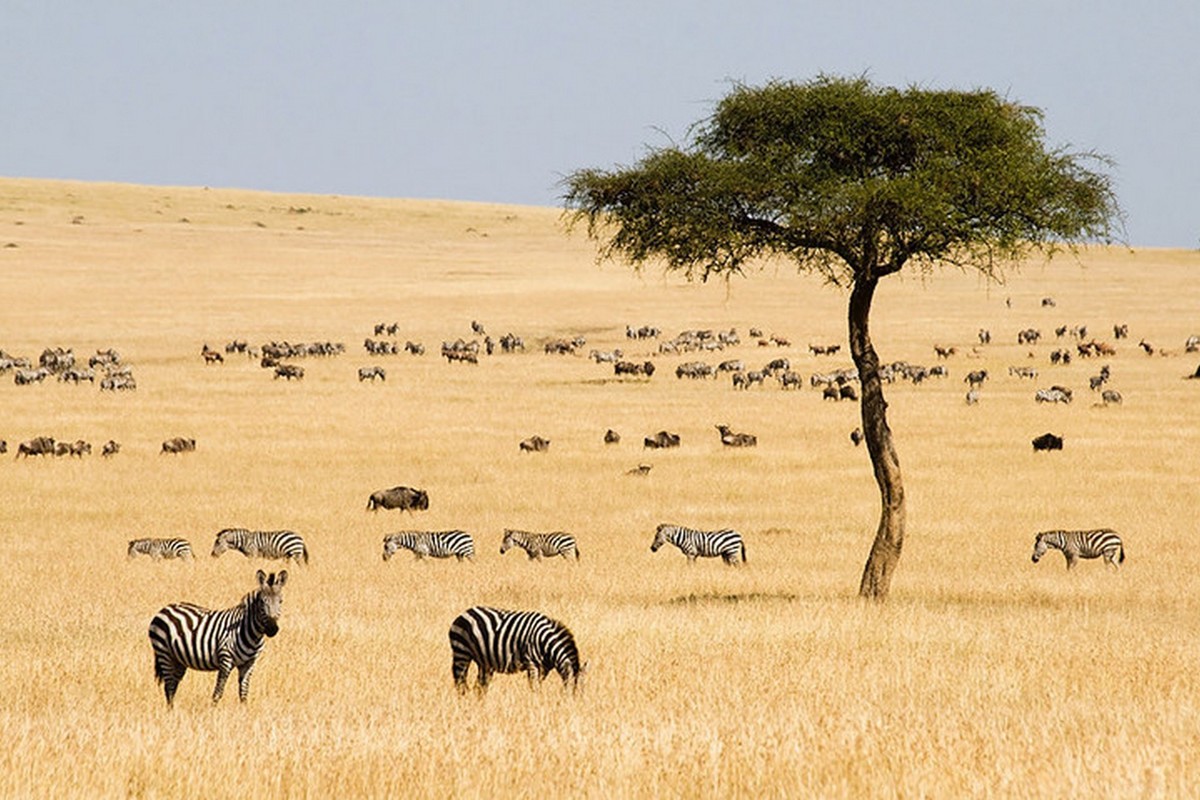
Because Kenya does not receive as much rainfall as other regions in the tropical zone, the Kenyan vegetation is mostly comprised of savanna.
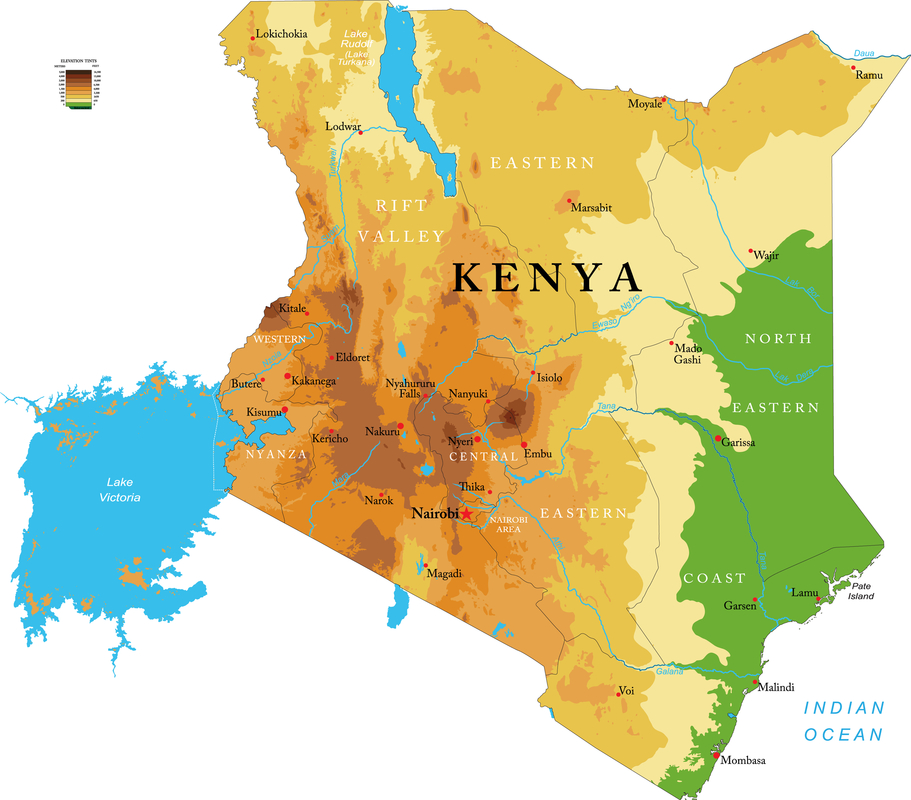
The capital city of Kenya is Nairobi. It is a large city inhabited by over two million people. It is located in the Kenyan highlands, at an elevation of over two kilometers. This is why the climate in Nairobi is not as hot as elsewhere in the tropical zone. The city of Mombasa is located on the shore of the Indian Ocean.
Because Kenya does not receive as much rainfall as other regions in the tropical zone, the Kenyan vegetation is mostly comprised of savanna.
Kenya is a developing nation
 Kenya is inhabited by over 40 million people. Most of these people are Christians.
The official languages of Kenya are Swahili and English. English is the language spoken in schools and offices. Many Kenyan tribes also have their own languages. Because of this, many Kenyan people know three languages: their own tribal language, Swahili and English!
Kenya has been a developing nation for a long time, and continues to be one to this day. There is a lot of poverty, the family sizes are large, and unemployment is widespread in many areas. Slums have formed on the outskirts of the major cities. Diseases like Aids and malaria are also common.
The Kenyan vegetation is suitable for food production. Many food products, such as coffee, tea and maize, are grown in Kenya.
Kenian ilmasto mahdollistaa ruuan tuotannon. The Kenyan bedrock is full of expensive minerals.
In the recent decades, living standards have grown better in many parts of Kenya. Children have access to education and learn to read. When the literacy rate increases and people become more educated, many diseases and problems can be prevented.
 Kenyan children on their way to school. Because the climate is very warm, there is no need for shoes.
Animals of the savanna
 Savanna is a type of open grassland common to the African tropical zone. Savannas have formed in regions that experience both a rainy season and a dry season. The dry season often lasts for a couple of months.
 The vegetation of the savanna consists of grasses, shrubs and trees. The long dry season is difficult for the flora of the savanna. During the dry season, the grass dries out and the trees and shrubs drop their foliage. The landscape becomes brown. Finally, as the dry season gives way to the rainy season, large thunderstorms bring large amounts of rainfall to the environment. During the rainy season, the landscape becomes green once again.
Savannas are suited for cattle farming. A number of nature reservations have also been established in Kenya. In these reservations, hunting and raising cattle is prohibited. The reservations attract numerous tourists every year – who wouldn't want to see a lion or an elephant in the wild?
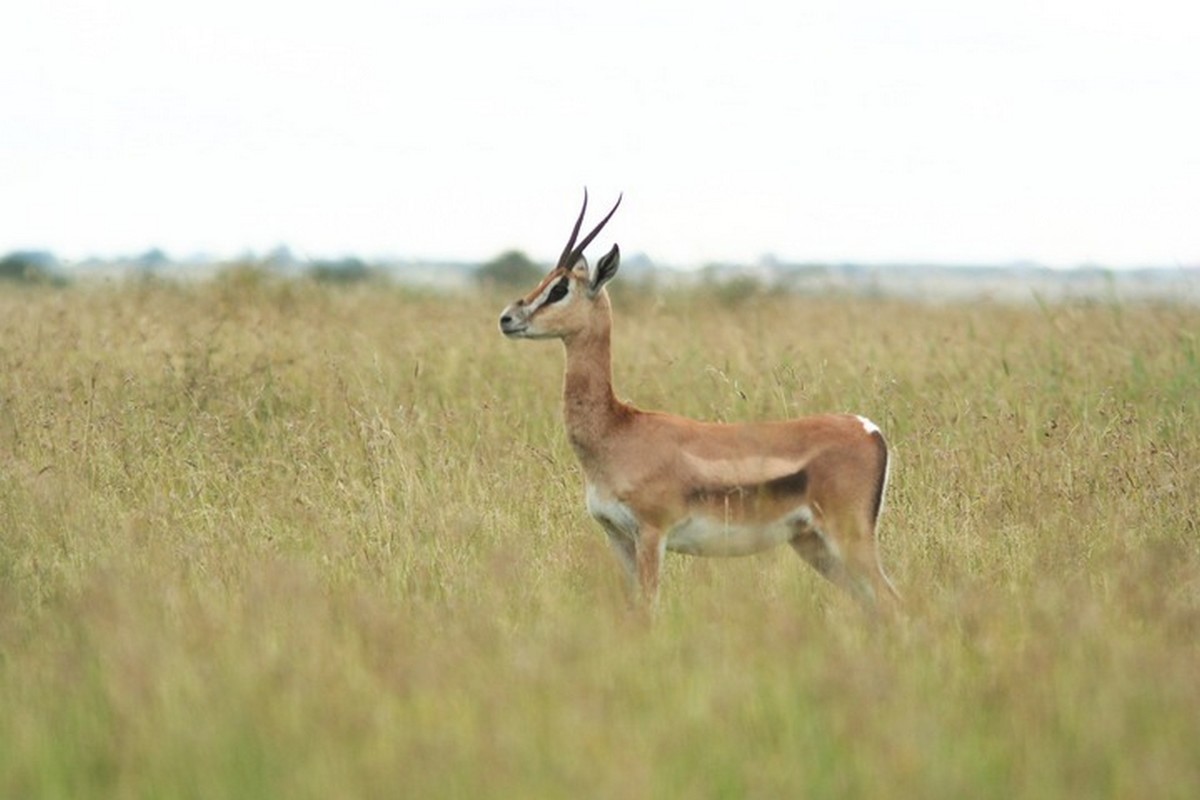
The grassland of the savanna accommodates a large variety of different animals. The largest herbivores include the buffalo, the giraffe, and the rhinoceros. Savanna herbivores are very selective as to what kinds of grasses they eat. Different species eat different grasses, which means that there is no competition between them. The herbivores of the savanna are the food of predators, the most well-known of which is the lion (pictured).
Images from Kenya

Shutterstock.

Shutterstock.com

Volodymyr Burdiak/Shutterstock.com

Anastasiia-S/Shutterstock.com

Timaldo/Shutterstock.com
Shutterstock.

© Simo Veistola ja e-Oppi Oy

Shutterstock

© Simo Veistola & e-Oppi Oy

© Simo Veistola & e-Oppi Oy

© Simo Veistola & e-Oppi Oy

© Simo Veistola & e-Oppi Oy

© Simo Veistola & e-Oppi Oy
Mammals of the savanna


Birds of the savanna



Terminology
| Term | Explanation |
|---|---|
| savanna | A vegetation zone dominated by low shrubs and tall grasses, with scarce trees. |