
38. Heat from electricity
What is a thermal resistor?
Electricity can be transformed into heat by using an electric circuit.
When an electric circuit is closed, electricity can travel through it.
The part of the electric circuit that provides the most resistance will grow hotter. This part of the circuit is known as the thermal resistor.
Thermal resistors
Most devices and machines that produce heat do so with the help of a thermal resistor. A thermal resistor can be found in a hairdryer, for example. The thermal resistor of a hair dryer has been moulded into a spiral shape. As electricity travels through the hairdryer's circuit, the thermal resistor begins to radiate heat. The hairdryer's electric motor and rotor then blow the warm air outwards.
Thermal resistors can also be found in toasters. The thermal resistor of a toaster usually begins to glow red when it is heated. The thermal resistor is controlled by either a thermostat or a timer. They control when the circuit of the toaster is opened and closed. A thermostat measures the temperature inside the toaster, whereas a timer is a kind of simple clock.
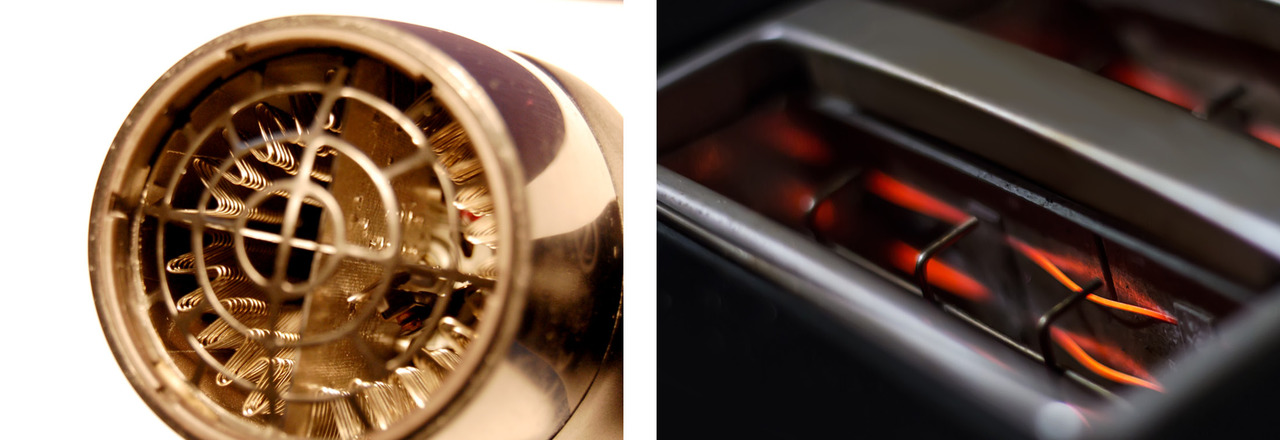
The thin lines found on the windows of some cars are also thermal resistors. When electricity is directed through them, they heat up. By doing so, ice and frost can be removed easily from the windows.
The incandescent light bulb is also an example of a thermal resistor. When electricity travels through the light bulb's thread, it begins to radiate light and warmth.
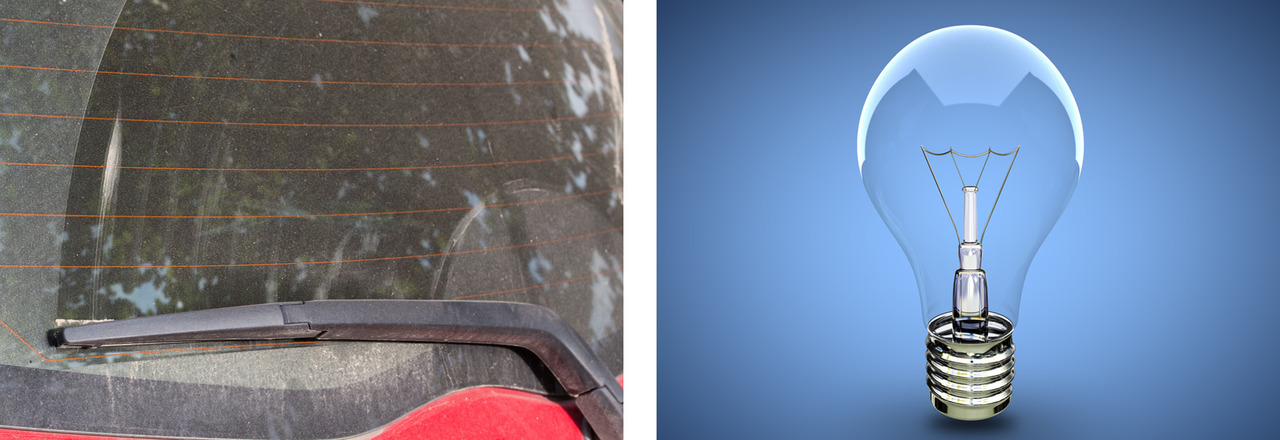
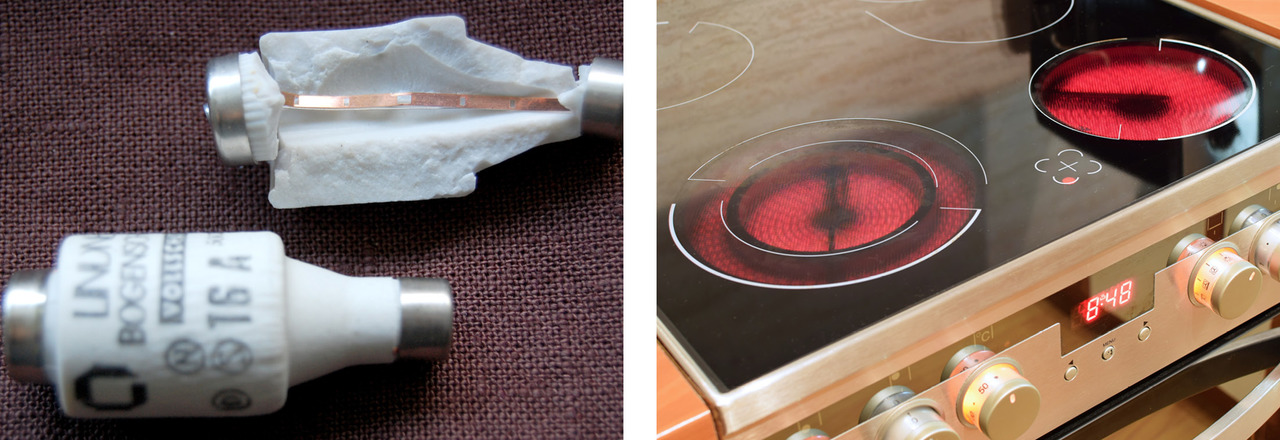
Even ceramic fuses contain thermal resistors. When an electrical disturbance occurs in the electric circuit, the thermal resistor of the fuse will heat up and break itself. This helps to prevent the electrical disturbance from causing damage to other parts of the electric circuit. Nowadays, ceramic fuses are being replaced by automatic fuses in many households.
The heat of a normal electric stove is also produced by a thermal resistor. The resistor can be sometimes seen glowing red under the stove's ceramic surface.
Thermostats
Thermal resistors are made out of metal. In some devices, the thermal resistor is protected by an insulant and a thick metal tube. This makes the resistor safer and more durable.
In the image below, a metal tube that surrounds the thermal resistor of a sauna stove can be seen glowing red. The electric sauna stove is controlled with a thermostat. A thermostat measures the temperature of the stove and controls the amount of electricity that is directed to the thermal resistor. 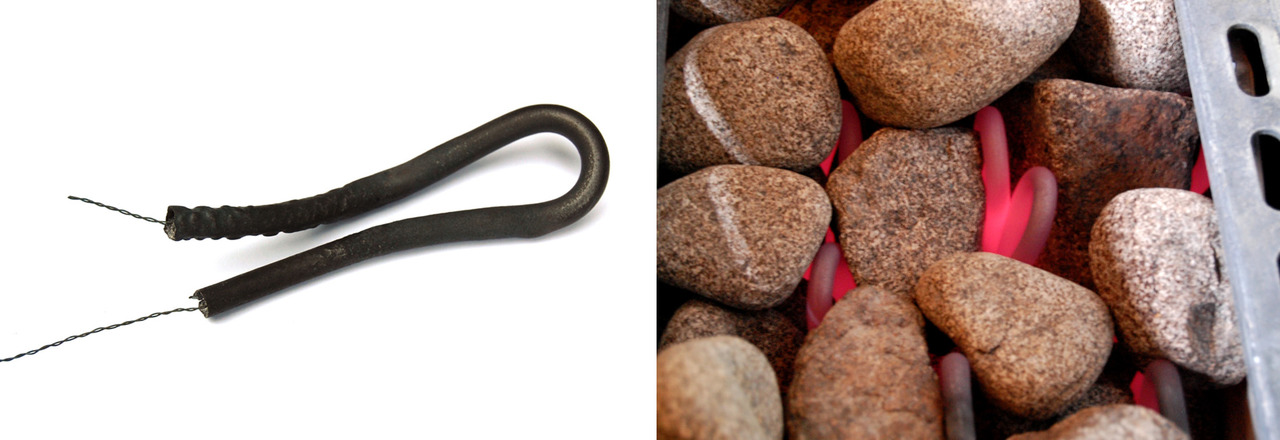
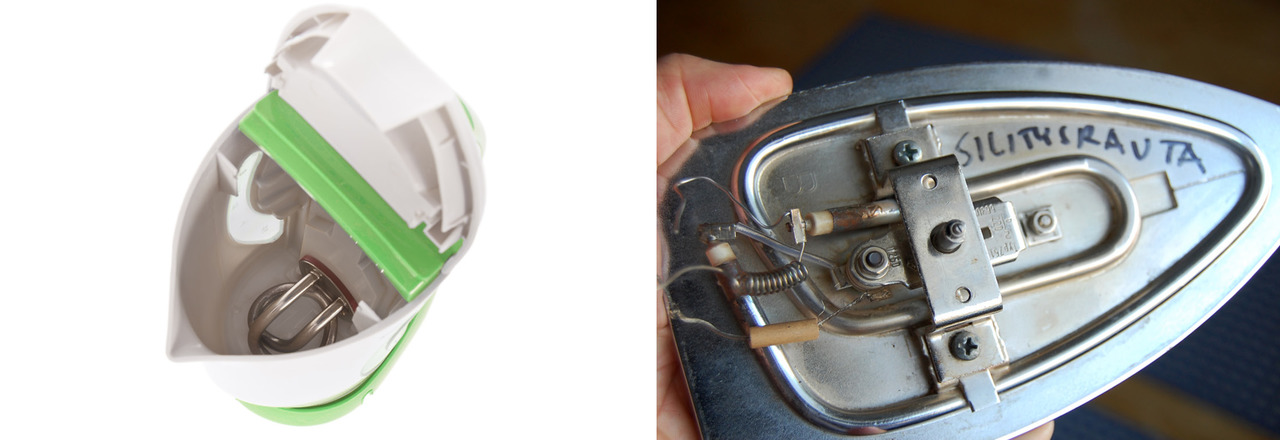
The images below display the thermal resistors of an electric kettle and an electric iron. An electric kettle is an efficient tool for boiling water, as it uses less energy than a stove or a fire. The thermal resistor inside the kettle heats up the water inside it. When the water is boiling, the kettle's thermostat opens the electric circuit, which turns off the thermal resistor.
The thermal resistor of an electric clothes iron is found below its bottom plate. The thermal resistor is protected by a metal tube. The iron's thermostat is used to select the desired temperature. When the thermal resistor reaches that temperature, the thermostat opens the electric circuit. This turns off the thermal resistor.
Terminology
| Term | Explanation |
|---|---|
| electricity | A form of energy where electrically charged particles travel in a certain direction. |
| electric circuit | The route through which an electric current travels. Electricity can only travel through closed circuits. |
| thermal resistor | A thin metal wire that radiates heat to its environment when electricity travels through it. |