
20. Water treatment
Water purification
Natural water from lakes, rivers and groundwater deposits is collected and cleaned for household use. Every day, we use approximately 60 litres of water for washing ourselves, 40 litres of water in the toilet, 35 litres of water in the kitchen and 20 litres of water for washing clothes. This means that we produce over 200 litres worth of wastewater every day. The waste substances contained in wastewater can be harmful to lakes, rivers and oceans. This is why wastewater is cleaned and treated in sewage treatment facilities. These treatment plants receive wastewater from the sewer system. In sewage treatment facilities, the wastewater undergoes mechanical, chemical and biological processes that result in clear, drinkable water.
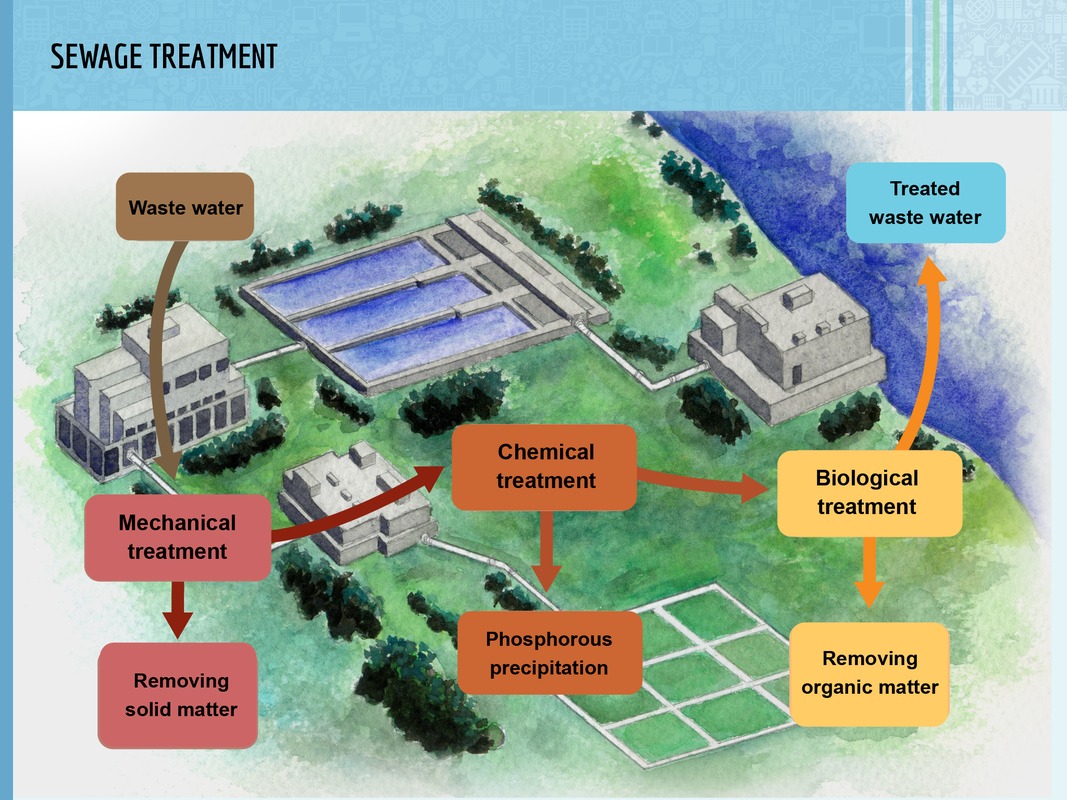 A sewage treatment facility.
Conserving water
 Find water leaks
Large amounts of water are wasted every year because of water leaks. These leaks, which are usually found in household plumbing, are often hard to notice. One leaky tap can waste over 300 litres of waters a year. If you see a leaky tap or water pipe, you should notify an adult of it immediately. Do not play with water
To save water, you should always favour a quick shower over a long one. Taking a bath once in a while is fine, but it uses a lot of water compared to the shower. You should only keep the shower for as long as you need it.Run water responsibly
Because water that stays in a pipe for a long time can become spoiled, it is okay for you to let the water run for enough time for it to become cool. Warm water should not be used for drinking or cooking, as it can contain harmful bacteria.Do not spoil your wastewater
You cannot pour all liquids down the sink or into the toilet. You should never throw anything other than human waste or toilet paper into the toilet. Foreign substances and objects can cause problems for sewage treatment facilities.
Terminology
| Term | Explanation |
|---|---|
| wastewater | Dirty water that is produced in kitchens and bathrooms, for example. |
| chemical treatment | A series of processes where water is cleaned and purified with chemical methods. |
| biological treatment | A process where water is cleaned and purified with the help of bacteria. |