
20.10 Mutations are errors in genetic information
Mutations occur all the time during cell division and gene replication. Most mutations are not visible. If the mutation occurs during normal cell division or in a part of the genome that is not used in that cell, it will not manifest itself. However, if the mutation occurs in germ cells or in a portion of the genome that is used in that cell type, it may manifest itself. If a mutation occurs in gametes or their stem cells, it is also passed on to the next generation.
A mutation can occur within a single gene, in a chromosome, or across an entire chromosome system. In a gene mutation, the structure of the DNA changes and at the same time there may be a change in the protein produced by the gene, or a completely different protein is formed. Such a change can be harmless, causing, for example, in an individual having different colour eyes. If a gene mutation occurs in a gene encoding an enzyme or hormone that is vital to cell function, it can result in serious illness or even death.
If a mutation changes the structure of a chromosome, we speak of a chromosomal mutation. The most severe chromosomal mutations tend to be eliminated in the initial stages of fetal development, resulting in spontaneous miscarriage. Even mild chromosomal mutations usually cause some form of disease.
If the number of chromosomes changes because of the mutation, we speak of a chromosome system mutation. The best-known example of a chromosome system mutation is Down syndrome. An individual with Down syndrome has three copies of chromosome 21 instead of the usual two. The syndrome results in a characteristic facial appearance, poor muscle tone, many structural and functional problems and varying levels of developmental disability. On the other hand, many people with a Down syndrome have a sunny and positive personality.
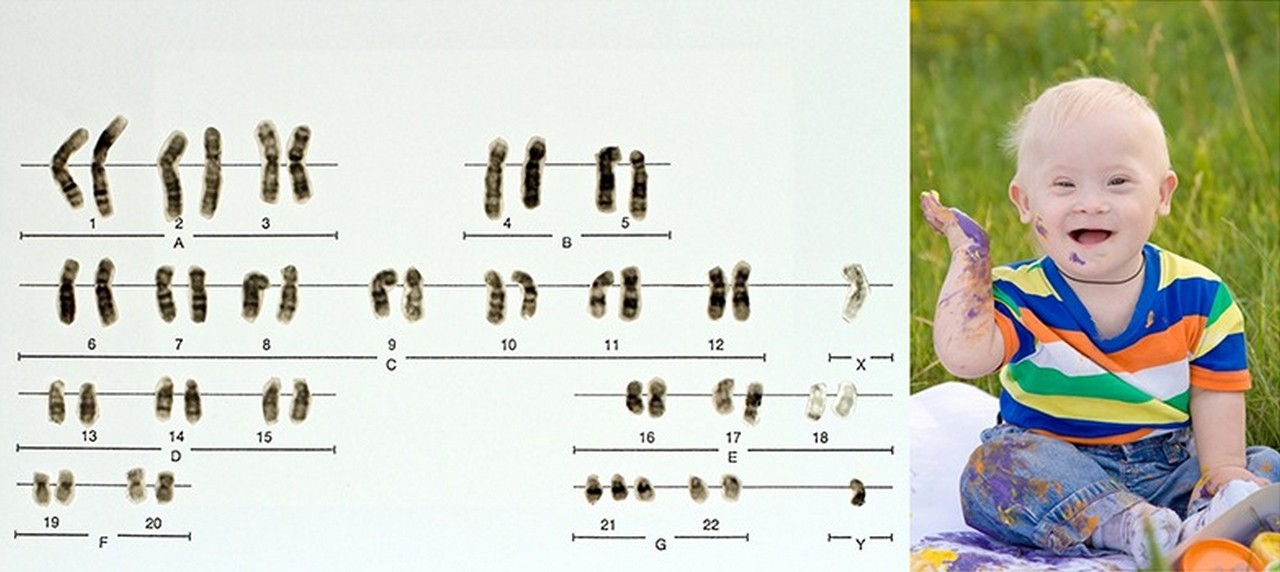 Down syndrome is caused by an extra chromosome 21.