
4. Forest flowers and berries
Forest flowers


Wood anemone
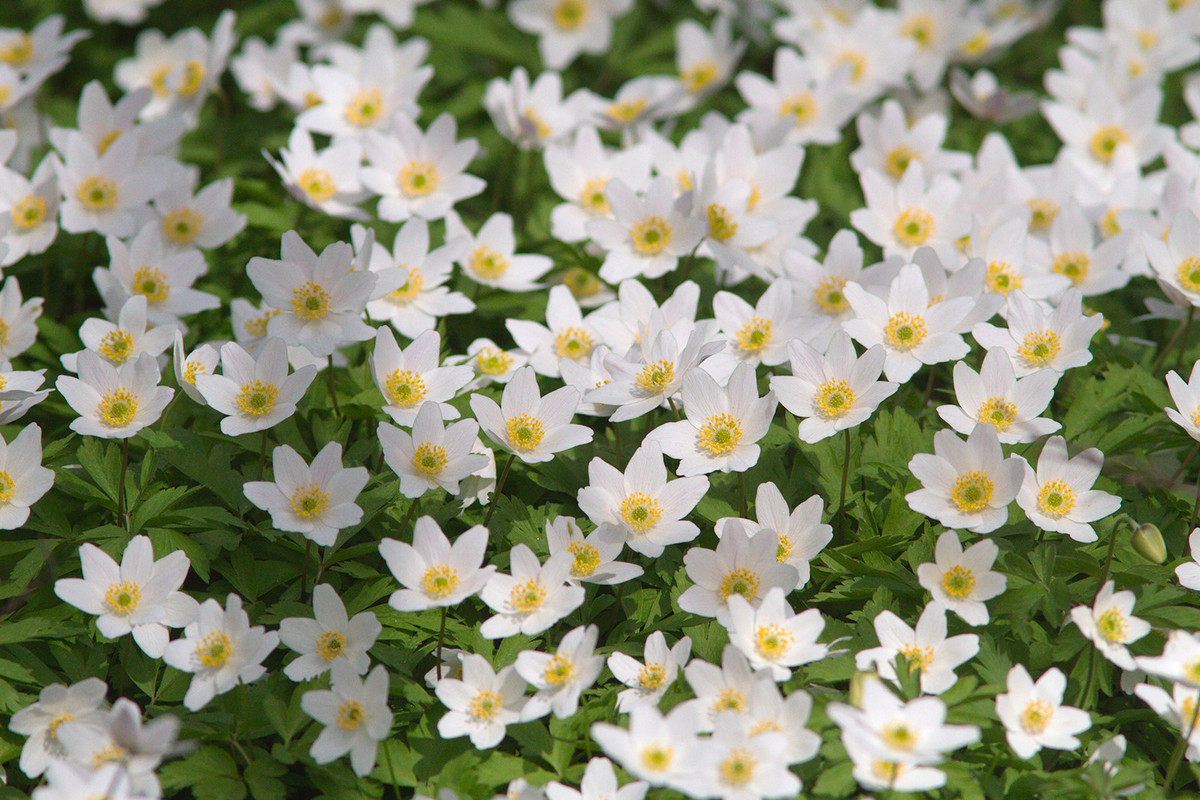 The wood anemone is a perennial flowering plant. This means that although the visible part of the flower dies out in the autumn, the roots of the plant keep living and grow into a new flower during the spring.
 The white flowers of the wood anemone can easily be distinguished, even form a distance. This makes it easy for pollinator insects to find the flowers.
Pollinator insects fly from one flower to another, collecting the sweet nectar stored in the flowers. At the same time, the insects spread pollen from one flower to another.
Roundlobe hepatice
 The roundlobe hepatica can be distinguished from its round-lobed, purple-blue flowers.
 The leaves of the roundlobe hepatica are dark green and leathery. The leaves live on through the winter, which means that the roundlobe hepatica is an evergreen flower.
The purple leaves of the flower are called petals. At the center of the flower, you can se yellow pistils. The pistils are where the flower's seeds are produced. They are surrounded by white stamens. Stamens are where pollen is produced.
Lingonberry and blueberry
 Lingonberry and blueberry are flowering plants with sturdy, wooden stems. This means that they are sprigs.
 Blueberry is a well-known forest plant. If the weather is good during the early summer, you can find large quantities of blueberries growing in the forest during the late summer.
The leaves of the blueberry are thin and they fall during late autumn.
Lingonberry is a sprig that can often be found in pine forests. The red lingonberries are not as sweet as blueberries, but they can be used to make jam and juice.
Lingonberry resists drought better than the blueberry. This is a result of its wax-covered leaves. The leaves of the lingonberry do not fall during the winter.
 The leaves of the lingonberry are small, hard and covered with wax. In the picture, the berries are not yet ripe.
Terminology
| Termi | Explanation |
|---|---|
| perennial plant | A flowering plant that lives for multiple years. In contrast, annual plants do not live through the winter. |
| sprig | A small flowering plant with a sturdy, wooden stem. E.g. blueberry and lingonberry. |