
30. Australia
Australia
The name of the Australian continent comes from the Latin word "australis", meaning southern. The surface area of Australia is approximately 7,7 million square kilometers, and its population is 23 million. It is simultaneously a continent and a nation.
The islands of Oceania are considered part of the Australian continent, which is why the continent is sometimes called "Australia and Oceania". The largest islands of Oceania include New Guinea and the two main islands of New Zealands.

Australia was inhabited by stone age humans approximately 40–50 thousand years ago. They arrived at the previously uninhabited continent by wooden boats. These original settlers of Australia were the ancestors of the Aboriginal Australians.
Captain James Cook declared the continent property of Great Britain in the year 1770. After this, the continent began to receive immigrants from Europe. A majority of the modern Australian population is descended from these European settlers, most of which came from the British Isles.
Australia became independent from Great Britain during the 20th century, but the British queen is still the formal ruler of the nation. English is the official language of Australia. Metropolises have formed on the coastal regions of Australia. An example of such a metropolis is Melbourne, pictured below.
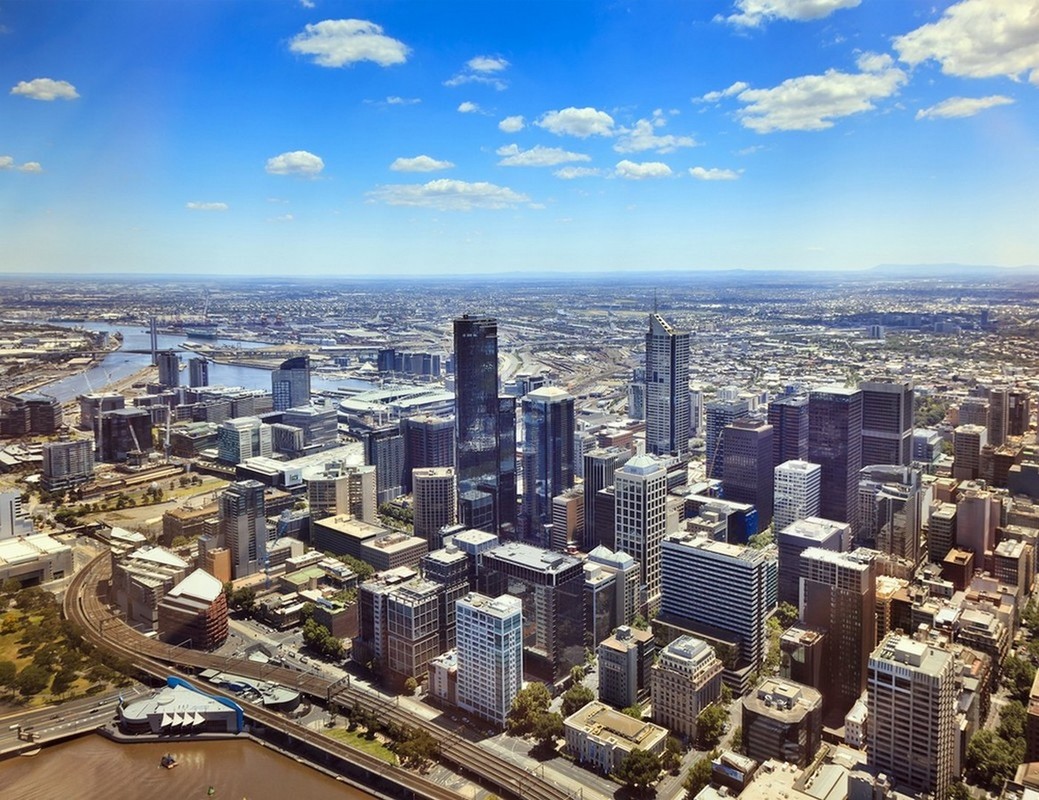
Melbourne is one of the largest cities in Australia.
The islands of Oceania are considered part of the Australian continent, which is why the continent is sometimes called "Australia and Oceania". The largest islands of Oceania include New Guinea and the two main islands of New Zealands.
Australia was inhabited by stone age humans approximately 40–50 thousand years ago. They arrived at the previously uninhabited continent by wooden boats. These original settlers of Australia were the ancestors of the Aboriginal Australians.
Captain James Cook declared the continent property of Great Britain in the year 1770. After this, the continent began to receive immigrants from Europe. A majority of the modern Australian population is descended from these European settlers, most of which came from the British Isles.
Australia became independent from Great Britain during the 20th century, but the British queen is still the formal ruler of the nation. English is the official language of Australia. Metropolises have formed on the coastal regions of Australia. An example of such a metropolis is Melbourne, pictured below.
Melbourne is one of the largest cities in Australia.
Australian climate and vegetation
Australia is located completely in the Southern Hemisphere. This is why December and January are the two warmest seasons on the continent. As a result, it is no problem for Australians to go surfing on Christmas Eve, something that would be unthinkable in the Northern Hemisphere.
The northernmost parts of Australia are located near the equator. Rainforests grow in these northern regions. In contrast to these lush forests, the innermost parts of Australia look drastically different due to them receiving only a little precipitation throughout the year. The majority of the continent consists of savannas and deserts.
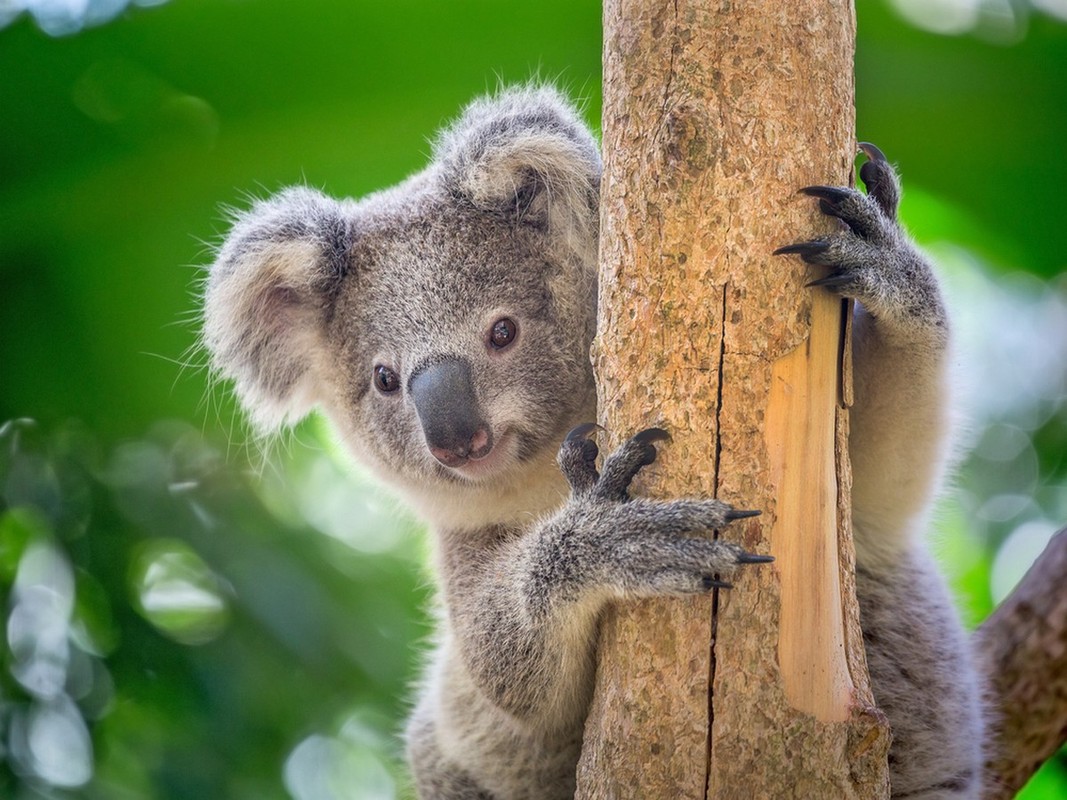
The eucalyptus tree is native to Australia. It is widely used as a material in both construction and paper production. In right conditions, an eucalyptus tree can grow tens of meters in just 20 years. The leaves of the eucalyptus tree are not eaten by many animals. One of the animals that does like eucalyptus is the koala, which is one of Australia's many endemic species.

Eucalyptus trees.
The northernmost parts of Australia are located near the equator. Rainforests grow in these northern regions. In contrast to these lush forests, the innermost parts of Australia look drastically different due to them receiving only a little precipitation throughout the year. The majority of the continent consists of savannas and deserts.
The eucalyptus tree is native to Australia. It is widely used as a material in both construction and paper production. In right conditions, an eucalyptus tree can grow tens of meters in just 20 years. The leaves of the eucalyptus tree are not eaten by many animals. One of the animals that does like eucalyptus is the koala, which is one of Australia's many endemic species.
Eucalyptus trees.
Australian animals
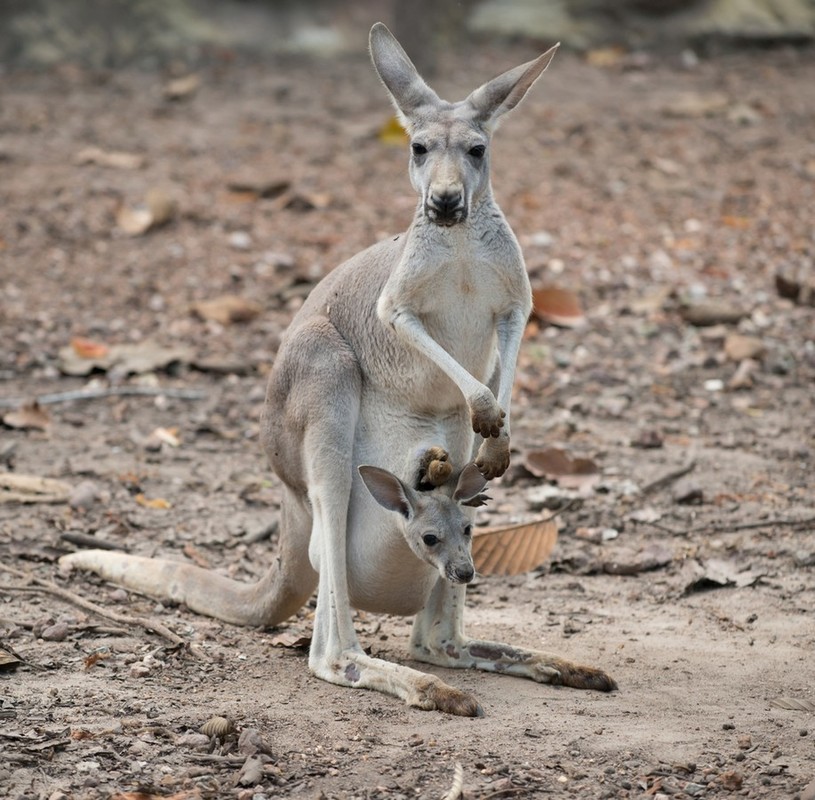 Because of Australia is isolated from all other continents, its plants and animals have developed in a unique manner. Many species of plants and animals that are not found anywhere else in the world can be found in Australia.
 Although marsupials have become extinct almost everywhere else on Earth, many marsupial species can be found in Australia. Marsupials are mammals that carry their young in specialized pouches. Because young marsupials are small, hairless and helpless creatures, they live and develop inside their mother's pouch, which also covers the teats that the young marsupials feed on.
The best-known Australian marsupial species are kangaroos, koalas and wombats.
The strangest and most unique Australian animal is the platypus, which is one of the only mammal species in the world that are known to lay eggs.
Photographs of Australian animals



Terminology
| Term | Explanation |
|---|---|
| aboriginals | A name given to the indigenous inhabitants of the Australian continent. |
| eucalyptus | A tree species native to the Australian continent. |