
10. Qualities of water
Dissolution
 Water is a molecule that consists of two elements: oxygen and hydrogen.
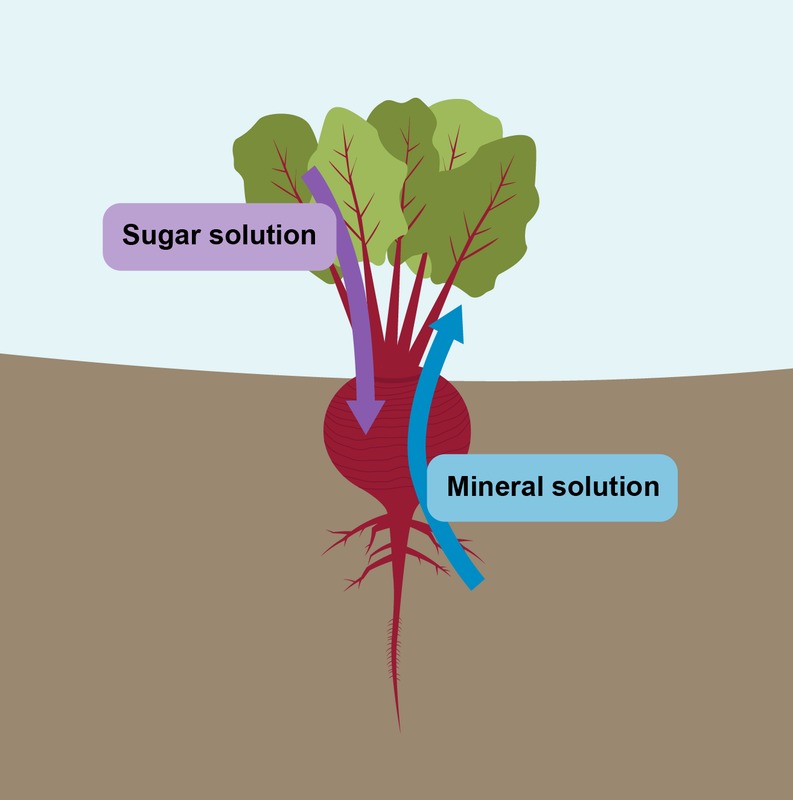
Water is a good solvent. This means that different substances, especially sugars and salts, dissolve into water easily. This is especially beneficial for plants, because they can receive important nutrients and minerals alongside the water that they collect with their roots.
Water is also used by plants to trasnport the sugar they produce in their leaves into other parts of their structure. The sugar dissolves with water, and moves through the plant's vascular system. Similarly, the human body uses water to transport salts and sugars between various cells and organs. This is why both plants and humans are mostly made of water.
Some gases also dissolve into water. For example, oxygen that dissolves into water is used by fish to breathe through their gills. However, water contains significantly less oxygen than the air around us.
Although the air is full of oxygen, fishes will quickly die on dry land. This is because their gills are not suited to breathe without moisture. On dry land, the gills dry out and stick together, making the fish suffocate.
 Enough oxygen is dissolved into water for fish to breathe through their gills.
A solution is a mixture of substances, where one substance is dissolved into another. For example, salt molecules quickly dissolve in water so that they cannot be distinguished with the naked eye. In the images below, the test tube on the left contains water that has been mixed with quartz sand. The test tube on the right contains water that has been mixed with salt. The picture on the left shows the starting point, and the picture on the right shows the situation some minutes after the two substances have been mixed together. The picture on the right clearly shows how the salt solution on the right is more transparent than the mixture of quartz sand and water on the left.
 .
.
Salt (test tube on the left) dissolves into water easier than quartz sand (test tube on the right).
If you want to separate the salt from water once again, the water must be evaporated. This method is used to separate sea salt from sea water. The heat of the Sun helps to evaporate water from shallow beaches, and people can gather the crystallized sand into large piles.

Evaporation is used to separate sea salt from sea water.
Surface tension
Water also has a strong surface tension. When an iron paper clip is placed carefully on top of the water's surface, it will not sink. Instead, it stays on top of the water's surface (image on the left below). However, even the slightest touch can make the paper clip sink to the bottom of the water, because iron is more dense than water.
The picture on the right below shows how a aluminum disc has pushed the water's surface downwards. It looks like the water's surface contains a thin film that the aluminum disc cannot penetrate. Note that the disc does not float, but instead stays in its place thanks to water's surface tension. This surface tension is caused by water molecules, which cling on to one another more tightly near the water's surface.

Examples of water's surface tension.
The surface tension effect is so strong that it will make water drops round. The surface on which the drop of water is placed will determine how round the drop will become. On plant leaves, for example, water drops can easily become ball-shaped because of surface tension.
Water's surface tension is so strong that a large amount of water can be poured on top of a coin before it will spill out.
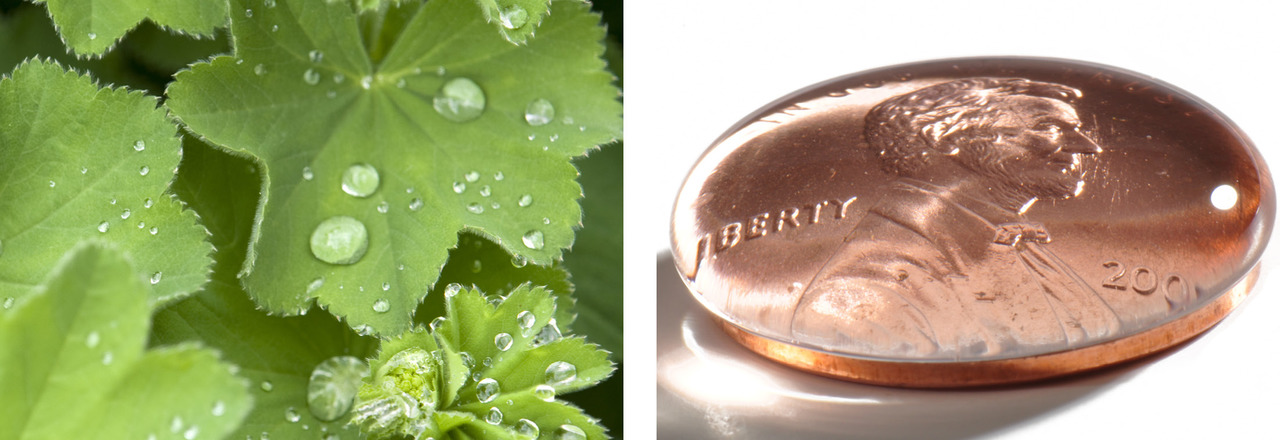
Water's surface tension creates round drops (on the right) and makes it possible for large amounts of water to stay in small amounts of space (on the right).
Soap also has a strong effect on water's surface tension. When painting with a water color on a plastic surface, the surface tension effect will make the water color form small drops. However, when soap is added to the water color, the result is a thick, even line. In other words, soap reduces the surface tension effect. This is made us of in washing powders and laundry detergents. The soap contained in these products make it possible for water to reach the deepest folds of fabrics, cleaning the clothes completely.
The pond skater is a small insect that moves on the surface of water with the help of surface tension. Its legs are oily and hairy, which helps to prevent the surface tension from breaking.

Image on the left: When soap is added into water, its surface tension effect is reduced. The result is an even line. Image on the left: A pond skater moves on the surface of water.
Density
The density of matter determines how easy it is to float in it. The more dense the substance, the easier it is for things to float in it.
Look at the image on the left below. The glass on the right is filled with regular water. When a piece of potato is placed in the glass, it will sink to its bottom straight away. The glass in the middle contains water mixed with salt. This helps to make the solution thicker. As a result, the piece of potato floats near the surface of the water. The glass on the left contains water in two layers: the upper layer contains regular water, whereas the lower layer contains salt water. As a result, the piece of potato is floating halfway between these two layers.
It is easier for humans to float in salt lakes than in regular lakes. Water that has a high salt concentration is more dense than the human body. The best-known salt lake in the world may well be the Dead Sea, located in Israel.

Images on the left: The potato floats or sinks depending on the density of the solution. Image on the right: A human can float in a salt lake easily.
Look at the image on the left below. Substances that are less dense than water, such as yellow cooking oil, float above water. Conversely, substances that are more dense than water, such as dark syrup, sink below the layer of water. Similarly, warm water floats on top of cold water, because its density is lower.
Water is a strange substance, as solid ice usually floats in liquid water. Normally, solid matter is more dense than its liquid counterpart. For example, if you throw a chunk of solid iron in a pool of liquid iron, it will sink immediately. However, an ice cube placed in a glass of water will float near its surface. Ice floats because it is less dense than water. This is helpful for many aquatic organisms: if ice formed near the bottom of the lake during the winter months, the fish would have no access to food.

Image on the left: Substances that are less dense than water, such as cooking oil, float above water, whereas substances that are more dense than water, such as suryp, sink below it. Image on the left: Water is a strange substance, because its solid form is less dense than its liquid form.
Even enormously heavy and large glaciers are able to float in the planet's oceans. This happens because ice is slightly less dense than liquid water. However, this difference in density is very small. It is why over 90 percent of the glacier is actually located below the water's surface.
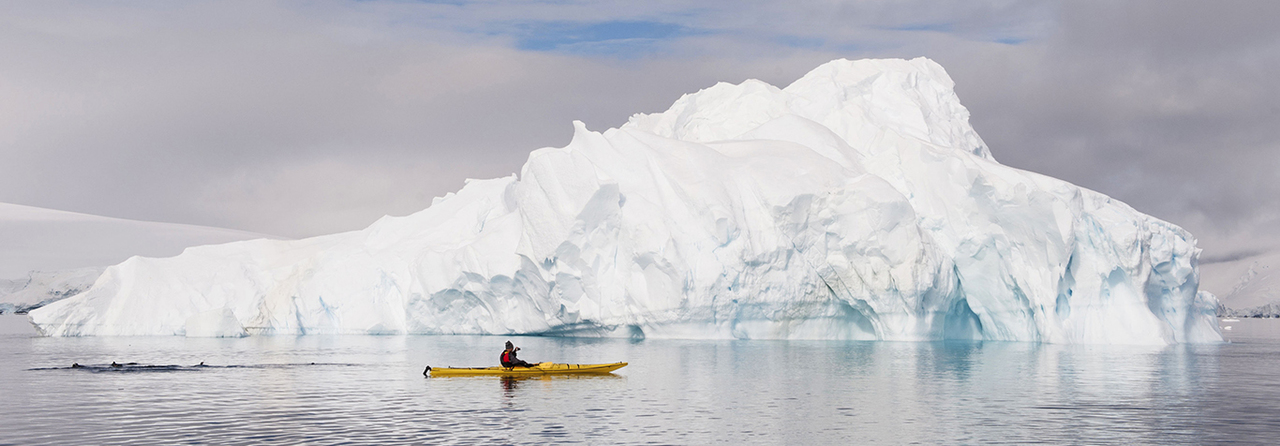
The difference in the density of ice and water makes it possible for glaciers to float.
Terminology
| Term | Explanation |
|---|---|
| solvent | A substance where another substance can be dissolved. E.g. water for sugar and salt. |
| solution | A mixture where one substance has "disappeared" into another substance. E.g. salt water |
| surface tension | A phenomenon where the surface of a liquid forms a strong, film-like sheet. |
| density | A unit that shows the weight of a material compared to its volume. |