
Third-class levers
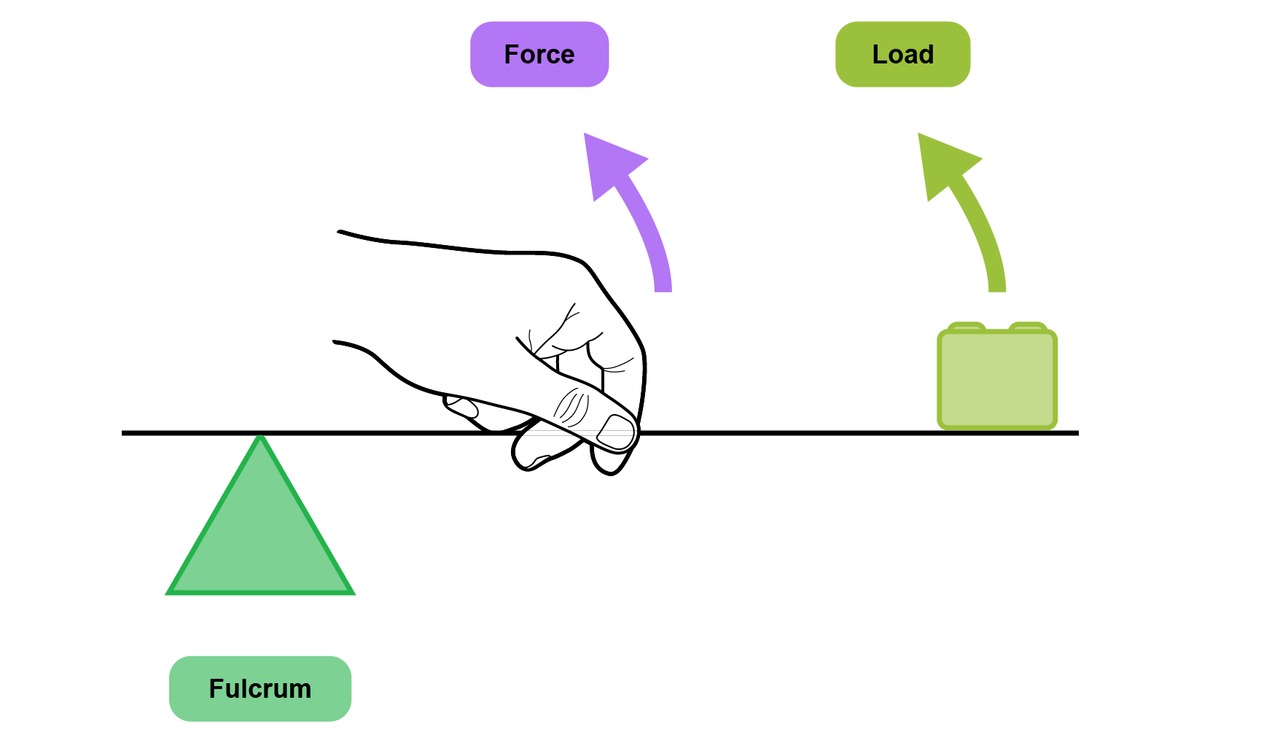 In third-class levers, a small movement produces a large movement at the edge of the lever. The force moves between the fulcrum and the load.
Third-class levers do not make lifting a load easier. Instead, they produce large movements with small amounts of force.
The arm is an example of a third-class lever. The small movements of the muscles make the arm move for longer distances.
Third class levers are useful for throwing things.

Image on the left: The arm of the pitcher makes use of a third-class lever. On the right: A ball can be made to travel a longer distance by using a plastic thrower.
A fishing rod is an example of a third-class lever. The fulcrum is located in the fisher's belt, the left hand produces the force, and the load is provided by a large fish.
A floorball stick is also an example of a third-class lever. The force is located at the centre of the level, whereas the fulcrum is found at its upper end. A small movement makes the ball travel with great force and speed.
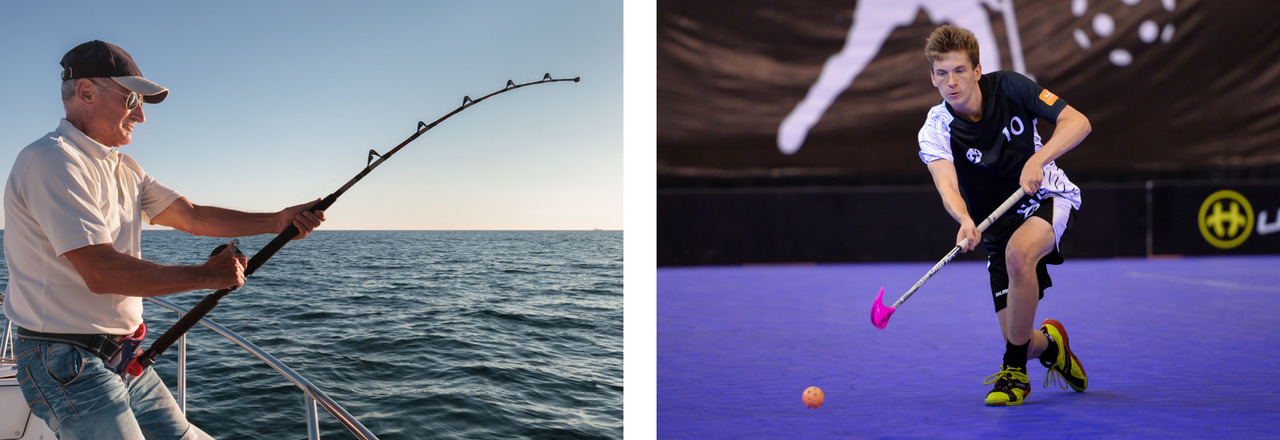
Fishing rods and floorball sticks are examples of third-class levers.