
23. Sweden
Basic facts: Sweden
 Surface area: 450 295 km² (larger than Finland)
Population: approximately 9,5 million (larger than Finland)
Most important livelihoods: services, industry, agriculture
Capital city: Stockholm
What do you know about Sweden?
 What do you know about Sweden?
 Key words:
- nature
- cities
- monarchs
- sports
- music
- language
0 kommenttia
What is Sweden like?
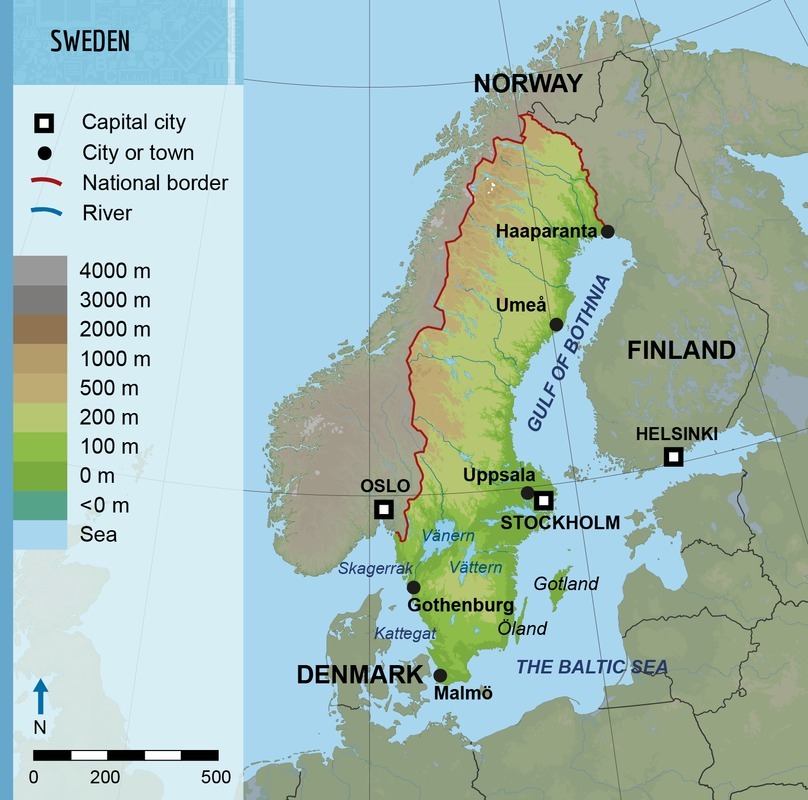 Sweden shares its borders with Finland, Norway and Denmark. It is one of the Nordic countries.
 The largest Swedish cities include Stockholm, Gothenburg and Malmö.
The southernmost parts of Sweden are known as Götaland, the middle part is known as Svealand, whereas the northern parts are known as Norland. The northernmost region of Norland is Lapland.
The large islands of Öland and Gotland belong to Sweden. They are located in the Baltic Sea. Sweden has shores on the Gulf of Bothnia, the Baltic Sea, and on the Danish straits of Skagerrak and Kattegat.
Øresund is a narrow strait located between Sweden and Denmark. The two nations are connected by the long Øresund bridge, which runs from the Danish capital city of Copenhagen to the Swedish city of Malmö.
Sweden is a large country
 Sweden is the largest Nordic country, and the fifth largest nation in all of Europe. Its land surface area is 450 295 square kilometres (km2). The population of Sweden is approximately 9,5 million, which is almost twice of the population of Finland. This means that Sweden is also the largest Nordic country in terms of its population.
Like Norway, Sweden is a constitutional monarchy. On paper, it is ruled by a monarch, whereas actual decision-making power is wielded by the nation's democratically elected parliament and government.
The capital city of Sweden is Stockholm. It is located on the shore of the Baltic Sea and is home to over a million people. Stockholm is the political and economic center of the nation. The Swedish parliament meets in Stockholm, and the Royal Castle is likewise located in the capital city.
The official language of Sweden is Swedish. The largest minority language is Finnish because Sweden is home to approximately 200 000 ethnic Finns.