
Weather factors
Temperature is a term that means how warm the air around us is. During the summer, the daily temperatures are at their highest, as the northern hemisphere receives more sunlight than during other parts of the year. Temperature is also affected by clouds and the wind.
Clouds prevent sunlight from warming up the planet's surface during the day. During the night, however, clouds act as a kind of blanket above the planet's surface, preventing heat from evaporating into space. This is why clear summer nights are colder than cloudy summer nights.
Air currents or winds have an effect on air temperature. When air flows from the north, it is usually colder than the air that flows from the south.
Near sea shores, the maritime climate makes the air temperature warm up more slowly during the spring than in inland areas. During the autumn, the maritime climate makes the air temperature cool down more slowly during the spring. This happens because the water of the sea warms up and cools down more slowly than land.
In inland areas, the continental climate results in a colder winter and warmer summer.
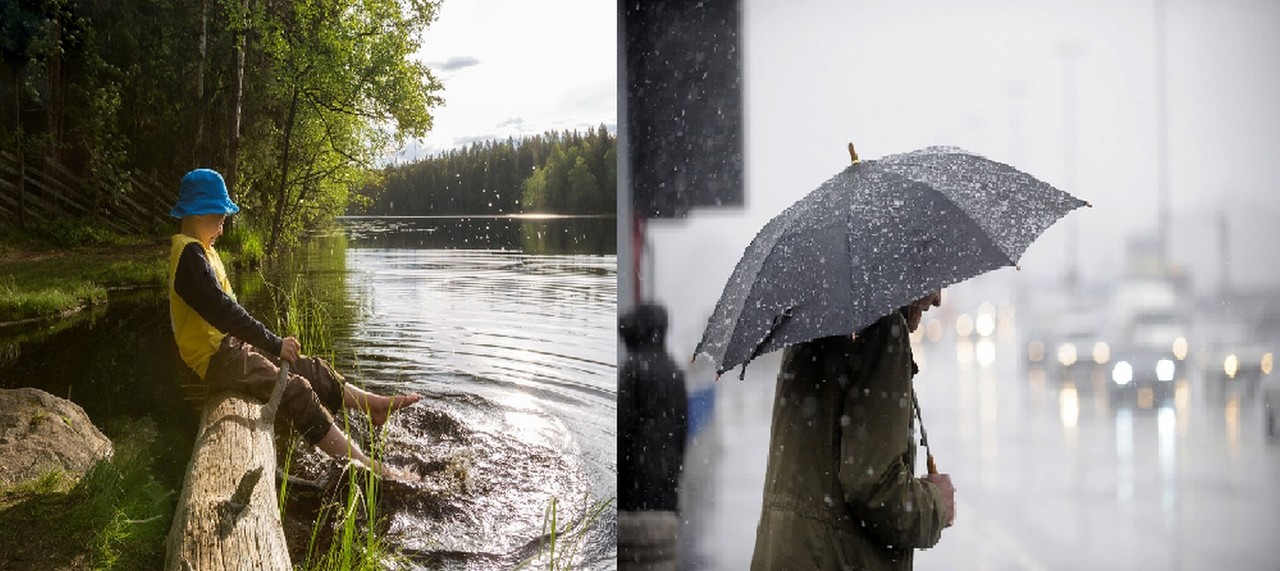
Different weather conditions. On the left, a calm, warm and clear summer day. On the right, a rainy, windy and cold autumn day.
Clouds prevent sunlight from warming up the planet's surface during the day. During the night, however, clouds act as a kind of blanket above the planet's surface, preventing heat from evaporating into space. This is why clear summer nights are colder than cloudy summer nights.
Air currents or winds have an effect on air temperature. When air flows from the north, it is usually colder than the air that flows from the south.
Near sea shores, the maritime climate makes the air temperature warm up more slowly during the spring than in inland areas. During the autumn, the maritime climate makes the air temperature cool down more slowly during the spring. This happens because the water of the sea warms up and cools down more slowly than land.
In inland areas, the continental climate results in a colder winter and warmer summer.
Different weather conditions. On the left, a calm, warm and clear summer day. On the right, a rainy, windy and cold autumn day.