
24. Russia
Photographs from Russia




Basic Facts: Russia

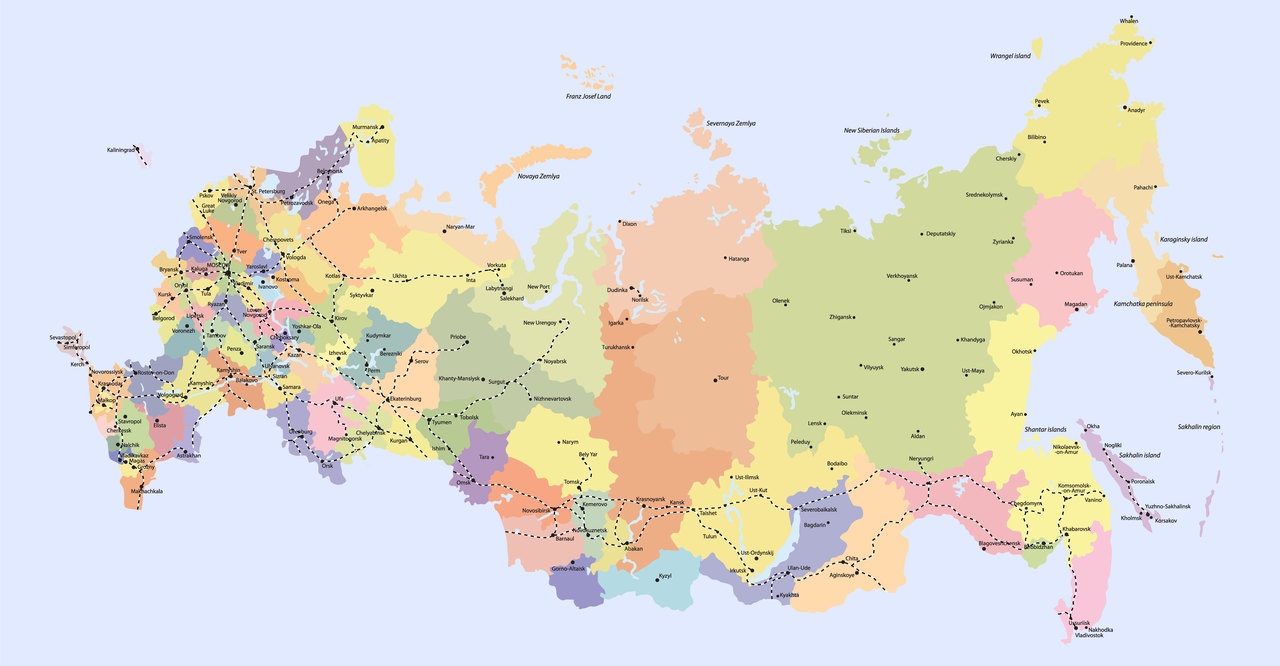
Russia is the largest nation in the world in terms of surface area. It covers an area from the Baltic Sea to the Pacific Ocean. Most of the Russian population lives in the western parts of the country. The eastern part of the nation, Siberia, is sparsely populated.
Surface area: 17 075 400 km²
Population: approximately 140 million (140 000 000)
Currency: the Russian rouble
Most important livelihoods: natural gas and oil production, the metal and forest industries, agriculture
Study the map or Russia on Google Maps.
Russia is the largest nation in the world
 Russia is the largest nation in the world. Its surface is area is over 17 million square kilometres, which covers approximately one eight of the planet's total land surface area.
In terms of its population, Russia is the ninth largest nation on the planet.
Russia is located on two continents. Its western part is in Europe, whereas its eastern part is in Asia.
The longest railway in the world, the Trans-Siberian Railway, is almost 10 000 kilometres long. It starts from Moscow and ends in the city of Vladivostok on the Chinese border. In total, the journey takes eight complete days!
Russia has the largest energy and mineral deposits in the world. It also has the largest forests on the planet.
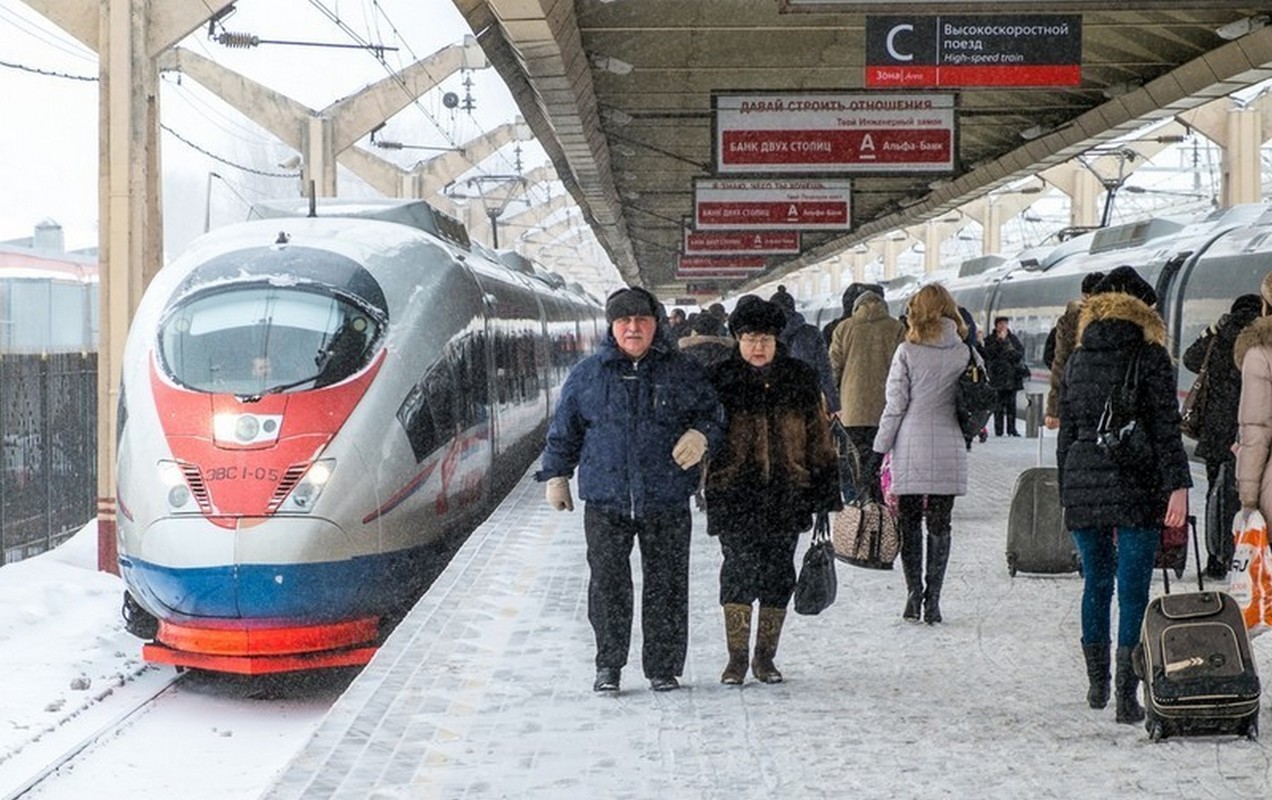
Picture: When travelling through Russia by train, you will quickly understand how large the nation really is. At the same time, you have a lot of time to talk with other passengers.
Government
 Russia is officially known as the Russian Federation. This means that Russia is actually not a single country, but instead a federation of 83 smaller regions. Each of these federations has two representatives in the Russian federal assembly, which is the nation's legislative body.
 In addition to the federal assembly, the president holds a lot of political power in Russia.
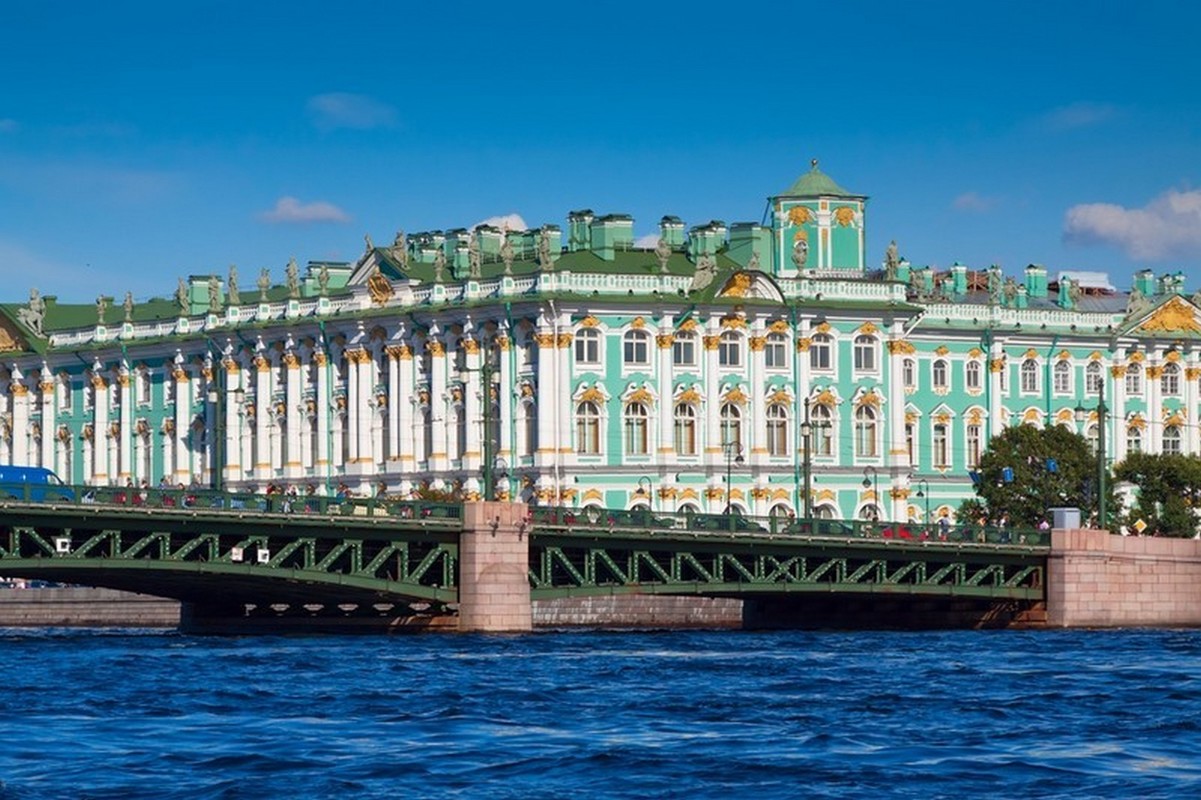
Picture: The political decisions of the Russian Federation are made in its capital city, Moscow.
Economy
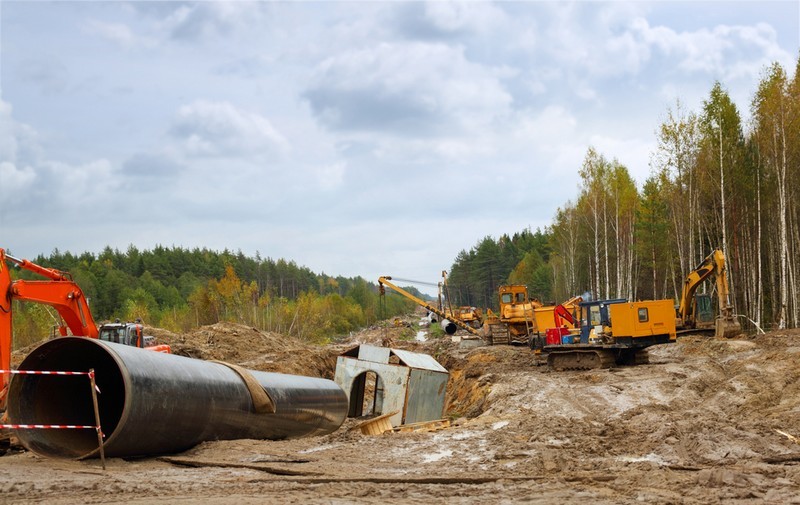 Russia is one of the most important economic powers in the world. However, the nation's riches are distributed very unevenly between the nation's rich western part and its poor eastern parts.
Russia has the largest deposits of natural gas, crude oil and coal in the world. In addition to these natural resources, the Russian forests also provide a lot of wood for the forest industry. In addition to these industries, the metal industry is also a significant part of the Russian economy.
In addition to industry, agriculture is also an important livelihood. Most of the agricultural products made in Russia are sold on the nation's large domestic market.
Nature
The Russian nature accommodates a lot of large animals. The bear is considered the national symbol of Russia. Some of the large mammals found in Russia are very endangered. Such species include the Siberian tiger, the amur leopard and the snow leopard.

The amur leopard is an endangered feline predator found in Russia. Today, there are only approximately 100 amur leopards living in the wild.
Many languages are spoken in Russia
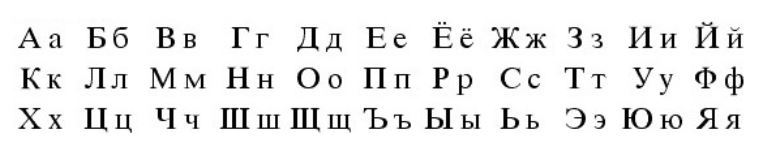
The Russian Federation is home to over 160 different ethnic groups that speak over a hundred different languages.
However, the main language and the only official language of the nation is Russian. Unlike most other European languages, Russian is written by using the Cyrillic alphabet (pictured on the right).
Terminology
| Term | Explanation |
|---|---|
| federation | A nation that consists of several smaller, autonomous regions. |