
16. Electrical safety
The dangers of electricity
Electricity can be dangerous. This is why it is always good to read the instructions of an electronic device before using it. When using an electronic device, you should always follow the manufacturer's instructions carefully.
You should also know how to use electronic cables and sockets correctly. You should never pull the power cable of an electronic device from the cable itself, as this can cause the conductors of the cable to split. Instead, you should always pull the power cable from near the socket. When attaching a power cable into a socket, always make sure that you push it all the way in. If a power cable is attached loosely to a wall socket, it can cause a fire hazard.
You should never try to fix a faulty electronic device yourself, as it can sometimes be very dangerous. If an electronic device is faulty, it is also not safe to use. Faulty or broken electronic devices should be replaced or sent to be fixed by professionals. Sparks, smoke and flames are the most important warning signs of a broken electronic device, and a device that produces one of them should be removed from use immediately.
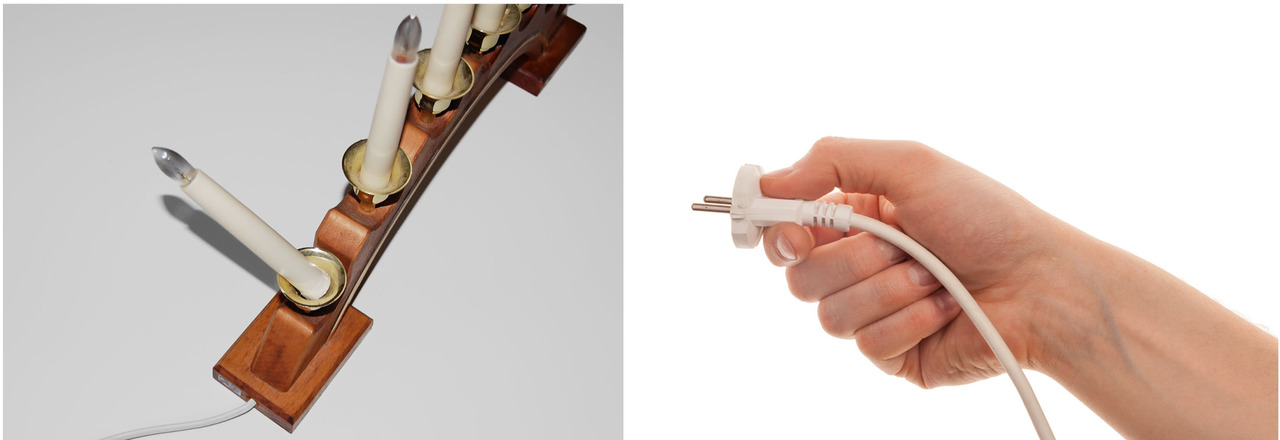
On the left: A broken electronic chandelier. On the right: The right grip for handling power cords.
Never use extension cables permanently. They are only meant for temporary use. You should always use an electronic device in the same room as the socket it is connected to is.
When outdoors, you should only use specialized outdoor sockets. Never move a power cord that is used indoors out of the house.

On the left: Extension cables should never be used permanently. On the right: Insulated wall sockets are meant for outdoor use.
Water and electricity do not fit well together. Using electronic devices near water, e.g. in the shower, can be dangerous and even fatal.
High tension wires contain a lot of electrical power, which makes them dangerous. You should never play or climb near them, as they can send dangerous sparks that can be fatal for humans.

On the left: Water and electricity should not be used simultaneously. On the right: The high-tension cables near railway tracks are extremely dangerous.
Dust is also dangerous when it comes into contact with electronic devices. This is why all electronic devices, especially refrigerators, freezers and heating units, should be kept clean and free of excess dust. Computers and televisions can also cause fire hazards if they are not cleaned regularly.
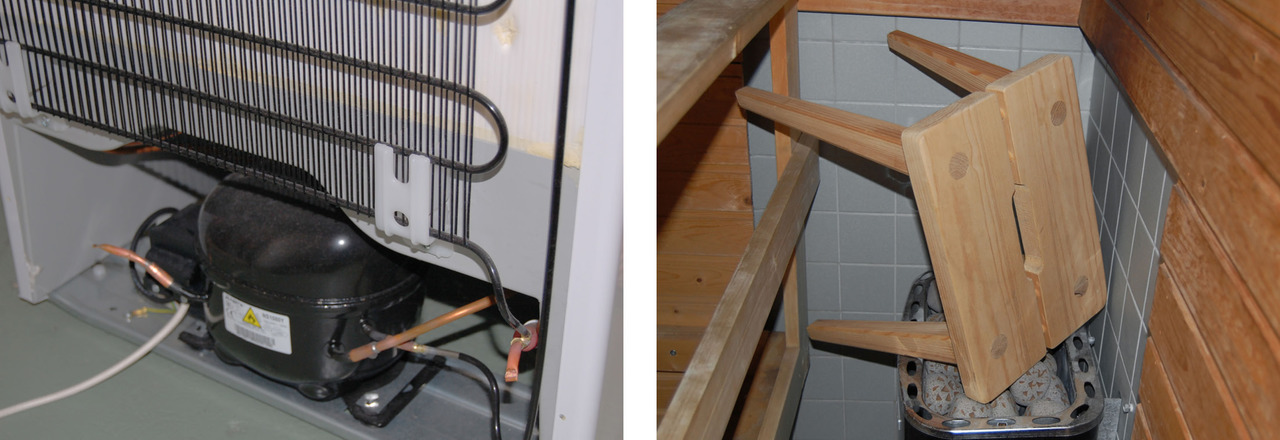
On the left: Electronic devices should be kept free of dust. On the right: Devices that produce heat, such as heating units and sauna stoves, should never be covered with other objects!
Electronic devices can heat up and produce a fire hazard if they are covered by other materials when used.
You should also be careful when using microwave ovens. No metals, such as aluminium foil, should ever be placed in a microwave oven, as they can cause a fire hazard.
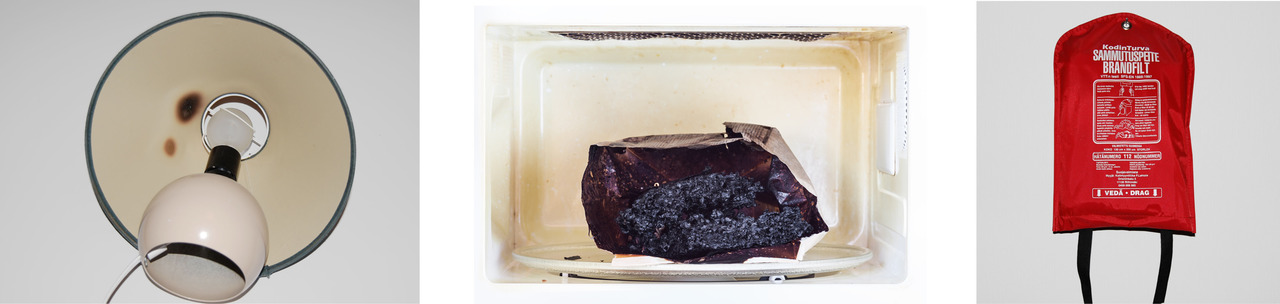 If an electronic device begins to burn, you should first disconnect it from its power source. The device should be extinguished with a fire blanket. Water should never be used to extinguish electronic fires.
Terminology
| Term | Explanation |
|---|---|
| socket | Sockets connect electronic devices into the mains current. |
| high tension wires | High tension wires connect large electronic circuits. They are very dangerous. |