
Different kinds of circuits
There are three types of electric circuits: large, small and medium-sized circuits.
The electronic devices you use at home and at school are usually connected into a large electronic circuit called a mains circuit. Devices are connected to mains current circuits usually via wall sockets. The electric current of a mains circuit is dangerously strong.
The electric tension sources of large mains circuits are the generators of large power plants. They are connected to households and buildings through a vast network of electronic cables.
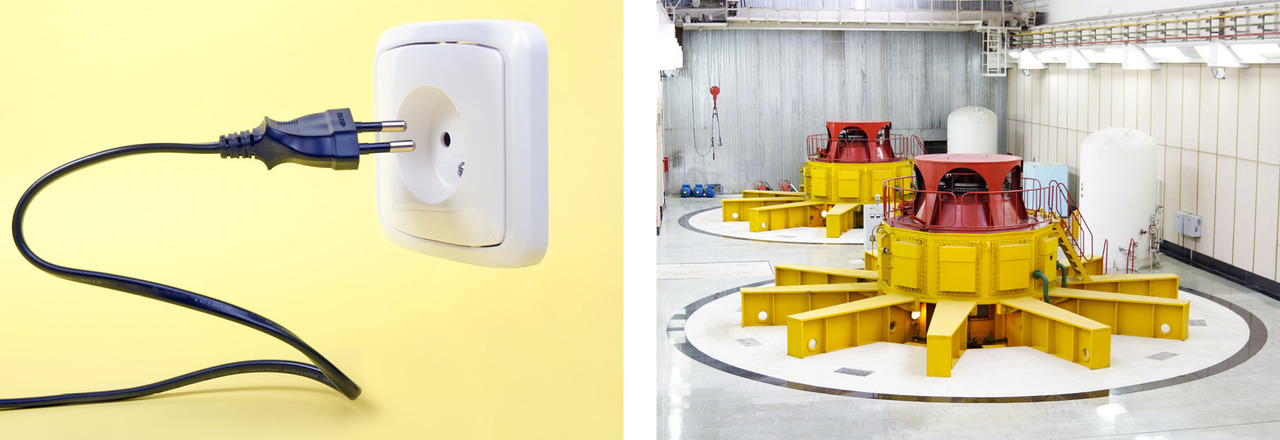
The structure of a large circuit.
Small electric circuits are used in portable devices. In these devices, the source of tension is usually a battery. If an electric circuit contains instructions on the placement of poles, these instructions should be followed precisely. Otherwise, the device will not work or can even break. Batteries contain two different poles: a minus pole (-) and a plus pole (+). This is why batteries must always be placed in a device the right way round. An empty battery must be removed, as it can begin to leak and ruin the device by doing so.
A small electric circuit can also use a chargeable battery. These batteries can be charged full of electric tension again and again, by connecting them to a mains current with a battery charger. These chargers are actually converters that transform the mains current into a smaller, portable current. Chargeable batteries should be handled carefully because they can sometimes be dangerous.
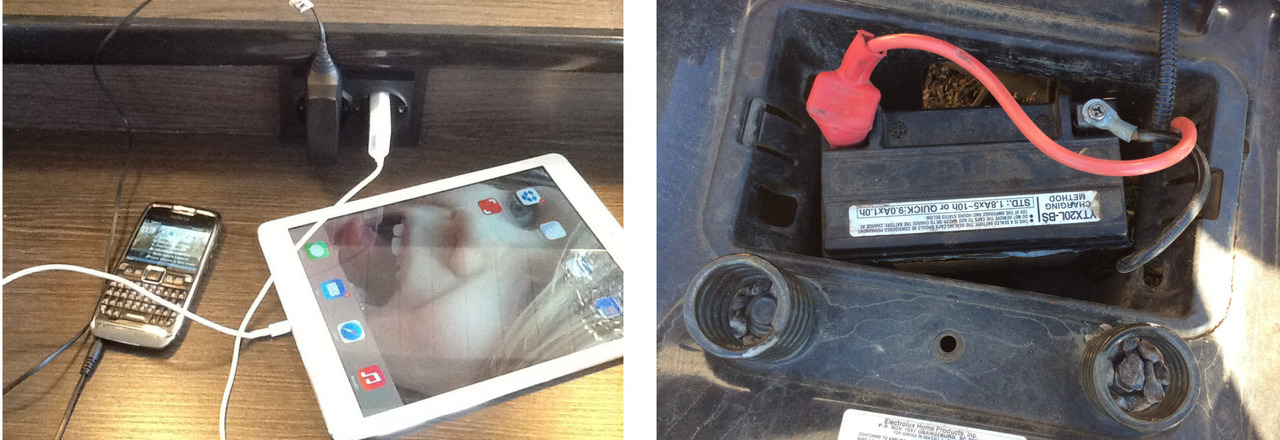
On the left: Small electric circuits are used in portable devices. They are often powered by a battery. On the right: A car battery is an example of a chargeable battery.
Medium-sized electric circuits are stronger than small circuits. These kinds of circuits are found in cars and other vehicles. Medium-sized circuits use powerful batteries as their source of electric tension. These batteries are usually chargeable, and their electric tension is not as powerful and dangerous as those found in large circuits.
A car battery receives electric power from a generator that is called a charger. If everything is fine, the generator will recharge the car's battery when the car is driven. If the battery empties out, the car cannot start. The batteries of electric cars are charged by connecting the battery into large electric circuits. Electric cars are moved by electric motors, which is why they do not need a source of fuel.
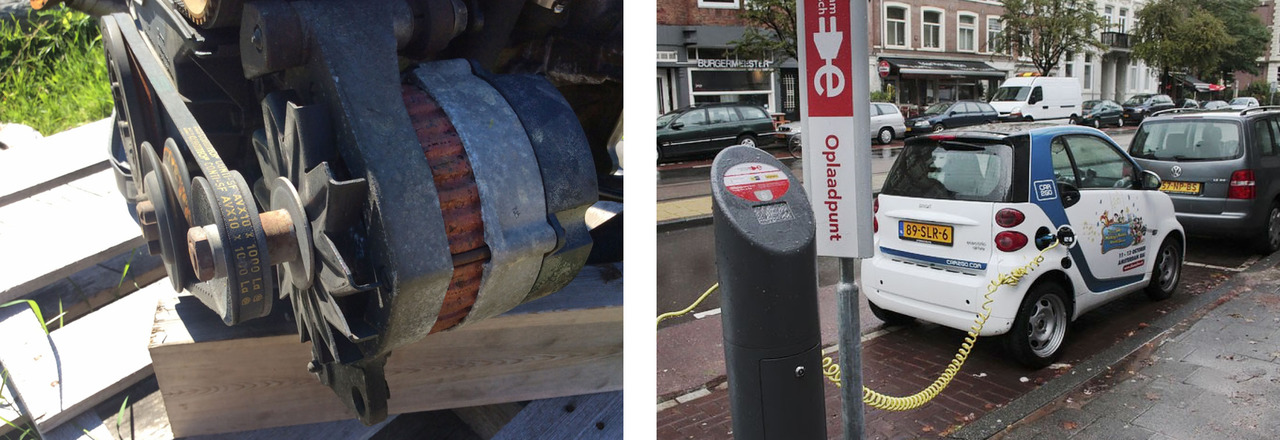
On the left: A car battery receives energy from a generator. On the right: The battery of an electric car is charged by connecting it to a large electric circuit.
Large electric circuits are not connected to all places in the world. This is why certain remote locations, such as summer houses, can be powered by medium-sized circuits. These circuits are often powered by powerful batteries and aggregators. Aggregators are generators that run on fuel. The batteries that power the electric circuits of summer houses can also be charged by using solar panels or wind generators.
Electricity can also be produced with an aggregator.