
Weeks 4-5 Politics and Society
EXERCISE C
Liitteet:
EXERCISE B .Why I believe in educating girls (multiple choice)
Liitteet:
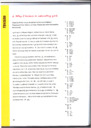
Exercise A: Political life in Finland
Read the text. Translate the underlined words and new ones.
The Finnish Constitutution crystallies the main principles of governance in very plain terms. Power in Finland is vested in the people, who are represented by 200 members of Parliament, the President of the Republic having a minor role.
Executive power lies with the Council of State (Government), which consists of a Prime Minister and a requisite number of ministers. Judicial power is vested in independent courts of law, at the higest level in the Supreme court and the Supreme Administrative Court.
The Government produces most of the material that Parliament deals with and uses as the basis for its decisions. The President formally appoints the Governement and he or she also suggests a candidate for Prime Minister, after negotiating with the parties in Parliament and consulting the Speaker of Parliament. In practice, the main role in the formation, functions and dissolution of the Government is played by the political parties involved.
If a Government resigns between parliamentary elections, the reason is usually disagreement among the Government parties that has come to light when the Government has had to make a difficult decision, or when its own bills are being dealth with by Parliament before being passed as acts. The Government always resigns after after parliamentary elections. In recent years, three to five parties have been represented in the Government. In spite of their political heterogeneity, these coalition governments have been very stable and have not lost a single vote of confidence.
The functions of ministers are extensive. They prepare the national budget and legislative reforms and after obtaining the approval of Parliament and the President, implement the latter. The ministers each direct their ministries with relative independence. There are 13 ministers, including the Prime Ministers Office, and a maximum 18 ministers. If an MP is appointed as a minister, he or she continues to work as an MP. Most ministers have this double role. It is normal practice that the leaders of the parties forming the Government also act as ministers.
The Finnish Constitutution crystallies the main principles of governance in very plain terms. Power in Finland is vested in the people, who are represented by 200 members of Parliament, the President of the Republic having a minor role.
Executive power lies with the Council of State (Government), which consists of a Prime Minister and a requisite number of ministers. Judicial power is vested in independent courts of law, at the higest level in the Supreme court and the Supreme Administrative Court.
The Government produces most of the material that Parliament deals with and uses as the basis for its decisions. The President formally appoints the Governement and he or she also suggests a candidate for Prime Minister, after negotiating with the parties in Parliament and consulting the Speaker of Parliament. In practice, the main role in the formation, functions and dissolution of the Government is played by the political parties involved.
If a Government resigns between parliamentary elections, the reason is usually disagreement among the Government parties that has come to light when the Government has had to make a difficult decision, or when its own bills are being dealth with by Parliament before being passed as acts. The Government always resigns after after parliamentary elections. In recent years, three to five parties have been represented in the Government. In spite of their political heterogeneity, these coalition governments have been very stable and have not lost a single vote of confidence.
The functions of ministers are extensive. They prepare the national budget and legislative reforms and after obtaining the approval of Parliament and the President, implement the latter. The ministers each direct their ministries with relative independence. There are 13 ministers, including the Prime Ministers Office, and a maximum 18 ministers. If an MP is appointed as a minister, he or she continues to work as an MP. Most ministers have this double role. It is normal practice that the leaders of the parties forming the Government also act as ministers.
0 kommenttia
A. Vocabulary Work for the text
Liitteet:
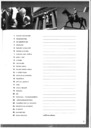
C. Reading Comprehension Homework for Mon 14th Nov.
Read the text attached below and answer the questions 1-5.
Either in English or Finnish.
The questions in English:
1.What benefits does living at home provide for young people?
2. Which change did the 1990s bring to the young people's independence?
3. According to psychologists, what is the reason for the current situation?
4. When do American young people become grown-ups, accoding to studies?
5. How is it different to grow children today compared to the past?
Either in English or Finnish.
The questions in English:
1.What benefits does living at home provide for young people?
2. Which change did the 1990s bring to the young people's independence?
3. According to psychologists, what is the reason for the current situation?
4. When do American young people become grown-ups, accoding to studies?
5. How is it different to grow children today compared to the past?
Liitteet:
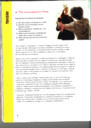
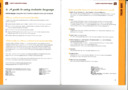
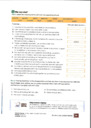
B. Active citizenship and inclusive language

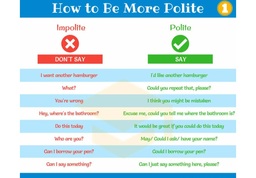
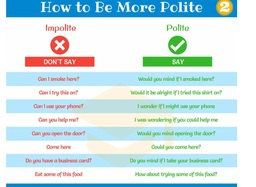
D. How to make communication work? There are certain rules!
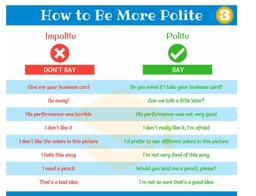
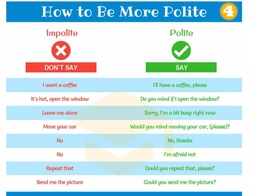
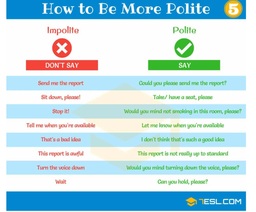
Work in pairs. Only one opens the picture at a time! You open the first picture and say the impolite words on the left. Your pairs should response in a polite manner. You check if that happens and give the right sentence if needed. Then change your roles in another picture. Only the "impolite one" has the picture open!
WATCH: Afganistan girls banned from school
Afganistan girls banned from school
Answer:
What would you do in the same situation i.e. you were banned your right to work and go to school?
Would you demonstrate?
How would your course of life change , maybe for good?