
4. Lakes
Finland is the land of a thousand lakes

Finland is often called "the land of a thousand lakes". This is true, as Finland is full of lakes.
There are over 50 000 lakes in Finland. Lakes are bodies of fresh water that have a surface area that is larger than one hectare. The bodies of fresh water smaller than one hectare are considered ponds, although some of them are sometimes called lakes, as well.
Lakes are an important part of Finnish nature. Each year, many tourists arrive in Finland in order to witness the beauty of Finnish lakes.
In the regions located on the shores of the Baltic Sea, the landscape is dominated by archipelago. Because the water of the Baltic Sea is relatively low in salt, its species are similar to those of the Finnish lakes.
Finnish lakes
Because Finnish lakes contain a relatively small amount of water, the lakes must be protected. The small amount of water is in danger of becoming polluted, and shallow lakes can suffer from the lack of oxygen during the winter months.
During the summer, Finnish lakes are full of life. They are home to various species of fish and other, smaller organisms. They are an important food source for many birds and mammals.

Lake water
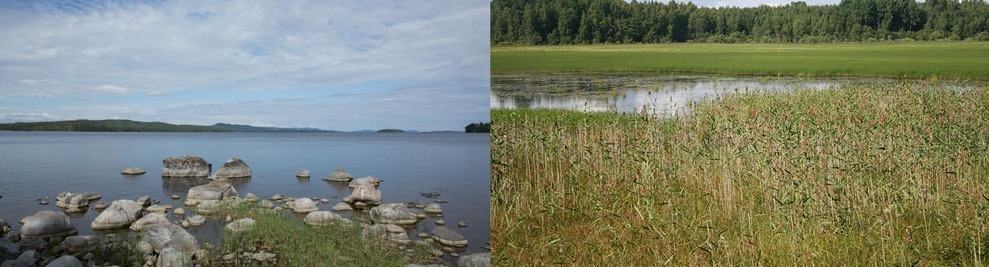
The water of a clear lake contains fewer nutrients. It also warms up more slowly during the summer months. Because of this, there is less algae and aquatic plant growth. Clear lakes are called oligotrophic lakes.
Lake plants
 Many different kinds of plants can be seen growing in lakes. Have you ever noticed that different kinds of plants grow in different parts of the lake?
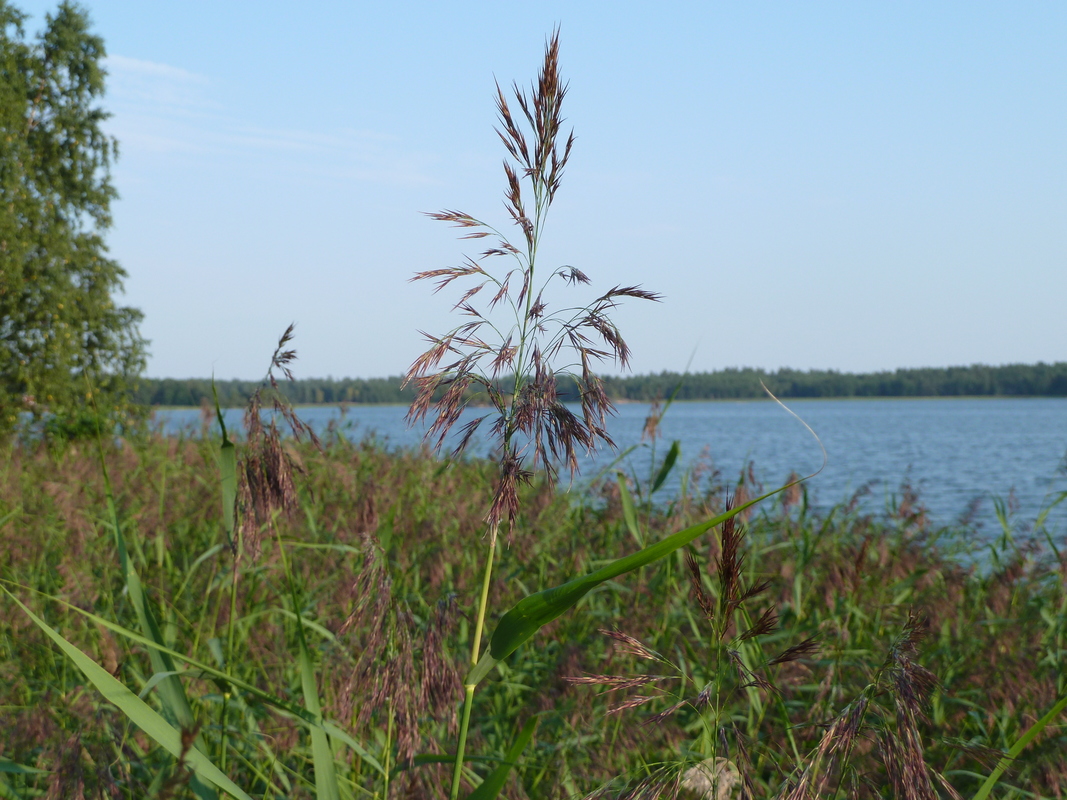
The areas near the lake shore are home to various kinds of aerial-shoot plants. They have long, hollow stems. The common reed is an example of an aerial-shoot plant.
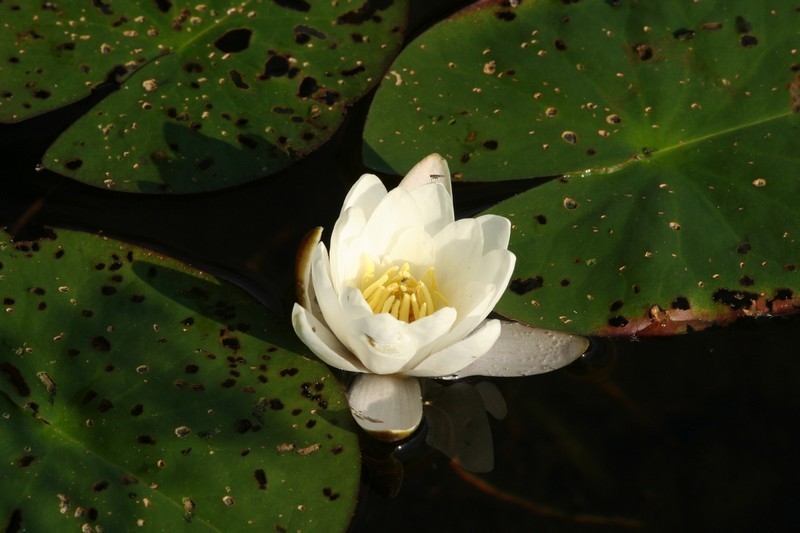
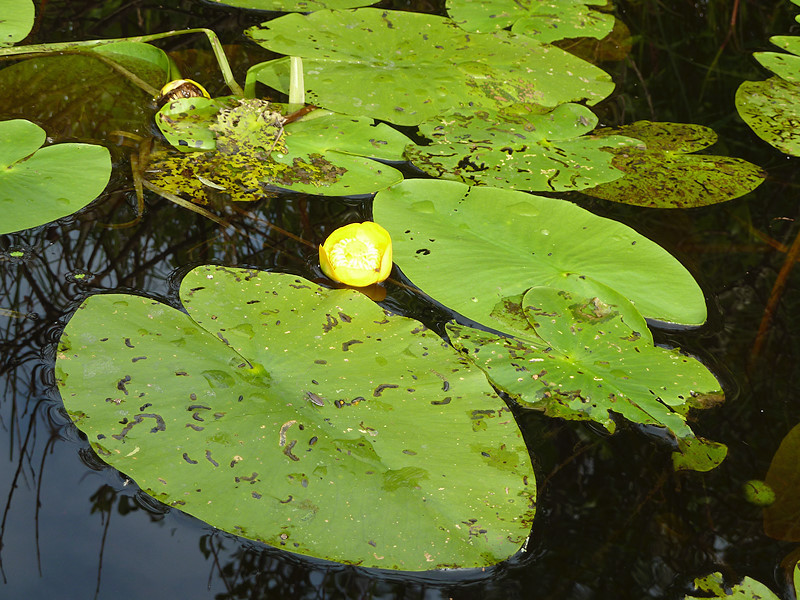
When moving deeper towards the center of the lake, we can see plants with floating leaves growing on the surface of the lake. The water lily is an example of such a floating-leaf plant.
If you go swimming in the lake and dive to its bottom, you can encounter the loose, flexible stems of plants that grow completely under the water. The perfoliate pondweed is an example of such a submerged plant.
Gallery: Lake plants
Beware of blue-green alga!
All species of blue-green alga are not toxic, but some of them are. Because of this, you should never swim in water with visible growths of blue-green alga.

Terminology
| Term | Explanation |
|---|---|
| lake | A large body of fresh water. |
| average depth | A number that tells us the lake's depth on average. |
| eutrophic lake | A lake with a lot of nutrients and plant growth. |
| oligotrophic lake | A lake with clear water, little nutrients and minimal plant growth. |
| blue-green algae |
Small algae which can colour the water of a lake in the summer, making the water unsafe to swim in. |