
3. Mosquitoes
Mosquitoes
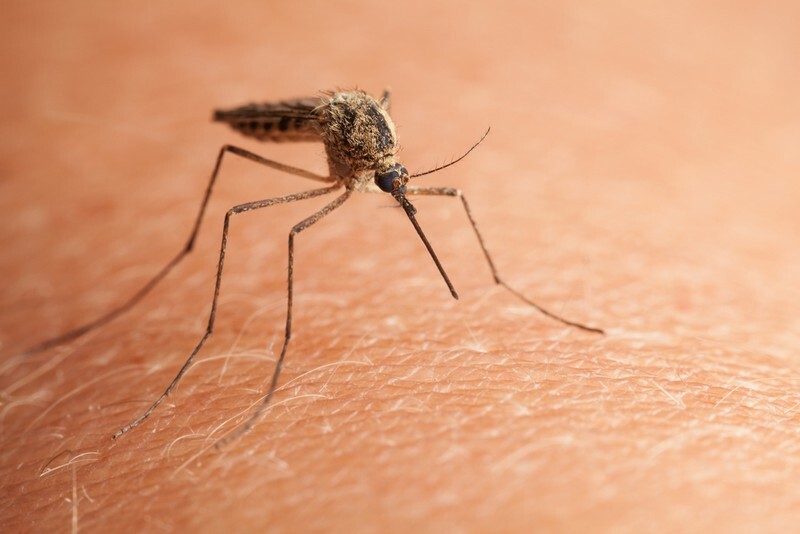 Mosquitoes are flying insects. They have compact bodies, long legs, and a sucker, which they use to suck blood from warm-blooded animals. To find their prey, they monitor the smells, temperatures, and carbon dioxide levels of the environment.
 Only female mosquitoes suck blood. Female mosquitoes use the blood as their energy source. They use the energy contained in blood to reproduce and produce eggs. Male mosquitoes only suck nectar from flowers. The life of the male mosquito is very short: they die quickly after reproducing. In contrast, the life span of a female mosquito is somewhere between 3 and 4 months.
Female mosquitoes lay their eggs in bodies of still water, such as a pond, pool or a lake. One female mosquito can lay hundreds of eggs at a time. The mosquito eggs last through the winter. In spring, the eggs hatch and develop into new mosquito individuals through metamorphoses.
Mosquitoes develop in water
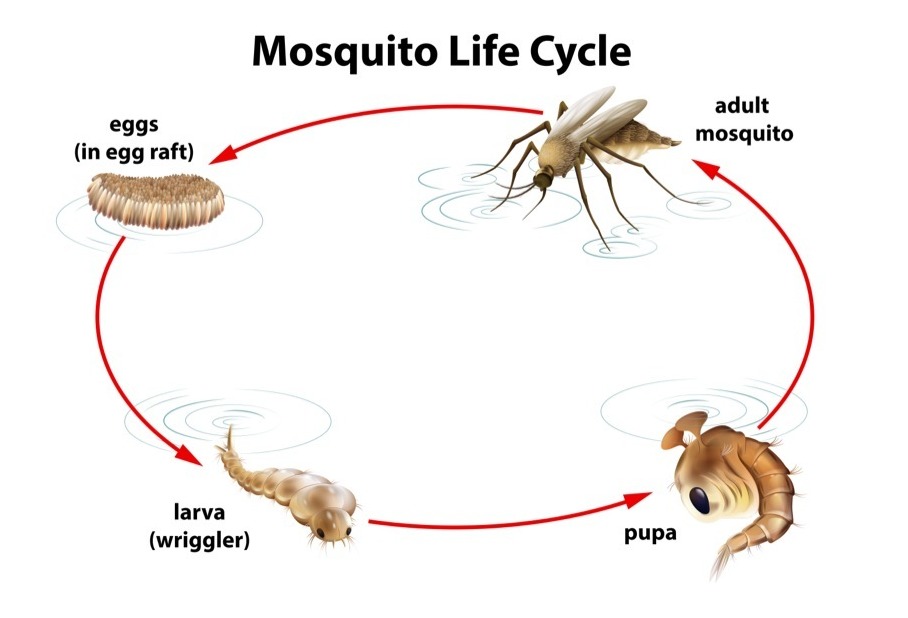 Mosquitoes lay eggs in bodies of water such as lakes and ponds. The mosquito eggs float on the water's surface.
 During the spring and the summer, mosquito larvae hatch from the eggs laid by the female mosquito during the previous summer.
The mosquito larva grows in the water before pupating, forming a hard shell called a pupa.
The mosquito develops inside the shell. Finally, the mosquito breaks free from its pupa, having developed into an adult mosquito with wings and a sucker.
This kind of a process is called a complete metamorphosis. The stages of a complete metamorphosis are the egg, the larva, the pupa and the adult insect.
Because mosquitoes develop in water, they can often be encountered near lakes, rivers and bogs.
Mosquitoes spread diseases
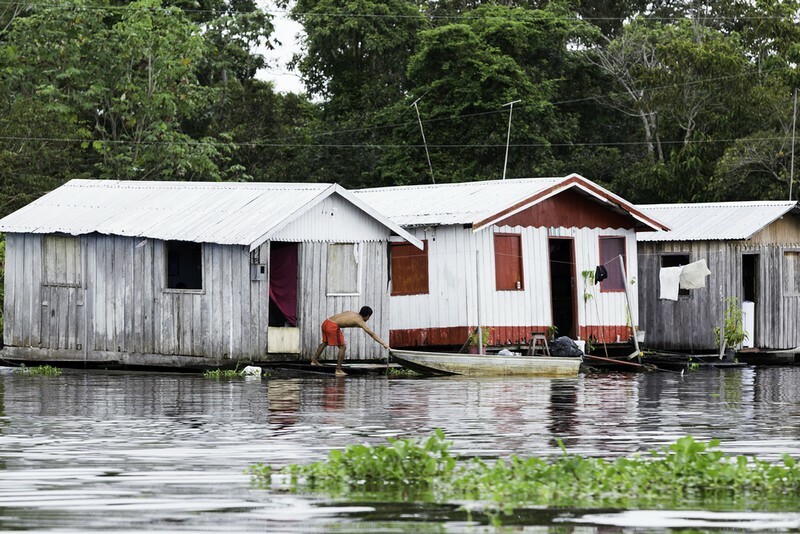 Mosquitoes spread a variety of diseases. When they suck blood from a human, the pathogens living inside the mosquito can travel through its sucker into the human's bloodstream.
 Malaria is the most well-known disease spread by mosquitoes. Other diseases spread by mosquitoes are also common in the tropics. Over a million people die each year from these diseases.
Mosquitoes spread diseases in the northern hemisphere as well, but these diseases are not as dangerous as tropical diseases. For example, some forms of flu can be spread by mosquitoes during the summer.
Usually, mosquito bites are not dangerous. The spot where the mosquito has penetrated the skin can be irritated, but this can be treated with store-bought ointments and lotions.
Mosquitoes can be avoided
 The best way to avoid being bitten by a mosquito is to dress correctly during the summer. Long-sleeved shirts and trousers offer effective protection from mosquitoes.
 Sometimes, the summer temperatures can be too hot for thick clothing. When this happens, you can protect yourself from mosquitoes with various kinds of repellent sprays and ointments available in stores.
Mosquitoes do not like smoke, which is why they do not like to spend time near campfires. Smoke-producing mosquito repellents are also effective for keeping mosquitoes away when spending time outdoors.