
2. Summer nights
Summer nights
 In the northern hemisphere, summer nights are often quite bright and full of light.
 In regions located on the northern side of the Arctic Circle, the midsummer marks the period of the midnight sun. During this period, the sun does not set below the horizon for weeks. For example, in Utsjoki, Finland, the sun shines continuously between the 18th of May and –28th of July.
In regions located on the southern side of the Arctic Circle, the sun sets normally, but the dark part of the night is very short.
The brightest time of the year is experienced during midsummer, in June. In many Nordic countries, the midsummer is celebrated with bonfires.
Animals of the summer night
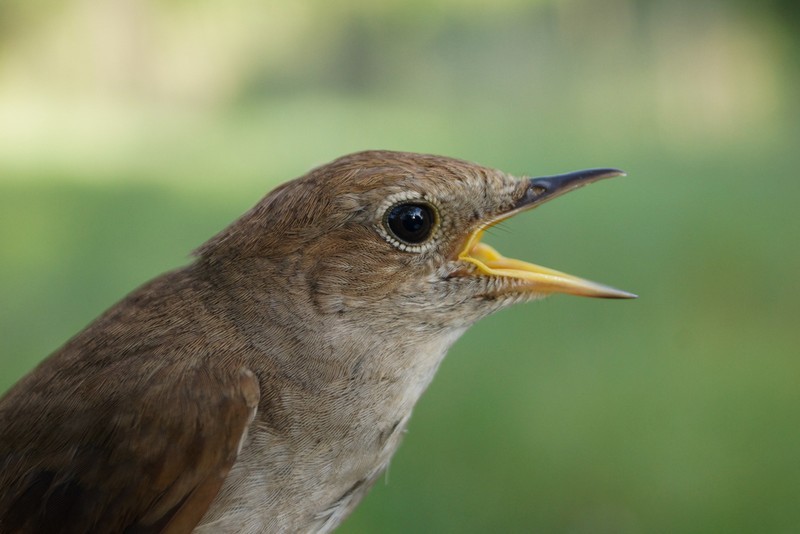 Nature grows quiet when the summer night falls. However, all animals do not sleep during the night: for example, you can hear birdsong, or even see a bat or a hedgehog.
During the summer night, you can hear the song of the thrush nightingale or a redwing. Warblers are heard singing during the night in wetlands and meadows.
The rare corn crake can be heard croaking in fields and meadows. In pine forests, you can hear the song of the European nightjar. When the sun rises, the sounds of these night-singers is joined by the songs of day-singers.
Many mammals move primarily during the night. Such species include the raccoon dog, the badger, the hedgehog and bats. Moose, deer and rabbits are likewise more often seen during the summer night than during the day.
Gallery: Animals of the summer night


Plants and the night
Plants rest during the summer nights. When the sun sets and the amount of sunlight decreases, the plant stops photosynthesizing. This means that plants do not produce sugar during the night.
When night falls, plants close the air holes of their leaves in order to prevent water from evaporating. The petals of many flowers also close during the night.
However, all plants do not rest through the night. In fact, some flowering plants continue to attract moths with their strong smells. The picture below shows a privet hawk moth approaching a flower. Moths drink nectar from the flowers, while transporting pollen from one flower to the next at the same time.
Some plants require short nights in order to grow flowers. Other plants need a long, dark night in order to bloom.
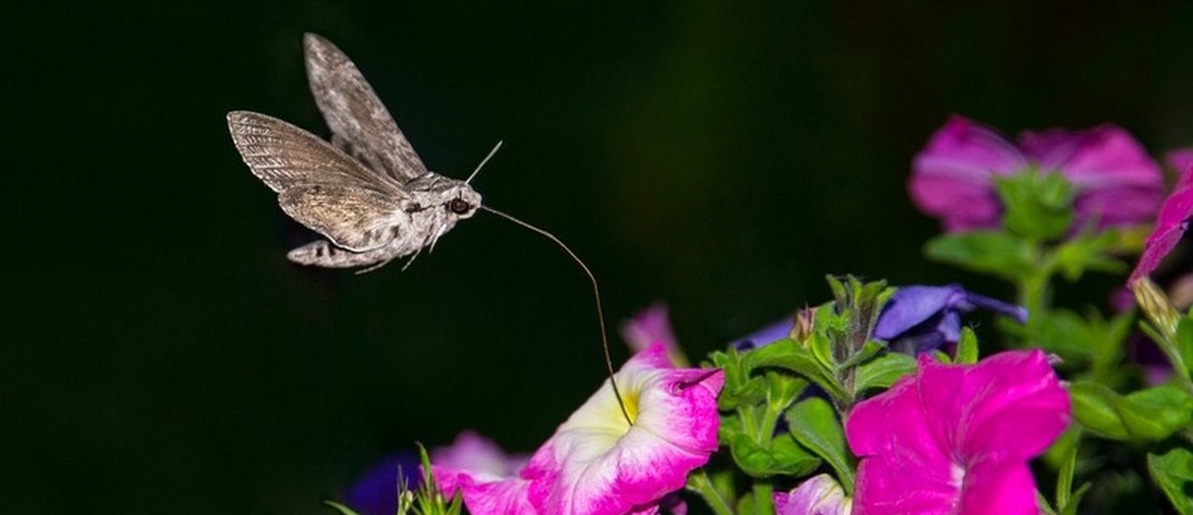
A privet hawk moth drinking a flower's nectar.
When night falls, plants close the air holes of their leaves in order to prevent water from evaporating. The petals of many flowers also close during the night.
However, all plants do not rest through the night. In fact, some flowering plants continue to attract moths with their strong smells. The picture below shows a privet hawk moth approaching a flower. Moths drink nectar from the flowers, while transporting pollen from one flower to the next at the same time.
Some plants require short nights in order to grow flowers. Other plants need a long, dark night in order to bloom.
A privet hawk moth drinking a flower's nectar.
Terminology
| Term | Explanation |
|---|---|
| midsummer | A period of summer during which the days are at their longest. |
| petal | A flower's colourful leaf. |